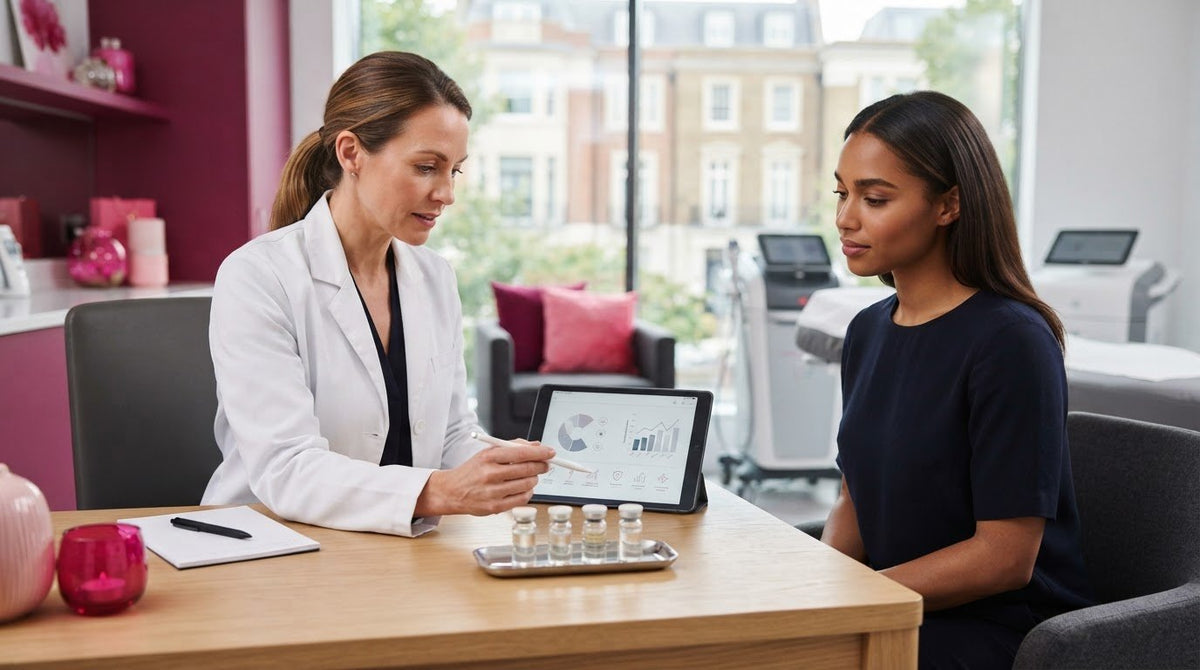
Polynucleotide Treatment Planning for Clinics
A client asking for “polynucleotides” is not yet a treatment plan. They may be concerned about crepey under-eyes, post-inflammatory redness, dullness, acne scarring, or the gradual loss of skin quality that no amount of concealer can disguise. Strong polynucleotide treatment planning turns that broad request into a safe, commercially sensible and clinically considered pathway.
For busy clinics, that matters. Polynucleotides can be an exciting addition to a regenerative-focused menu, but they are not a one-size-fits-all glow-up. The right candidate, a clear goal, appropriate product selection and sensible review points are what make the treatment feel premium rather than improvised.
Start with the skin concern, not the trend
Polynucleotides are often positioned around skin quality, hydration, texture and the appearance of revitalised tissue. That makes them highly relevant for clients who want a fresher, healthier-looking finish without automatically moving towards volumisation. It does not mean every concern should be treated as a polynucleotide concern.
Begin by identifying what the client is actually seeing. Is it laxity, dehydration, fine lines, pigment irregularity, inflammation, textural change, volume loss or a combination? A client who says their under-eye area looks tired may be describing thin, dehydrated skin - or they may have tear-trough hollowing, pigmentation, oedema or prominent fat pads. Those scenarios need different conversations and may need different treatment choices.
This is where practitioner judgement earns its place. Take a proper history, assess the area in motion and at rest, consider the client’s previous treatments, and document baseline photography with consistent lighting. Avoid promising a transformation before you have established whether the treatment goal is realistic.
Set a treatment objective clients can understand
A good plan has one primary objective. “Better skin” is too vague to measure and too easy to overpromise. “Support smoother-looking periocular skin”, “improve the appearance of dehydration lines” or “build a more resilient-looking complexion over a planned course” gives both practitioner and client something concrete to work towards.
The conversation should also distinguish between tissue quality and structural correction. Polynucleotides may be selected when skin quality is the priority, while fillers, biostimulators, skin boosters, energy-based treatments or topical skin programmes may be more appropriate in other cases. Combination planning can be powerful, but only when every treatment has a defined job.
Clients should understand that visible change may be progressive rather than instant. They also need realistic guidance on variability, maintenance, downtime, possible adverse effects and the fact that response is individual. A polished consultation is not about selling the biggest course. It is about making sure the client knows what they are choosing and why.
Build polynucleotide treatment planning around four checks
Before stock is opened or appointments are booked, make four checks part of the clinic workflow:
- Suitability: Review medical history, allergies, current medication, pregnancy or breastfeeding status where relevant, active infection, inflammatory skin activity and any factors identified in the product instructions or your clinical protocols.
- Product fit: Confirm the intended indication, anatomical area, formulation, packaging, storage requirements, expiry date and traceability details. Use products only in line with their instructions for use and within your professional competence.
- Treatment timing: Consider recent or planned procedures. Skin needling, peels, fillers, toxin treatments, laser and other regenerative treatments may affect sequencing, recovery expectations and the way results are interpreted.
- Follow-up: Agree when the client will be reviewed, how progress will be assessed and what route they should use if they have concerns after treatment.
Do not skip the medical and consent process
Polynucleotide treatments are professional procedures, not retail beauty add-ons. Follow your insurer’s requirements, local standards, product documentation, infection prevention measures and clinic governance. Where prescribing, delegation or medical oversight is relevant to your setting, make sure responsibilities are clear before treatment begins.
Consent should be informed, documented and specific. Discuss expected benefits without guaranteeing outcomes, alongside risks, aftercare, alternatives and the option not to proceed. A client who understands the plan is far more likely to be satisfied with a gradual skin-quality approach than a client who has mistaken it for an instant filler result.
Plan the course without forcing a formula
A treatment course should be based on the chosen product’s instructions, the client’s presentation and your assessment - not on a copied protocol from social media. Some clients may be best suited to a focused course with planned review, while others may require a different modality before polynucleotides make sense.
Think in stages. The first appointment establishes suitability and baseline. Subsequent sessions, where appropriate, are opportunities to review tolerance, emerging response, adherence to aftercare and whether the original objective remains the right one. At review, compare like-for-like photographs and ask targeted questions: does the client feel their skin is more comfortable, does make-up sit differently, has the appearance of fine textural change improved?
If the answer is no, do not automatically add more treatment. Reassess the diagnosis, the client’s expectations, lifestyle factors and whether another treatment category may be a better fit. Being selective is good practice and good business. It builds trust, reduces unnecessary spend and keeps your results portfolio credible.
Make combination treatments intentional
Polynucleotides can sit well in a wider skin-quality strategy, but layering treatments without a rationale can make aftercare harder, increase variables and blur the source of any reaction. Map out what comes first, what can be performed later and what should be avoided during recovery according to product guidance and your clinic protocol.
For example, a client with dull, dehydrated skin may benefit from a staged plan that includes at-home skincare and carefully timed in-clinic treatments. Someone seeking correction of a deeper structural concern may require a separate conversation about whether a volumising or collagen-stimulating option is more appropriate. The goal is not to make every client a combination client. The goal is to make every recommendation make sense.
Stock planning is part of treatment planning
A treatment category only performs commercially when the operational side is tight. Check your likely conversion from consultation to booking, the length of a typical course in your clinic, expected maintenance demand and the product shelf life. Ordering too little can interrupt a client’s planned journey; ordering too much can tie up cash and create avoidable expiry pressure.
Keep batch records and ensure the product used is recorded in the client’s notes alongside treatment area, date, product details and any observations required by your governance process. Stock rotation should be routine, not a monthly panic. A clear reorder point based on real appointment demand helps protect margin and keeps your diary moving.
For UK practitioners building out a regenerative category, a professional wholesale partner such as Skin Candy can make replenishment easier - but supplier speed should never replace your own checks on product suitability, storage and documentation.
Train the whole client journey
The consultation is not the only point where confidence is built. Front-of-house staff should know how to describe the category without making clinical claims. Practitioners need consistent language around outcomes, recovery and follow-up. Your booking team should know when a client needs a consultation rather than a treatment slot.
Create a straightforward internal pathway: enquiry, consultation, suitability decision, treatment booking, aftercare contact and review. This makes the experience feel considered from the first message to the final photograph. It also gives clients the reassurance that their treatment is part of a plan, not a product-led impulse.
The best polynucleotide treatment plan is not the most complicated one. It is the one that respects the skin in front of you, stays within sound clinical practice and gives the client a clear, confident reason to return.