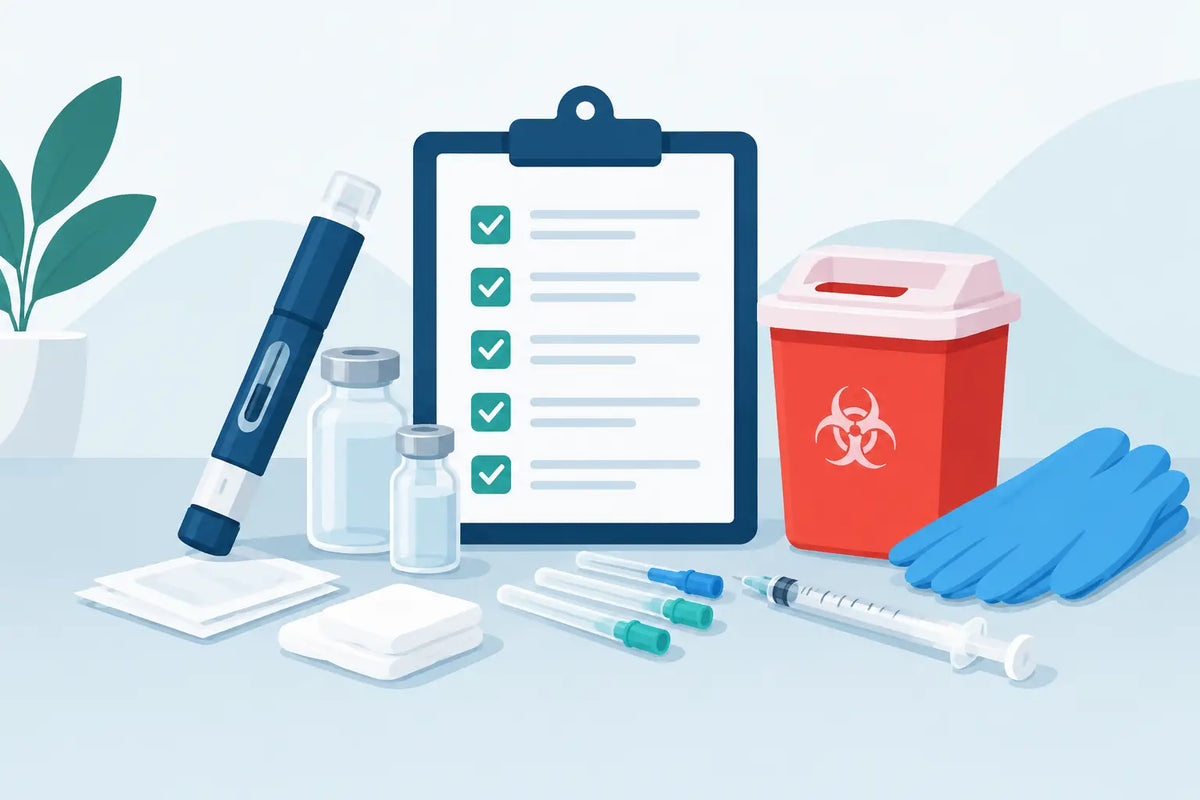
Injector Emergency Consumables Checklist
Aesthetic emergencies are uncommon, but the minutes after a concern is identified are not the time to discover that the final pair of gloves has gone, the sharps bin is full, or a key item has passed its expiry date. This injector emergency consumables checklist is built for clinics that want treatment rooms ready for business, client confidence and safe escalation - without turning stock control into a last-minute scramble.
Emergency preparedness is not about treating every appointment as a crisis. It is about protecting the calm, capable standard clients expect from a professional injector. Your clinical emergency plan, training, emergency medicines, devices and escalation procedures must be set by the appropriate prescriber, medical lead and applicable professional guidance. Consumables are the practical layer that lets that plan work when it matters.
Why an injector emergency consumables checklist earns its space
Your best-selling treatment stock will naturally get attention. Filler, skin boosters, polynucleotides and aftercare all move quickly because they drive your diary. Emergency consumables can be easier to overlook precisely because you hope not to use them. That is the wrong reason to leave them unmanaged.
A complete, checked kit reduces avoidable delays, supports infection prevention and gives your team a clear routine when a client becomes unwell or requires urgent assessment. It also makes handovers cleaner. A practitioner covering a busy Saturday should be able to locate the same labelled supplies in the same place as the clinic owner who set up the room.
There is a commercial upside too. A treatment room that is properly stocked opens on time, stays professional under pressure and avoids cancelled appointments caused by missing basics. Preparedness protects your standards and your revenue.
Build the checklist around your actual emergency protocol
There is no single shopping list that suits every clinic. The right contents depend on the treatments you offer, who is on site, your premises, your medical oversight arrangements and the emergency plan in place. An injector working alone in a small appointment-only space will need a different storage and review system from a multi-practitioner clinic with a reception team and dedicated clinical lead.
Start with your written protocol, rather than adding products because another clinic has them. Confirm who can administer what, who calls emergency services, who meets them at the entrance, who documents the event and who checks the kit after use. Your emergency consumables should support those roles.
Keep the emergency kit separate from everyday treatment trays. It needs to be visible, labelled and immediately accessible, but not so exposed that routine stock is borrowed from it. If a sealed item is used for a standard treatment, replace it straight away and record the replacement. A kit that looks full but is missing one critical item is not ready.
Essential infection-control and barrier supplies
These are the items that allow your team to assess and respond while maintaining clean technique. Hold enough for more than one person, as assistance may be required before an ambulance arrives.
- Nitrile gloves in a practical range of sizes, plus spare pairs
- Fluid-resistant surgical masks and suitable eye or face protection
- Disposable aprons and absorbent disposable drapes
- Alcohol hand rub, clinical wipes and approved surface-cleaning products
- Sterile gauze, swabs and saline suitable for your protocol
- Adhesive dressings, tape and bandages in date and sealed
Sharps, waste and spill-control consumables
A calm room can become a contaminated workspace quickly if a sharps injury, bleeding episode or bodily-fluid spill occurs. Your team should not have to search cupboards while managing a client.
Maintain a correctly assembled, labelled sharps container with capacity remaining. Full sharps bins are a predictable safety failure, so build a fill-line check into the opening routine. Keep a replacement bin available, along with clinical waste bags, disposable scoop-and-scraper equipment where used in your protocol, and a body-fluid spill kit appropriate for the setting.
Store spare needles, syringes and blunt draw-up devices only where they are needed under your clinic’s approved procedures. They are not an excuse for improvised action. All single-use devices must remain sealed until required and be disposed of correctly after use.
Documentation and communication essentials
The paperwork matters, even in a fast-moving situation. Clear notes support continuity of care, escalation and later review. Keep incident forms, treatment records and a means of recording observations in a known location. If these are digital, ensure the relevant device is charged, accessible and permitted under your privacy policy.
Your emergency information should be easy to read at a glance: full clinic address, postcode, entry instructions, nearby landmarks and the number for emergency services. In a multi-room clinic, make sure every practitioner can direct assistance to the right treatment room. A printed copy is sensible backup if Wi-Fi fails or a phone is unavailable.
Include a current list of escalation contacts approved by your medical lead, plus the location of emergency medicines and equipment. Do not place detailed clinical dosing instructions in a generic stock checklist unless they are part of your formally approved, current protocol and accessible only to authorised staff.
Comfort, privacy and client support supplies
Professional care is not only about the clinical response. A client who feels faint, anxious or unwell may need privacy, warmth and straightforward reassurance while the team follows the appropriate process.
Keep disposable blankets or clean coverings, tissues, sick bowls or emesis bags, drinking water where appropriate, and a spare gown or modesty cover available. These low-cost supplies can make a high-stress moment feel far more controlled. They are especially useful in busy clinics where a client may need to wait away from the main reception area.
Do not treat emergency medicines as ordinary stock
Emergency medicines, oxygen, automated external defibrillators and other equipment may sit alongside your consumable arrangements, but they require their own governance. Storage conditions, expiry checks, access control, prescribing arrangements, staff competency and replacement processes must be managed according to your medical lead’s instructions and current UK requirements.
The same applies to hyaluronidase and any supplies associated with vascular occlusion management. Only appropriately trained and authorised practitioners should follow an approved complication-management pathway. Your stockroom can support readiness, but it cannot replace training, assessment or urgent referral.
This distinction protects both clients and practitioners. Being well stocked is valuable; acting beyond scope is not.
Set a checking rhythm that survives busy weeks
The best checklist is the one your team will actually use. A daily visual check works well for treatment-room basics: gloves, wipes, sharps capacity, hand hygiene supplies, emergency kit location and any obvious missing seals. Keep it quick enough to complete before the first client arrives.
Run a more detailed monthly check for expiry dates, packaging integrity, stock counts and the condition of storage containers. Rotate short-dated stock into legitimate routine use only where appropriate and within its intended purpose. Record what was checked, who checked it and what was replaced. This creates accountability without adding unnecessary admin.
After any incident, simulation exercise or use of the kit, check it immediately. Replace consumables before the next clinic session, not when the weekly order is due. It is also worth reviewing the checklist after adding a new treatment category, moving premises or changing your team structure.
Store for speed, not just tidiness
A beautiful cupboard is useful only if everyone can find what they need. Use clear labelling, defined compartments and a consistent layout across rooms. Avoid overfilling bags or drawers, as this hides expired stock and makes it difficult to identify missing items.
Place a concise inventory sheet inside the kit lid or on the cupboard door. Include minimum quantities and reorder points, rather than relying on memory. For high-volume clinics, assign one person to own the monthly audit but train every practitioner to flag shortages. Stock responsibility should have an owner, while readiness belongs to the whole team.
Where possible, keep a small reserve of everyday emergency consumables away from the active kit. That gives you a quick replacement option after use and avoids stripping another treatment room to solve a problem. Fast, reliable replenishment from a professional supplier such as Skin Candy can help keep that reserve in place, but ordering should never be your emergency plan.
Make preparedness part of your clinic standard
Clients may never see your checklist, and that is exactly the point. They should see a calm practitioner, a clean environment and a clinic that feels ready for their appointment. Behind that experience should be disciplined stock checks, clear protocols and supplies that are where they need to be.
Set the checklist, give it an owner, test it in real-world conditions and revise it when your service changes. The strongest clinics do not wait for a difficult moment to prove they are prepared.