
Client Aftercare Instructions for Polynucleotides: A Clinic Checklist
What if a polished aftercare handout creates more uncertainty than reassurance? Client aftercare instructions for polynucleotides need to do more than list familiar precautions. They should reflect the current instructions for use for the product, the procedure performed and the practitioner’s clinical judgement. A generic template can blur those distinctions, leaving clients unsure which short-term effects may be possible and which concerns need prompt attention.
Clear, consistent guidance supports a better client experience. The challenge is to put product-specific requirements into plain language without promising a predictable recovery or giving broad instructions that do not fit the protocol used.
This article provides a practical clinic checklist for organising written aftercare around the product and procedure, explaining possible short-term effects, and setting out how clients can raise concerns and follow-up arrangements. It also highlights where to check product instructions and apply clinical judgement, so clients receive clear guidance without unsupported medical advice.
Key Takeaways
- Make client aftercare instructions for polynucleotides specific to the product, procedure and individual clinical assessment.
- Check the current product instructions and protocol before drafting, then distinguish verified guidance from clinic preferences.
- Separate possible short-term responses from concerns that require clinical contact, without promising a particular reaction or recovery timeline.
- Organise the handout so clients can quickly find immediate instructions, ongoing guidance, contact details and follow-up arrangements.
- Have the responsible practitioner review and approve the clinical content before sharing it with clients.
Client aftercare instructions for polynucleotides: what should clinics include?
Aftercare guidance should match the product used, the procedure performed and the treating clinician’s assessment of the individual client. A checklist supports clear communication, but it does not replace clinical judgement or the current product instructions for use (IFU). Products, protocols and client circumstances can differ, so verify any timing, restriction or possible response before adding it to the handout.
Product-specific aftercare means instructions informed by the current product IFU and the treating clinician’s assessment. Keep this definition at the centre of your process. Written instructions give clients something to refer back to after leaving the clinic; a verbal explanation lets the practitioner clarify what applies to that person. Provide both, invite questions and record that the guidance was discussed and supplied.
Why is one universal polynucleotide aftercare sheet not enough?
A generic sheet can make unverified advice appear to be a product requirement. The product, treatment protocol, client circumstances and practitioner’s decisions may all affect what guidance is appropriate. Before issuing instructions, check the current IFU and clinic protocol. Ask the responsible practitioner to confirm any client-specific adjustments, and do not present a timeframe, restriction or possible response as universal unless the relevant product information supports it.
Make the source of each instruction clear. Separate directions confirmed in the IFU from clinic-specific preferences, and label the latter accordingly. If a point is unclear or conflicts with the clinic protocol, resolve it with the responsible practitioner before sharing the handout.
What should a client-facing checklist do?
Make the checklist easy to scan and act on. Use short sentences, familiar terms and direct instructions. Group information under clear labels, and explain any clinical term clients may not recognise. For background terminology, readers can explore what polynucleotides are; keep that general context separate from product-specific aftercare advice.
Make the route for raising concerns explicit. State the clinic’s confirmed contact method and who the client should ask for. Explain what information to provide, such as the treatment date, area treated and a description of the concern. Set out agreed follow-up arrangements as well. For related clinical context, see polynucleotide indications for aesthetic clinics.
Ultimately, client aftercare instructions for polynucleotides should help clients understand what to do and how to ask for guidance, without suggesting a level of certainty the product information or protocol does not support. Have the responsible practitioner approve the final wording before distribution.
How to prepare polynucleotide aftercare instructions before treatment
Prepare the handout before the appointment, but do not finalise it until you have checked the product and treatment plan. Verify the current product IFU before issuing product-specific aftercare. This workflow helps practitioners organise client communication; it does not replace relevant training, individual clinical assessment or the treating clinician’s judgement.
Verify the product and its current instructions for use
Start by identifying the exact product supplied. Check its current packaging and applicable manufacturer documentation, then confirm any product-specific restrictions or follow-up instructions before drafting client guidance. If information is incomplete, uncertain or conflicts with the clinic protocol, pause and refer it to the responsible practitioner. Do not fill gaps with assumptions or copy directions from another product’s handout.
Use evidence carefully when discussing expectations. The PMFA Journal’s review of polynucleotide injection efficacy can provide professional context, but it does not replace the product IFU or establish what an individual client will experience.
Personalise, explain, and document the instructions
Once the product information is verified, follow a consistent clinic workflow:
- Confirm the product and protocol. Match the product supplied to its current IFU and the planned procedure.
- Separate requirements from preferences. Identify which points are confirmed by manufacturer documentation and which reflect clinic practice. Label preferences clearly so clients do not mistake them for product requirements.
- Tailor the handout. Align the wording with the client’s treatment plan and relevant assessment findings. Ask the responsible practitioner to resolve uncertainty before issuing the instructions.
- Explain the contact route. Tell clients how to contact the treating clinic, who to ask for and what details to share if they have a concern or question. Include any agreed follow-up arrangements.
- Record the discussion. Document the written guidance supplied, what was explained verbally and that the client acknowledged receiving it. Follow the clinic’s record-keeping process.
Keep the wording practical. For example, label a confirmed direction as “Product instruction” and a local approach as “Clinic guidance”. This makes the distinction clear to clients and staff, and helps practitioners explain the handout consistently. The checklist is a communication aid, not a substitute for practitioner assessment.
Clinics reviewing their supply options can explore professional polynucleotide products for clinics. Keep product selection and aftercare review as separate steps: the treating practitioner remains responsible for confirming the applicable instructions before the handout is shared.
Expected effects and warning signs: how should clinics explain the difference?
Clients need to understand the difference between possible short-term responses and concerns that warrant clinical contact. Keep both sides of that distinction specific to the product and procedure. Before including an example or timeframe, check the current product instructions for use (IFU) and the clinic’s approved protocol. Do not promise that a reaction will happen, how long it will last or what outcome to expect.
Use the comparison below as a drafting framework, not as universal medical advice. The treating practitioner should confirm which details apply to the product and procedure used.
Possible short-term responses to verify
- Include only responses identified in the IFU or approved clinic protocol. Depending on those sources, examples to check might include local redness, swelling, small bumps, bruising, tenderness or itching.
- Describe these calmly as possible responses, not a guaranteed experience or something every client should expect.
- Include a recovery timeframe only if the product information or approved protocol supports it.
Concerns requiring clinical contact
- List only warning signs and escalation wording approved in the current clinic protocol.
- Where clinically confirmed, the protocol may identify changes such as increasing swelling, warmth or pain, a rash, intense itching, or hard nodules as reasons to contact the clinic.
- State the clinic-approved contact route and whether the client should seek prompt clinical review or follow an urgent-care referral pathway.
How can clients be guided about short-term reactions?
Use calm, factual language. For example: “Some local responses may occur. Your experience can differ. Follow the instructions provided for your treatment, and contact the clinic if you’re concerned.” Use this wording only after checking the IFU and protocol. If a client’s symptoms or circumstances differ from the handout, direct them to follow their treating practitioner’s instructions and contact the clinic for individual guidance.
When should clients contact the clinic or seek urgent help?
Make the next step unmistakable. Give clients the confirmed contact method and explain what details to share, such as the treatment date, area treated and what has changed. If the clinic’s approved protocol identifies circumstances that require prompt review or urgent help, state the agreed pathway plainly. Verify that wording against current UK guidance and clinic policy before publishing it. Do not diagnose symptoms in the handout or imply that reading it replaces assessment.
For consistent client aftercare instructions for polynucleotides, have the responsible practitioner review the comparison before use. Keep the wording aligned with the product-specific information, and update it if the applicable instructions or clinic protocol changes.
How to make polynucleotide aftercare clear, accessible, and consistent
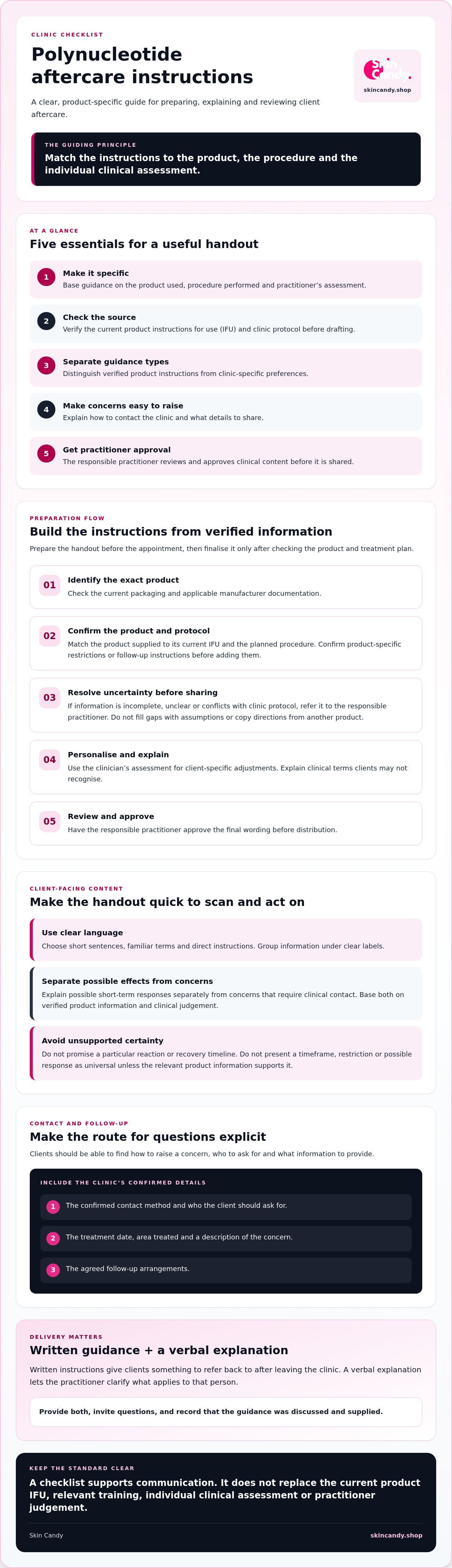
A useful handout is easy to scan, understand and relate to what the client heard during the consultation. Organise it into four sections: immediate instructions, ongoing guidance, contact details and follow-up. Tie each instruction to verified product information and the client’s plan. Do not add generic directions simply to make the page look complete.
What makes written instructions easier for clients to follow?
Give one action per sentence and make the next step specific. “Contact the clinic using the details below if you have a concern” is clearer than “monitor the area”. Include the clinic’s confirmed contact method and explain what details will help staff respond, such as the treatment date and area treated.
Keep technical wording accurate, but briefly explain terms clients need to understand. Use headings, short paragraphs and bullet points so key information is easy to find. Offer the handout in an accessible format suited to the client’s needs, and check that it works on paper and on a mobile screen. Do not rely on colour alone to distinguish important instructions.
Written guidance should reinforce, not replace, the consultation. Ask the client to explain in their own words how they would follow a key instruction or contact the clinic with a concern. This gives the practitioner a chance to clarify misunderstandings before the client leaves.
How should clinics keep staff guidance consistent?
Use a controlled template with required fields for product-specific information. Before sharing it, staff should check that the relevant fields are complete and that they are using the approved version. Keep clinic preferences clearly separate from directions supported by product documentation.
Set a review process for changes to product documentation and clinic protocols. Assign responsibility for checking updates, revising the template and removing outdated copies from circulation. Relevant staff should know how to provide the approved handout and where to direct clinical questions: to the treating practitioner, rather than to an improvised answer.
For broader category context, read exosomes versus polynucleotides for clinics. It can support general product understanding, but it is not a source for aftercare directions. Keep client aftercare instructions for polynucleotides grounded in the applicable product information and practitioner-approved guidance.
Review your clinic’s product range and browse polynucleotide products for professional clinics as part of your supply planning.
Build a clinic-ready polynucleotide aftercare process
Turn the guidance into a repeatable clinic process. A completed checklist helps staff confirm they are using the right product information and giving each client clear, practitioner-approved instructions. It supports consistent communication, but does not replace clinical assessment or the responsible practitioner’s judgement.
What should a clinic verify before issuing its checklist?
Before distributing the handout, check each item:
- Product identity: Confirm the product used and that the documentation relates to it.
- Current instructions: Check the applicable, up-to-date instructions for use and clinic protocol.
- Clinical approval: Confirm that the responsible practitioner has reviewed and approved all clinical content.
- Client and contact details: Ensure the instructions reflect the treatment plan and provide the clinic’s confirmed contact route.
- Content accuracy: Remove timings, contraindications, restrictions or treatment claims that have not been verified against the product documentation and approved protocol.
- Document control: Record the version in use and review it when product documentation or clinic protocols change.
The final review matters. A template can become outdated even if its layout still looks current. Assign responsibility for checking it, and withdraw superseded copies so staff do not select an older version by mistake. The practitioner must approve the clinical content before it reaches clients.
How can professional supply support a consistent workflow?
Keep relevant product documentation and stock information accessible to the practitioners responsible for care. This helps the clinic connect the product in use with the correct documentation when preparing or reviewing a client handout. Supply planning is a separate operational task, not a source of treatment or aftercare advice. For broader procurement considerations, see just-in-time clinic procurement guidance.
Use this process to keep client aftercare instructions for polynucleotides controlled, relevant and ready for practitioner review. Skin Candy supplies polynucleotides to clinics and practitioners. You can explore professional polynucleotide supplies; product selection and clinical aftercare decisions remain the responsibility of the treating clinic.
Put a clear aftercare process into practice
Strong client aftercare instructions for polynucleotides start with the correct product information and receive approval from the responsible practitioner. Keep possible short-term responses separate from concerns requiring clinical contact, and make the clinic’s contact route easy to find. A clear, accessible handout should support the consultation, explain follow-up arrangements and be reviewed whenever product documentation or clinic protocols change.
Reliable supply planning helps clinics keep relevant product documentation available to the practitioners responsible for care. Skin Candy supplies polynucleotides to clinics and aesthetic practitioners, with same-day and next-day delivery options across the UK. Check current terms and eligibility before relying on these options.
Explore professional polynucleotide supplies at Skin Candy as part of your clinic’s procurement planning. Keep clinical decisions with the treating practitioner, and use a consistent review process to give every client clear, product-specific guidance.
Frequently Asked Questions
What should client aftercare instructions for polynucleotides include?
They should explain the verified, product-specific steps clients need to follow, possible responses, how to contact the clinic and any agreed follow-up arrangements. Base the guidance on the current product instructions for use (IFU), the procedure performed and the treating practitioner’s assessment. Use clear headings and plain language. The responsible practitioner should approve the clinical content before it is given to clients.
How long should clients follow polynucleotide aftercare instructions?
There is no single duration that applies to every product or treatment. Check the current IFU and approved protocol, then state any supported timeframes clearly in the client’s handout. Do not copy a duration from another product’s guidance or imply that all instructions end after a set number of days. If the client’s situation differs from the instructions, direct them to their treating practitioner.
Are redness or swelling normal after polynucleotide treatment?
Redness or swelling may be listed as possible short-term responses in product information or an approved clinic protocol, but do not tell clients to expect them unless the applicable guidance supports that wording. Responses can vary, and a handout should not promise a particular reaction or recovery course. Explain which signs are covered by the verified protocol and give clients a clear route to contact the clinic if they are concerned.
When should a client contact the clinic after polynucleotide treatment?
Clients should use the contact route and escalation advice provided by their treating clinic, especially if they are concerned or their symptoms differ from the written guidance. The clinic should specify whom to contact, how to make contact and what information to share, such as the treatment date and area treated. Verify warning signs, prompt-review wording and any urgent-care pathway against current clinic policy and relevant UK guidance.
Can clients use make-up or skincare after polynucleotide treatment?
Only give make-up and skincare advice confirmed for the product and procedure in the current IFU or practitioner-approved protocol. Avoid applying a general rule or timeframe from another treatment. The handout should identify any verified products or activities to avoid and explain when clients should ask the clinic before resuming their usual routine. Clients should follow their treating practitioner’s instructions if their circumstances differ.
Should polynucleotide aftercare instructions be the same for every client?
No. A consistent template can support clear communication, but the instructions should reflect the product, procedure and individual clinical assessment. The practitioner may need to adapt the guidance to the client’s treatment plan or relevant assessment findings. Record what was provided and discussed, and make sure any individual changes are clinically approved. Do not assume one client’s instructions or response apply to another person.
Can a clinic use one aftercare template for different polynucleotide products?
A clinic may use a shared template structure, but it should not issue identical product guidance without checking each product’s current IFU and clinic protocol. Include product-specific fields for verified instructions, relevant restrictions, contact details and follow-up. Mark clinic preferences separately from manufacturer-supported directions. Have the responsible practitioner review the completed handout before distribution, and update controlled templates when product documentation or clinic protocols change.