
Wholesale Aesthetic Supplies for Clinics and Practitioners
The supplier matters as much as the product. UK clinics and practitioners can source dermal fillers through specialist aesthetic wholesalers. Wholesale aesthetic supplies for practitioners may include injectables and other professional products.
Choosing a supplier involves more than finding the right product. Authenticity, batch traceability, purchase records and reliable fulfilment all matter when managing clinic stock. A relevant product range can also simplify procurement by bringing categories together. This guide covers what to consider when sourcing dermal fillers wholesale, how product range and ordering processes affect day-to-day purchasing, and which factors suit different clinic needs. It also outlines the UK’s medical-device marking transition periods, providing regulatory context alongside practical supply considerations. Use these points to assess a wholesaler against your clinic’s requirements and organise your purchasing process.
Key Takeaways
- Match product range and ordering processes to your clinic’s treatment mix and stock needs.
- Assess a supplier’s product documentation, traceability and handling processes before placing orders.
- Compare wholesale pricing alongside expiry dates and stock rotation to understand the value of short-dated products.
- Prepare relevant professional and practice information, as supplier account checks can differ.
Wholesale aesthetic products for clinics and independent practitioners
Wholesale ranges help clinics source injectables and consumables through business purchasing channels. Match the product mix to your treatments, stock rotation and ordering routine.
Professional product ranges and availability
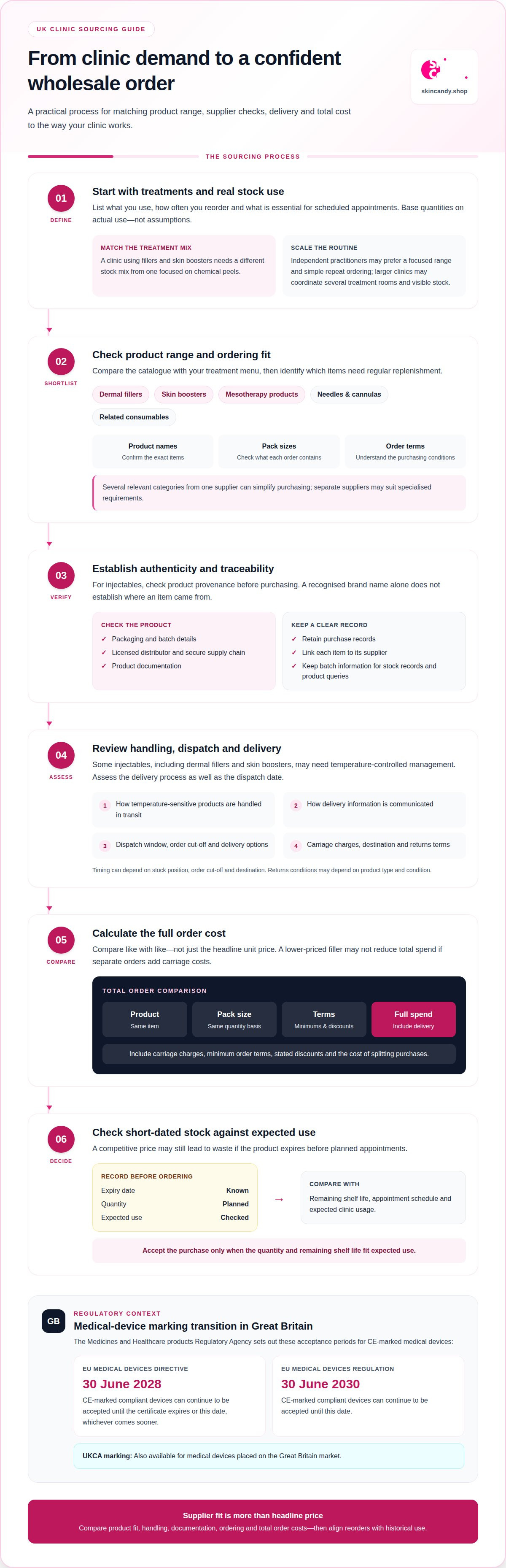
Aesthetic wholesalers may supply dermal fillers, skin boosters, mesotherapy products, needles, cannulas and related consumables. Compare these categories with your treatment menu, then identify which items need regular replenishment. For example, a clinic using fillers and skin boosters needs a different stock mix from one focused on chemical peels.
Product ranges vary between wholesalers. Before planning a purchase, confirm product names, pack sizes, expiry information and ordering terms. A supplier with several relevant categories can simplify purchasing, while separate suppliers may suit clinics with specialised requirements. Build your list around actual usage to avoid unnecessary stock.
Product authenticity and CE certification
For injectable products, check authenticity and traceability before purchasing. Review packaging, batch details and purchase records, and retain documentation linking each item to its supplier. These steps help clinics maintain stock records and investigate product queries. A recognised brand name alone does not establish an item’s provenance.
In Great Britain, CE-marked medical devices compliant with the EU Medical Devices Directive can continue to be accepted until their certificate expires or 30 June 2028, whichever comes sooner, according to the Medicines and Healthcare products Regulatory Agency. CE-marked medical devices compliant with the EU Medical Devices Regulation can continue to be accepted until 30 June 2030, according to the Medicines and Healthcare products Regulatory Agency. The agency also makes UKCA marking available for medical devices placed on the Great Britain market.
For UK shipping times, costs and returns, compare the supplier’s stated dispatch window, delivery options, carriage charges and returns terms before ordering. Timing can depend on stock position, order cut-off and destination; returns conditions may depend on product type and condition. Include these details in purchasing decisions alongside product availability, especially when replenishing clinic consumables.
Supplier selection for different clinic needs
Choose a supplier based on your clinic’s treatment mix, stock usage and ordering routine. A clinic that regularly uses dermal fillers may prioritise a relevant injectable range, while a practice with broader needs may value several product categories from one supplier. Start by listing what you use, how often you reorder and which products are essential for scheduled appointments.
Consider delivery handling when assessing product suitability. Some injectables, including dermal fillers and skin boosters, may require temperature-controlled management. Check how temperature-sensitive products are handled during transit and how delivery information is communicated. For example, a clinic receiving injectables should account for the delivery process as well as the dispatch date. Include these points in your supplier comparison alongside order cut-offs and delivery options.
- Range: Check whether the catalogue covers your regular products and relevant consumables.
- Ordering: Look at how easily repeat orders can follow your stock routine.
- Documentation: Consider whether product and batch records support your clinic’s purchasing process.
- Cost: Compare competitive pricing with delivery charges, minimum order terms and the cost of splitting orders.
An independent practitioner’s needs can differ from those of a multi-clinician clinic. An independent practitioner may prefer a focused range and straightforward repeat ordering. A larger clinic may need purchasing processes that coordinate several treatment rooms and keep frequently used stock visible. In either case, base reorder quantities on actual use rather than assumptions. This helps match purchasing to appointment demand and avoid unnecessary surplus.
Use the same criteria for each potential supplier: product fit, handling, documentation, ordering and total order costs. If you’re assessing a particular range, review available aesthetic products as part of your comparison. Prioritise the supplier whose processes fit your clinic’s routine, not simply the lowest headline price.
UK clinics should check dermal filler authenticity through licensed distributors, batch numbers, secure supply chains and purchase records. Track treatment volumes by product type and base injectable reorders on historical use. Keeping these checks within routine supplier reviews helps align sourcing and stock decisions with products used in practice.
Wholesale pricing and short-dated stock
Compare the full purchase cost, not just the unit price of a popular injectable. Include delivery charges, minimum order terms and any stated discounts. For example, a lower-priced dermal filler may not reduce total spend if separate orders add carriage costs. A broader product range can make combined orders more practical when every item matches clinic demand.
Short-dated stock calls for careful planning. Compare the remaining shelf life with your appointment schedule and expected usage. A product that expires before planned appointments may go to waste, even if its purchase price seems competitive. Before ordering, record the expiry date, quantity and expected use for each item. This gives the person managing stock a clear basis for accepting or declining the purchase.
- Compare like with like: Match product, pack size and delivery terms across quotes.
- Calculate total spend: Include carriage, order thresholds and the cost of split purchases.
- Assess expiry: Relate the stated date and quantity to expected clinic usage.
- Plan dispatch: Factor the supplier’s stated dispatch timing into stock availability.
For example, a clinic with steady demand for one filler can assess a larger order against its usual stock rotation. A practitioner who uses it less often may prefer smaller purchases, even at a higher unit price. The key question is whether the stock can be used within its stated shelf life, not whether the offer seems popular.
Keep a record of quotes, expiry dates and purchase quantities by product. Review those records when sourcing injectables again, so ordering reflects actual use rather than an old estimate. Compare UK delivery terms alongside product price and dispatch timing. This makes the financial and operational trade-offs visible before an order is placed, particularly for short-dated stock.
For UK orders, compare carriage charges, minimum order terms, discounts and the cost of split purchases, as well as stated dispatch timing and delivery terms. This helps you assess total spend and whether stock is expected to arrive in time for planned use.
What qualifications or checks do UK aesthetic suppliers require from practitioners?
Account requirements depend on the products purchased and the supplier’s ordering process. A wholesale application may ask for practitioner identification, business details and evidence of relevant professional qualifications. Keep this information consistent across the application and supporting documents. For a clinic account, the person placing orders should also have clear authority to buy on the practice’s behalf.
Product type matters. Botox is a prescription-only medicine in the UK, and prescription-only botulinum toxin products have specific prescribing, supply and advertising requirements. Nurse and midwife prescribers have an additional professional requirement: from 1 June 2025, the Nursing and Midwifery Council required face-to-face patient consultations before prescribing for non-surgical cosmetic procedures. These rules concern prescribing and use, not a universal supplier account checklist.
- Practitioner details: Use the correct legal name and current professional information.
- Practice details: Keep the clinic or business name and delivery details consistent.
- Product scope: Identify whether the order includes prescription-only products or other regulated items.
- Records: Retain account documents and order records with the clinic’s purchasing files.
Before applying, organise relevant qualification and business documents in one place. For example, a practitioner ordering for a clinic should ensure the account details accurately identify both the practitioner and the purchasing practice. Clear records can help resolve order queries and support consistent stock administration.
Supplier checks don’t replace professional responsibilities. Prescribing, supply and professional use of prescription-only medicines and other regulated products must comply with applicable UK legislation and relevant professional requirements. Keep purchasing processes separate from clinical decisions, and ensure staff understand who may order each product. Explore practitioner supply options as part of your sourcing process.
Ordering multiple products from one supplier may help UK clinics simplify purchasing and reduce carriage costs. When reviewing account options, consider whether consolidating product orders suits your process. Weigh this alongside the qualification and business documents prepared for an application. Consolidated purchasing does not replace checks specific to each product or change the practitioner’s responsibilities for prescribing, supply and professional use. Keep potential savings in view while ensuring account details accurately reflect the practitioner and practice.
Skin Candy
Skin Candy supplies professional aesthetic products for clinics and independent practitioners planning wholesale orders. Its range includes Lumi Meso, Polynucleotides, Fat Dissolving Agents and Chemical Peels, covering several product categories. Choose Skin Candy when these products fit your clinic’s purchasing needs and you want to source them through a wholesale supplier.
Let your treatment mix and stock routine guide product selection. Consider which categories suit your practice, how they fit with existing orders and what you need to manage stock efficiently. This keeps purchasing focused on your clinic’s actual requirements rather than adding products without a clear purpose.
Contact Skin Candy to discuss your wholesale aesthetic supply requirements.
Make your next supply decision with confidence
Turn your purchasing criteria into a practical order plan. Prioritise the products your clinic uses, the records it needs and the supply process that fits its workflow. This gives you a clear basis for choosing wholesale aesthetic supplies for practitioners, without letting one factor, such as headline cost, determine the decision.
Skin Candy supplies premium dermal fillers, meso solutions and polynucleotides for professional aesthetic use. Consider whether these categories match your clinic’s purchasing needs and fit your existing stock plan. Take the next step with your requirements clearly in view.
Discuss your supply requirements with Skin Candy and move towards an ordering plan that works for your practice.
Frequently Asked Questions
Where can I buy dermal fillers wholesale?
Source dermal fillers from a specialist wholesale supplier serving UK aesthetic practitioners and clinics. Skin Candy supplies Lumifil Dermal Fillers alongside other professional aesthetic products. Before ordering, identify the product your practice needs and ensure your purchasing records capture product and batch details. This supports organised stock records and helps trace an item to its source if questions arise.
UK wholesale aesthetic supplies for practitioners: what products are available?
UK wholesale aesthetic supplies for practitioners may include dermal fillers, skin boosters, mesotherapy products and other clinic consumables. Skin Candy’s range includes Lumi Meso, Polynucleotides, Fat Dissolving Agents, Chemical Peels and Exosomes, as well as dermal fillers. Match product categories to your clinic’s treatments, then plan orders around actual use. This keeps purchasing relevant to your practice.