Article: How to grow an aesthetic business in the UK with sound finances
How to grow an aesthetic business in the UK with sound finances
Aesthetics clinics grow through disciplined finances, not treatment demand alone. Growing an aesthetic business in the UK takes a costed plan, careful cash-flow management and clear decisions about premises, services and compliance.
Building a client base matters, but a clinic also needs the finances and systems to support safe, sustainable growth. Plan costs before committing, then track income and outgoings as the business develops.
This guide covers how to shape your business plan, estimate setup costs, manage cash flow and market your clinic, while accounting for insurance, compliance and clinical risks. You’ll also learn how reliable product procurement can support day-to-day operations as your clinic grows.
Key Takeaways
- Research your local market and define what makes your clinic distinctive before choosing how to promote it. Build trust and referrals rather than relying on price competition.
- Map your clinical and business risks, and make sure your insurer is told which treatments you perform, where you operate and what qualifications you hold.
- Compare the financial impact of working from home, renting a room or taking dedicated premises, then use realistic income and outgoings to plan cash flow.
- Review your business plan regularly as your patient base, objectives and operating needs change. Reliable product procurement can also support a more organised clinic operation.
How to successfully market your clinic business in the aesthetic sector?
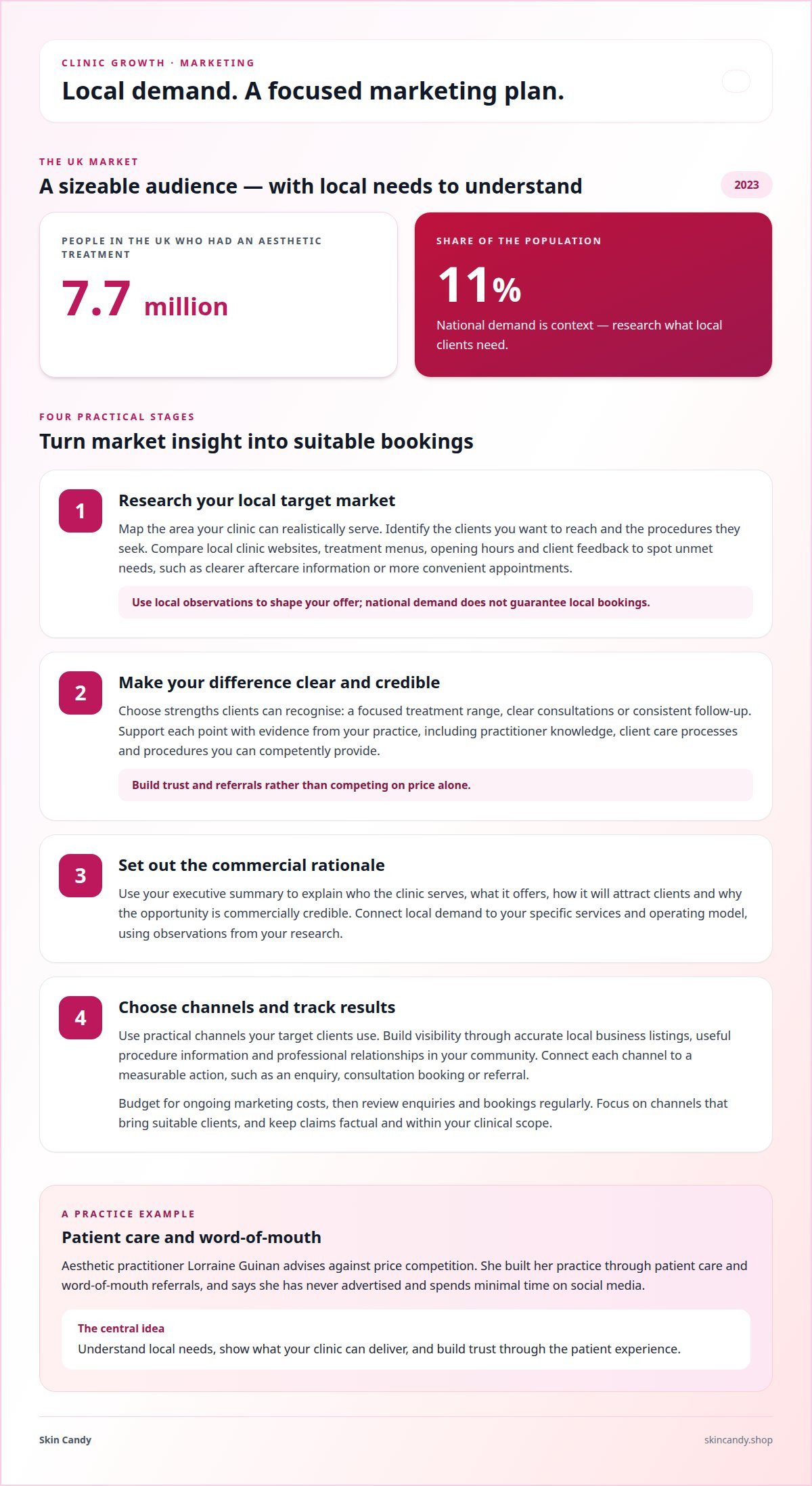
Build marketing around a defined local target, a clear reason to choose your clinic and a plan for tracking enquiries. In 2023, 7.7 million people in the UK had an aesthetic treatment, representing 11% of the population. A focused marketing plan supports growing an aesthetic business in the UK by connecting local demand with services your clinic can deliver.
-
Research the target market
Map the area your clinic can realistically serve, then identify the clients you want to reach and the procedures they seek. Review local clinic websites, treatment menus, opening hours and client feedback to spot unmet needs, such as clearer aftercare information or more convenient appointment times. Use what you learn to shape your offer, and don’t assume national demand guarantees local bookings.
-
Identify unique selling points
Choose strengths clients can recognise, such as a focused treatment range, clear consultations or consistent follow-up. Support each point with evidence from your practice, including practitioner knowledge, client care processes and procedures you can competently provide. Avoid competing on price alone. Aesthetic practitioner Lorraine Guinan advises against price competition and built her practice through patient care and word-of-mouth referrals.
-
Set out the market rationale
Write an executive summary that explains who your clinic serves, what it offers, how it will attract clients and why the opportunity is commercially credible. Support your rationale with local observations, such as competing treatment menus and needs identified in your research. Show how local demand supports your specific services and operating model.
-
Plan local client acquisition
Choose practical channels your target clients use and connect each to a measurable action, such as an enquiry, consultation booking or referral. Build visibility through accurate local business listings, useful procedure information and professional relationships in your community. Guinan says she has never advertised and spends minimal time on social media, relying instead on care and referrals.
Budget for ongoing marketing costs, including content production, listing management or advertising if you choose it. Review enquiries and bookings regularly, then focus on channels that bring suitable clients. When growing an aesthetic business in the UK, keep claims factual and within your clinical scope. Trust is central to sustainable clinic growth.
Managing business and clinical risks, compliance and insurance
Build risk controls into clinic operations before choosing a home-based, mobile or dedicated setting. Clear standards for patient care, advertising and record management help support sustainable growth.
-
Manage risks and arrange insurance
List clinical and business risks, then assign a control to each. Cover patient assessment, consent, aftercare, record security, stock handling and incident response. Tell your insurer which treatments you perform, where the business operates and what qualifications you hold. Aesthetics insurers require these disclosures, and treatments you don’t disclose aren’t covered. Keep your insurance details aligned with your actual procedures and working locations.
-
Check advertising and local rules
Review treatment claims and before-and-after photos before publishing them. Use accurate descriptions, avoid implying guaranteed outcomes, and obtain patient permission before sharing identifiable images. UK requirements can vary by nation and council, including local rules for special treatment premises. Scotland’s aesthetics licensing scheme is expected to take effect in September 2027. Check how your location and treatment model affect applicable requirements.
- Set up a home-based or mobile clinic around safe, consistent patient processes. Define where consultations, treatment, cleaning and secure record storage will take place. For mobile work, plan how equipment and records will stay protected between appointments. Include travel time and location-specific requirements in your operating plan, rather than treating mobility as a simple change of address.
- Define your clinic’s brand through practical values, such as clear communication, careful consultations and continuity of care. Turn each value into a routine patients can experience. For example, a commitment to transparency should shape consultation materials and aftercare, not just website wording.
- Document repeatable procedures for bookings, patient records, stock and follow-up. Choose a CRM or clinic management system that handles these tasks efficiently, with access controls suited to sensitive records. Review capacity, patient feedback and operating costs regularly. Expand only when your systems and clinical team can support the additional workload.
Estimating setup costs, cash flow and profitability
Compare your setup options, then build a budget that covers opening costs and ongoing cash flow.
-
Compare startup costs by setup
Choose a premises model and use its first-year estimate as your starting point. Include costs that vary by setup, such as rent, fit-out and operating expenses.
-
Set a starting budget
List each opening cost separately, distinguishing one-off spending from recurring commitments. Include premises, equipment, insurance, clinical supplies, waste collection, marketing and relevant training. Add allowances for administration, patient consent processes and record systems. Don’t treat all available funds as setup capital; retain working cash for early operating costs.
-
Estimate cash flow and profitability
Build a monthly forecast that records expected treatment income alongside fixed and variable outgoings. Separate room rent and insurance from costs that rise with appointments, such as consumables. Estimate how many booked procedures will cover those expenses before the clinic generates a surplus. Model slower booking periods as well as fuller schedules. Compare actual figures with the forecast and adjust purchasing, appointment capacity or marketing spend when cash flow changes.
Setting up an aesthetics business in the UK
Choose premises that support private consultations, treatment, cleaning and secure storage. Equip the room for the procedures you offer, with suitable treatment furniture, hand hygiene facilities and safe storage for clinical supplies.
- Write a business plan before committing to a setting. Define your target clients, procedures, premises model and ability to meet ongoing costs. Connect your market rationale to practical decisions, from room layout to appointment capacity. Review the plan annually and update it when your objectives, patient demand or premises change.
- Compare home, rented-room and dedicated-clinic options against the way you intend to work. Check privacy, access, cleaning arrangements, storage and how each space supports patient consultations. In Westminster, a new higher-risk special treatment premises licence costs £3,136 in 2026; renewal costs £2,240. Local requirements and fees can differ, so include the relevant premises process in your setup plan.
- Equip treatment rooms with the tools and hygiene processes your procedures require. Plan for cleanable surfaces, handwashing access, clinical supplies, secure storage and a clear separation between clean and used items. Establish documented cleaning routines and clinical waste handling before seeing patients. Match equipment to the procedures you intend to perform, rather than buying stock your clinic cannot use.
- Choose a suitable business structure and complete the essential administration. Consider the costs and administrative steps involved in choosing a business structure. UK aesthetics businesses do not have to register for VAT until turnover exceeds £85,000 in any rolling 12-month period. Build these obligations into your financial planning, alongside local premises requirements and any treatment-specific operating needs.
- Plan launch activity around your clinic’s capacity. Prepare accurate service information, local listings and social media content that explains procedures without overstating outcomes. Track enquiries and bookings to see which advertising channels reach suitable clients. Keep promotion aligned with the treatments you can safely provide, and expand only when your operating systems can support demand.
Build your clinic’s supply plan around the procedures you offer with professional aesthetic supplies.
Skin Candy
Skin Candy supports clinic operations with wholesale professional aesthetic products, helping practitioners plan procurement around their services. When assessing stock needs for your treatment menu, consider how products such as Polynucleotides, Fat Dissolving Agents and Chemical Peels fit your clinic’s procedures and purchasing plan.
Reliable procurement can help keep routine operations organised as your client base grows. Plan stock around the products your qualified practitioners use, your appointment schedule and safe storage requirements. Skin Candy’s range covers different professional product categories, while clinical judgement and risk management remain essential.
Explore Skin Candy’s professional aesthetic products and choose the categories that fit your clinic’s procurement needs.
Build your next stage on deliberate decisions
The next stage of growing an aesthetic business in the UK is a chance to make each operational choice support your clinic’s direction. As your treatment menu and client needs evolve, review whether your procurement plan still fits. Keep product selection connected to the procedures your practitioners provide, rather than letting purchasing drift from your business priorities.
Skin Candy supplies professional dermal fillers, meso products and polynucleotides for professional clinic procurement. Consider how these products fit your planned services and stock processes, alongside the clinical and financial decisions that guide growth. A focused procurement plan helps you prioritise the product categories relevant to your clinic.
Contact Skin Candy to discuss your clinic and its professional product requirements. Keep building at a pace your systems can support, with each next step grounded in your clinic’s priorities.
Frequently Asked Questions
How did you build your aesthetics practice?
Prioritise patient care and referrals over competing on price. Aesthetic practitioner Lorraine Guinan described growing through word-of-mouth recommendations, without advertising and with minimal social media use. Her experience points to a practical approach: deliver a consistent patient experience, make follow-up clear and encourage satisfied clients to share their experience. This is one practitioner’s approach, not a guaranteed formula for every clinic.
Why do I need a business plan?
A business plan helps you judge whether a growth opportunity fits your clinic’s capacity and finances. Before adding another treatment room, for example, model the extra premises and operating commitments against likely appointment demand. Your plan also provides a reference point when priorities shift, helping you explain changes to partners or lenders and revise decisions instead of relying on assumptions.
Do I Need a License to Do Aesthetics in the UK?
The UK has no single, specific licensing system for aesthetics practitioners, but premises rules can vary by nation and local council. Some councils require a special treatment premises licence for relevant activities. Scotland’s aesthetics licensing scheme is expected to take effect in September 2027. Separate requirements can apply to particular clinical activities, so distinguish practitioner requirements from premises licensing when planning your clinic.
What licences and qualifications are required to open an aesthetics clinic in the UK?
There is no single UK-wide aesthetics practitioner licence, though local premises licensing may apply. Practitioners administering Botox and dermal filler injections must hold a medical qualification recognised by the General Medical Council or Nursing and Midwifery Council. Requirements depend on the procedures and location. A premises licence and an individual practitioner’s qualification, for example, address different aspects of operating a clinic.
What UK regulations apply to Botox, dermal fillers and other aesthetic treatments?
Rules depend on the treatment and where the clinic operates. Practitioners administering Botox and dermal filler injections must hold a medical qualification recognised by the General Medical Council or Nursing and Midwifery Council. Local council requirements may also affect premises. Don’t assume rules for one procedure apply to every aesthetic treatment. Before adding a procedure to your service menu, map its practitioner and premises requirements.
How do you write a business plan for an aesthetics clinic in the UK?
Start with a concise summary of your clinic’s target clients, proposed procedures and premises model. Add market rationale, projected income and outgoings, operating processes, marketing channels and risk controls. Then set measurable objectives and record how you’ll track progress. In a cited survey, 52% of respondents had a business plan; of those with one, 70.4% said it had changed from the previous year.