Which UK polynucleotide brands suit your clinic?
The strongest-looking specification doesn’t automatically make a polynucleotide brand the best fit. For UK clinics, the best polynucleotide brands for clinics are those that match the treatment area and protocol, with evidence, source material, formulation and purity considered alongside concentration. LUMI-PN Face lists 20 mg/ml, while Newest lists 10 mg/ml PN-HPT with non-cross-linked hyaluronic acid and mannitol.
Set realistic expectations for regenerative timelines when comparing brands. Initial hydration and a skin glow may be noticeable within the first few weeks, while visible regenerative effects may become more apparent two to three months after a course of treatments.
This comparison explains how brands available to UK clinics differ across factors that support informed product selection. It covers what study evidence can and cannot show, how source material and formulation affect comparisons, and why concentration alone cannot determine which product suits your clinic.
Key Takeaways
- Match the product’s formulation and intended treatment area to your clinic’s protocol, rather than choosing on concentration alone.
- Assess the strength and limits of clinical evidence, including the study design and the patients represented.
- Compare source material, molecular weight and extract purity to understand how each product is characterised.
- Use the timeline comparison to set realistic expectations for when early changes and regenerative effects may become visible.
Expected timeline for regenerative results
Polynucleotide injectables are associated with gradual aesthetic changes, rather than the immediate volume change some treatments provide. Initial hydration and a skin glow may appear within the first few weeks. More visible regeneration may emerge two to three months after a course, as processes involving collagen and elastin develop.
A full UK course usually involves three sessions, but protocols vary. Fox Pharma recommends intervals of three to four weeks, while a periorbital study protocol used three sessions spaced two to three weeks apart. Dr Kate Aesthetics recommends three to four treatments around three weeks apart. These examples show why clinics should follow each product’s protocol instead of assuming that Plinest and other brands share a schedule.
| Option | Early change | Visible regeneration | Reported duration |
|---|---|---|---|
| Face | Hydration and glow within the first few weeks | More apparent after two to three months | Up to 12 months |
| Neck | Hydration may be an early change | Develops over the course | Six to nine months |
| Hands | Hydration may be an early change | Develops over the course | About nine months |
Set expectations according to the treatment area and intended outcome. Reported duration varies by area, not simply by brand. These timelines help clinics distinguish gradual changes in skin quality from the faster visible effect associated with other injectables, including Profhilo.
Downtime is generally limited: mild redness or swelling at injection points usually settles within a day or two. This is an aftercare expectation, not a measure of regenerative progress. At follow-up, assess changes against baseline skin quality and discuss how the course is progressing.
When comparing the best polynucleotide brands for clinics, weigh recommended session spacing against the treatment area and the time needed for visible change. This helps clinics give patients a clearer treatment and review schedule.
Manufacturing, source material and clinical evidence
Compare a product’s source material and manufacturing information with its clinical evidence. Follow the manufacturer’s instructions for that product’s storage conditions, handling and injection guidance.
Manufacturing and source material
Medical-grade polynucleotides are usually DNA fragments sourced from salmon. This shared source category is a starting point, not proof that products are interchangeable: brands may differ in formulation and intended treatment area. Names such as Nucleofill and Plinest alone do not establish a product’s source, manufacturing process or suitability. Compare the information for each product instead of assuming all salmon-derived formulations are identical.
Clinical evidence
The Authors of the 2026 PN-HPT real-world study followed 61 subjects across five countries, including 19 in the UK, for periorbital hyperpigmentation treatment with PN-HPT at 7.5 mg/ml. In that study, 34.4% of subjects reported mild oedema or erythema. The study had no control group, so its findings describe observed outcomes but can’t establish comparative effectiveness against another product.
Read evidence for the eye area in context. A pigmentation study does not, on its own, demonstrate equivalent effects on skin texture elsewhere or prove changes at a cellular level. Claims about collagen production or fibroblast activity need to be considered against the specific outcomes measured. Separate product studies may use different populations, protocols and assessment methods, limiting direct comparisons between brands.
For a practical comparison, record each product’s stated source, manufacturing information, treatment area and study design. Distinguish measured outcomes from proposed mechanisms to judge whether the evidence relates to the intended use, rather than relying on a general claim about regeneration. Apply the same criteria to every brand, including study population and reported adverse effects. Product-specific storage, handling and injection instructions are essential for safe, consistent use.
Molecular weight, PDRN concentration and purity
Compare concentration, chain characteristics and extract purity as separate specifications. Together, these details can help clinics assess skin boosters for different rejuvenation concerns, including fine lines.
PDRN concentration
Concentration shows the amount of a stated ingredient per millilitre, not the whole product dose. LUMI-PN Face contains 20 mg/ml in a 2.5 ml syringe, delivering 50 mg. LUMI-PN Eyes also contains 20 mg/ml, supplied in a 1.5 ml syringe. Newest lists 10 mg/ml PN-HPT alongside 10 mg/ml non-cross-linked hyaluronic acid and mannitol.
Read these figures in context. Newest’s formulation includes additional components, so its PN-HPT concentration is not a direct measure of total formulation strength. Compare the named polynucleotide, concentration, syringe volume and treatment area together. A higher mg/ml value alone does not establish stronger rejuvenation or suitability for particular concerns.
Molecular weight
Molecular weight describes polynucleotide chain size, which is distinct from concentration. Higher-molecular-weight chains are described as providing more structural support and a longer-lasting scaffolding effect for fibroblasts. This may be relevant when assessing a product’s positioning for skin rejuvenation, but it is not a stand-alone predictor of clinical results.
Compare molecular-weight information only where the manufacturer gives a clear product-specific value or description. Don’t infer chain size from a brand name, syringe volume or concentration. For example, LUMI-PN Face’s 20 mg/ml figure identifies concentration, not molecular weight. Keeping these measures separate makes product comparisons more precise.
Product purity
Purity concerns the quality of the DNA extract, not the amount of polynucleotide in each millilitre. Higher extract purity is associated with a lower chance of irritation, but it does not rule irritation out. Concentration and purity answer different questions, so compare them separately.
For each skin booster, record the stated concentration, syringe volume, molecular-weight information and purity details. Match these specifications to the intended treatment area and concerns, such as fine lines or broader skin rejuvenation. This gives clinics a clearer basis for comparison without assuming that one figure proves overall quality.

UK polynucleotide brands for clinics
Compare brands by formulation, intended treatment area and evidence, then consider product specifications, regulatory status and clinic economics separately. Newest combines PN-HPT, hyaluronic acid and mannitol, while LUMI-PN Face and LUMI-PN Eyes list different syringe volumes.
New UK clinics should not treat a brand name or ingredient concentration as proof of equivalent use. Match each product’s stated purpose to the skin-quality concern, such as elasticity, rather than expecting volume like that provided by a dermal filler.
CE marking indicates that a product meets safety, health and environmental protection requirements within the European Economic Area. It does not, by itself, identify a product’s approved use. Assess the individual product’s intended purpose and marking instead of inferring its status from the brand name.
UKCA or CE status for specific polynucleotide products, and their approved indications, cannot be established from the available product details here. Don’t treat either mark as evidence that a product is approved for every aesthetic use.
Practitioner qualifications and prescribing arrangements depend on professional role and scope. Before adopting an injection protocol, ensure the prescriber and injector act within their applicable professional responsibilities, and follow the manufacturer’s instructions for the product.
There is no single UK wholesale or patient treatment price that applies across brands. Wholesale costs are product-specific, while clinics set treatment fees according to their own protocol and patient plan. Do not infer either figure from concentration or syringe volume.
For a practical comparison, record the product name, formulation, intended area, evidence, marking and supply cost. Then consider whether its profile suits patients seeking improved skin health and quality, rather than immediate volume. No single specification makes a brand the universal choice.
Use those criteria to shortlist products for your clinic’s protocols, then explore clinic supply options.
Skin Candy
Skin Candy supplies polynucleotides to UK clinics assessing products for their aesthetic protocols. After comparing source material, formulation, evidence and treatment timelines, identify the products that fit your clinic’s needs.
Alongside polynucleotides, Skin Candy supplies Fat Dissolving Agents and Chemical Peels. Clinics can source several professional aesthetic product categories through one supplier, while aligning product selection with their own services and protocols.
Clinics ready to source polynucleotides or explore related product categories can contact Skin Candy.
Turn your shortlist into a sourcing decision
Use your comparison to create a focused shortlist based on your clinic’s protocols and patient needs. Set consistent selection criteria, then consider how each option fits your procurement plans and treatment portfolio. The best polynucleotide brands for clinics are those your team can assess against clear clinical and operational requirements, not simply the most familiar names.
Skin Candy supplies Polynucleotides, Lumi Meso and advanced dermal fillers, offering clinics products across related aesthetic categories. Consider which fit your current sourcing priorities and where a broader range could support your clinic’s plans.
For a practical next step, discuss your clinic’s sourcing requirements directly with Skin Candy. A focused conversation can help you move from product research to a considered procurement decision. Contact Skin Candy about clinic sourcing and take your next step with confidence.
Frequently Asked Questions
How Does a Best Polynucleotides UK Treatment Work?
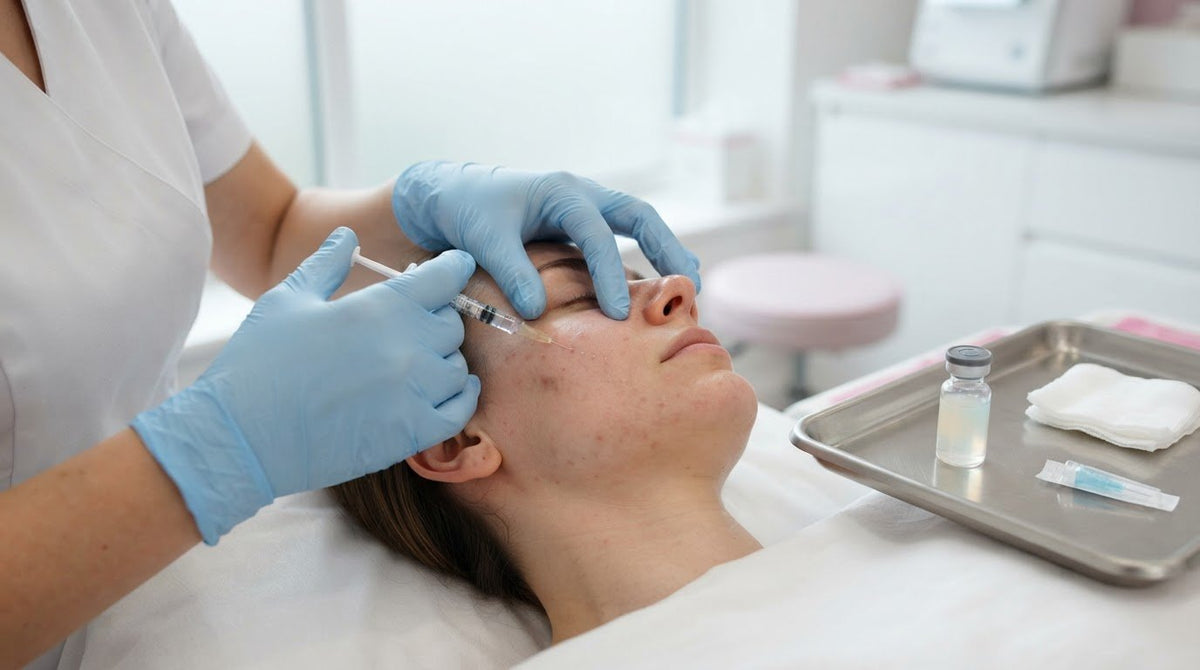
Polynucleotide treatments deliver DNA fractions into targeted skin layers using a fine needle or cannula. Their aim is to support skin quality, not create the structural volume associated with dermal fillers. For example, an eye-area protocol focuses on concerns affecting delicate skin. Treatment selection and technique must follow the product’s instructions and the patient’s treatment plan.
Who Should Consider the Best Polynucleotides UK?
Adults seeking support for skin quality, including concerns around the eye area, may consider whether this treatment suits their goals. It isn’t recommended for people under 18, those with uncontrolled autoimmune disease, or people who are pregnant or breastfeeding. These groups have insufficient supporting data or a stated health concern, so suitability needs careful consideration before treatment planning.
Are there any drawbacks to note?
Possible drawbacks include redness or swelling at injection points, and results develop gradually rather than providing immediate volume correction. Polynucleotides are not intended to replace toxin injections or dermal fillers, so they may not suit patients seeking the effects of those treatments. Clinics should not extend evidence for one treatment area or outcome to other concerns without supporting product-specific evidence.
Key Differentiators: How Do Polynucleotide Brands Compare?
Compare the product’s intended treatment area, formulation and evidence for the outcome your clinic plans to address. Match the product information to a specific patient profile, then assess whether its supporting evidence relates to that concern. Do not rank brands by name recognition alone: relevance depends on the planned use and documented product characteristics.
Understanding the Foundation: What Are Polynucleotides?
Polynucleotides are DNA-derived fractions used in injectable aesthetic products. Medical-grade formulations are usually sourced from salmon, but they are not dermal fillers designed to add volume. Their role focuses on skin quality; for example, polynucleotides may improve under-eye skin quality without the puffiness risk associated with some fillers.
Which polynucleotide injectable brands are available to UK clinics?
Examples discussed in UK clinic comparisons include LUMI-PN Face, LUMI-PN Eyes, Newest, Nucleofill and Plinest. Product-level names also include AMI Eyes and LUMI-PRO Eyes. Treat these as distinct formulations, not interchangeable labels: check each product’s intended area and instructions against your clinic’s planned use. Skin Candy supplies polynucleotides for professional use.