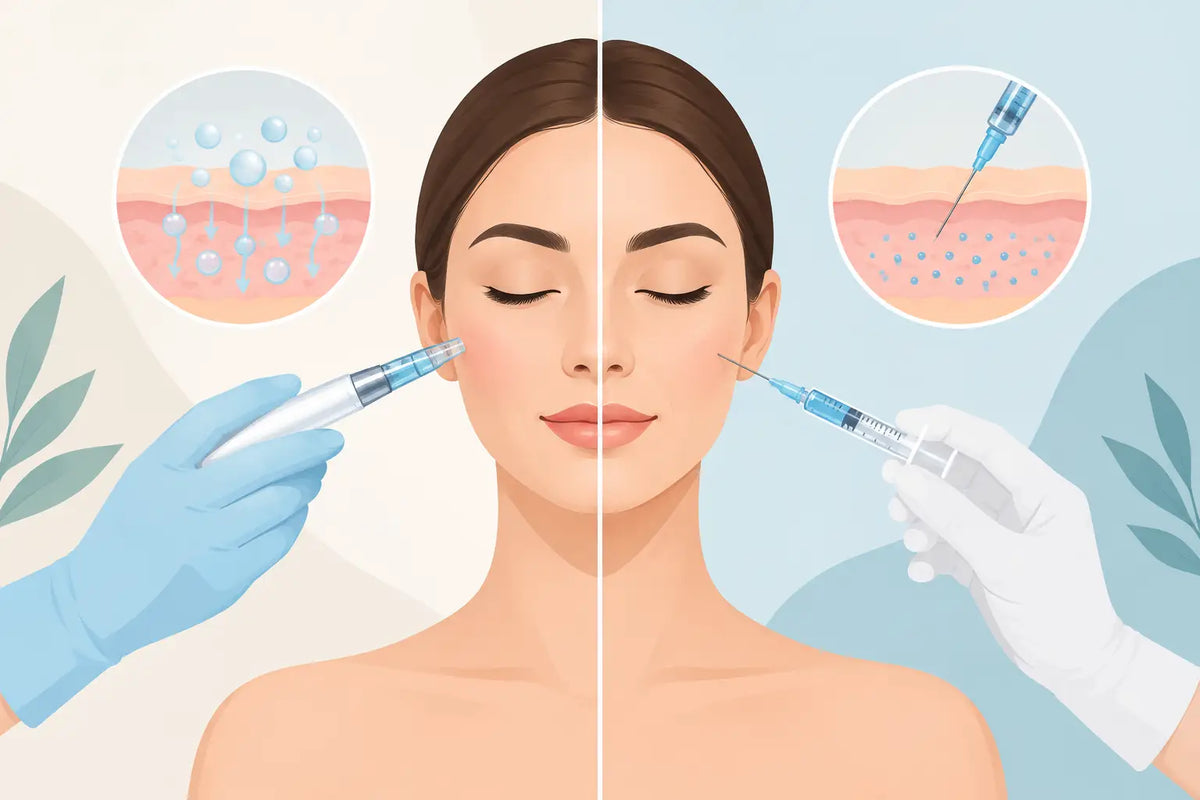
Skin Booster Versus Mesotherapy: Which Fits?
A client asks for “hydration injections”, but their concern is crepey cheeks, dullness around the mouth and make-up sitting poorly. That is where the skin booster versus mesotherapy conversation needs more than a quick category label. Both treatments can sit within a quality-led skin programme, yet their product formats, placement approaches and expected treatment journeys can be very different.
For clinics, getting the distinction right protects treatment planning, consultation clarity and stock decisions. It also helps avoid promising a result that a chosen product, protocol or client profile is not suited to deliver. The strongest result is rarely about using the trendiest injectable. It is about matching a professionally sourced product to sound assessment, competent technique and realistic goals.
Skin booster versus mesotherapy: the core difference
A skin booster is generally a product-led treatment category. Most commonly, it refers to injectable hyaluronic acid formulations designed to support skin hydration, quality and elasticity, rather than create the projection associated with conventional dermal filler. Depending on the product, the formulation may be lightly cross-linked, non-cross-linked or combined with other ingredients. It is typically placed according to the manufacturer’s intended technique and treatment area.
Mesotherapy is better understood as a technique or treatment approach, not one single product type. It involves delivering selected ingredients into superficial layers of the skin through multiple microinjections. The contents can vary considerably between ranges and protocols: non-cross-linked hyaluronic acid, vitamins, amino acids, peptides and other skin-conditioning ingredients may all appear in mesotherapy products.
That distinction matters. A skin booster is often chosen for a defined product technology and a structured protocol. Mesotherapy offers a broader cocktail-based approach, where the formulation and technique must be assessed together. There is overlap, particularly where a non-cross-linked HA product can be positioned in both conversations, but the terms are not interchangeable.
Start with the client’s skin story
Clients rarely arrive asking for a specific injection plane or ingredient profile. They want fresher-looking skin, a more rested appearance, improved hydration or a smoother glow before an event. The consultation should translate that language into a treatment plan without reducing every concern to “dry skin”.
Skin boosters can be a strong fit where the goal is overall skin quality and hydration, particularly for clients noticing a loss of bounce, fine textural change or a dehydrated appearance across the cheeks, lower face, neck, décolletage or hands. The desired effect is usually subtle and cumulative. This is not a replacement for restoring significant structural volume or treating deeper static lines with a filler-led plan.
Mesotherapy may suit a client whose concerns call for a targeted, superficial skin-conditioning approach and who understands that results can be gradual. It can be useful within a wider programme for dull-looking skin, uneven texture or areas that need a light-touch refresh. The exact suitability depends on the product’s indication, ingredients, treatment depth and the practitioner’s assessment.
Neither route is automatically the “better” treatment for mature, young, dry, oily or sensitive skin. A client with compromised barrier function, active inflammation, infection, uncontrolled skin disease, relevant allergies, pregnancy or breastfeeding, or other contraindications may need treatment postponed, modified or declined. A thorough medical history and informed consent are part of the service, not paperwork to rush through between appointments.
Product format changes the treatment plan
The most commercially attractive category is not always the right one to reach for. Product-led planning starts with the instructions for use, approved indication, storage requirements, ingredient list, syringe or vial format, needle or cannula compatibility, and recommended protocol. This is especially relevant in a market where similar-looking products can differ materially in rheology, concentration and intended placement.
What to check with skin boosters
For skin boosters, consider whether the product is intended for intradermal microdeposits, a specific injection pattern, or another manufacturer-defined administration method. Check treatment areas, recommended session spacing and maintenance guidance before presenting a course to the client. Some products are designed around two or three initial sessions; others follow a different rhythm.
Do not treat “low viscosity” as a shortcut for “suitable everywhere”. Periorbital work, thin skin and areas with greater oedema risk require careful judgement, product knowledge and an appropriately conservative approach. A beautiful glow-up should never come at the expense of safe, considered practice.
What to check with mesotherapy products
With mesotherapy, formulation scrutiny is even more central because there is no universal mesotherapy cocktail. Review every active ingredient, the stated route of administration and whether the product is supplied as a ready-to-use injectable rather than a topical or device-use solution. Never assume products can be mixed simply because their marketing language sounds complementary.
Where multiple products are being considered in one appointment, compatibility, sterility and accountability need to be clear. Using a single, traceable professional product according to its instructions may be more appropriate than creating an unvalidated blend. If a protocol is not supported by the manufacturer and falls outside your competence or insurance, it is not a commercial opportunity - it is a reason to step back.
Technique is not a footnote
The visible difference between a polished result and an avoidable complication is often in the planning behind the injection, not the name on the box. Skin boosters and mesotherapy can both involve multiple entry points, but the appropriate depth, injection volume, spacing and pattern are product-specific. Copying a protocol from social media or applying one technique across every face is not professional practice.
Practitioners should work only within their training, scope of practice, insurance and the product’s intended use. Appropriate aseptic technique, anatomical knowledge, emergency preparedness and clear post-treatment advice are essential. Document the batch number, expiry date, product used, treatment areas, technique, quantities and any immediate response. These details support safe aftercare and protect continuity when clients return for maintenance.
Clients should also understand normal short-term possibilities such as redness, tenderness, pinpoint bleeding, bruising, swelling and visible papules where relevant to the technique. They need accessible guidance on what to do after treatment and when to contact the clinic. Consent works best when it is specific: explain the planned product and approach rather than using broad language such as “skin injections”.
Build a course clients can understand
A single appointment can be useful, but many skin-quality treatments are better framed as a course with a review point. That is honest for the client and commercially sensible for the clinic. Instead of selling vague “glow”, set an outcome that can be evaluated: improved hydration appearance, smoother make-up application, healthier-looking texture or a more refreshed overall finish.
Photography, taken consistently with consent, can support objective review. Use the same lighting, positioning and timing where possible. This is more useful than relying on memory after several weeks, particularly where improvements are designed to look natural rather than dramatic.
Treatment sequencing is equally valuable. A client planning resurfacing, peels, microneedling, toxin, filler or another energy-based treatment may need a carefully timed programme rather than multiple procedures clustered together. Recovery time, skin reactivity, event dates and the client’s willingness to complete a course should shape the plan. The most profitable plan is one that is clinically appropriate, clearly communicated and likely to deliver a client experience worth returning for.
Stock with purpose, not just popularity
For a busy clinic, the skin booster versus mesotherapy decision also affects purchasing. A focused skin booster range can make menu design and staff training easier, especially when clients repeatedly request hydration and skin-quality treatments. Mesotherapy products may add flexibility for practitioners who are appropriately trained in the relevant approach and want options for tailored skin programmes.
Keep your ordering tight around the products your team understands and uses consistently. Factor in protocol demand, expiry dates, storage, treatment packs, needles, cannulas, antiseptic supplies and aftercare materials. A lower unit price is only a saving if stock moves safely and predictably. Reliable professional supply, traceability and efficient replenishment matter when a fully booked diary depends on having the right treatment kit ready.
Skin Candy’s practitioner-focused range can support clinics building a more considered skin-quality menu, but product selection should always follow training, manufacturer guidance and the individual client assessment.
The smarter question to ask
Rather than asking which treatment wins, ask what the client’s skin actually needs, what result is realistic and which product protocol supports that plan. Choose a skin booster when its specific formulation and treatment journey fit the brief. Choose mesotherapy when a suitable, compliant mesotherapy product and your trained technique offer the more appropriate superficial approach.
A confident recommendation does not need hype. It needs a clear rationale, excellent consultation and a treatment plan that makes the client feel looked after long after the initial glow has settled.