Patient safety in aesthetics: how AI and qualified care help
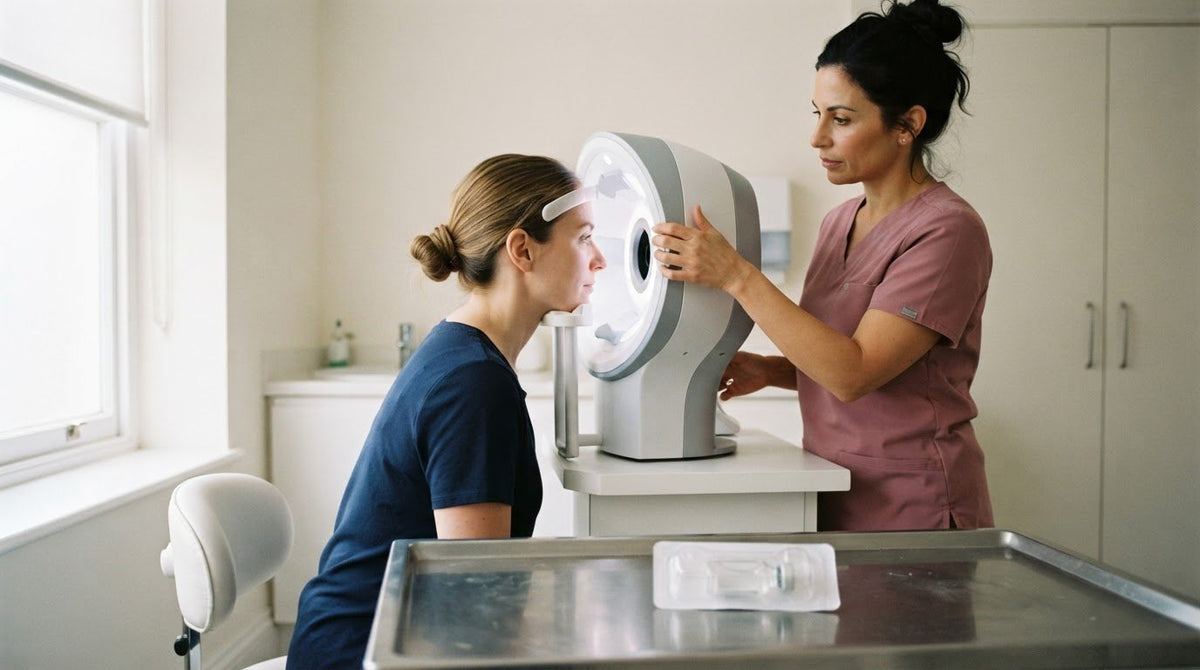
AI can support safer aesthetic decisions, but care still depends on qualified practitioners and sound clinical judgement. Ensuring patient safety in aesthetics means using AI to analyse skin texture, elasticity and volume loss as input for treatment planning, while augmented or virtual reality can support training without involving a live patient. These tools complement consultation, suitability assessment and follow-up.
You should expect clear information, a careful assessment and treatment in a suitable clinical setting. Technology can add useful insight, but it cannot replace a practitioner’s understanding of anatomy, medical history and potential complications.
This guide explains how AI can contribute to safer care, what to look for in a reputable UK clinic, and how qualified practitioners manage risk. It also explores why transparent conversations about benefits, risks and aftercare are central to public confidence.
Key Takeaways
- AI can add useful detail to treatment planning, while clinical judgement and practitioner expertise remain central to safe care.
- A thorough consultation and a sterile clinical setting are important signs of a clinic’s approach to infection control and suitability.
- Understand how qualified practitioners monitor patients, recognise complications and respond when concerns arise.
- Clear information about risks, benefits and aftercare helps patients make informed decisions and supports confidence in aesthetic care.
1. How does AI enhance patient safety in aesthetic procedures?
AI can analyse skin texture, elasticity and volume loss to inform treatment planning. For example, these assessments may help practitioners consider dermal filler placement or laser treatment. They add information, but do not replace clinical judgement, examination or discussion of suitability. A practical way to ensure patient safety in aesthetics is to treat technology as support for a qualified practitioner, not as a decision-maker.
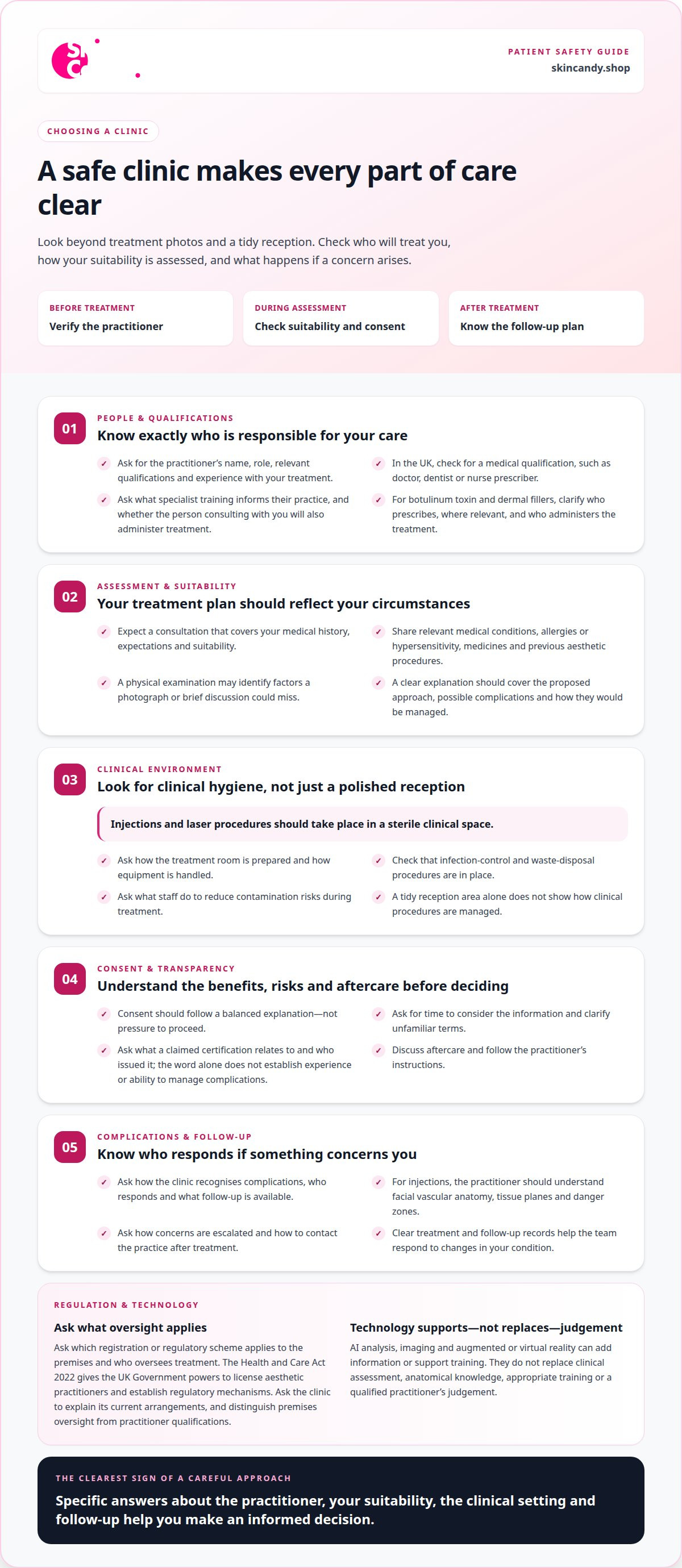
Before booking, establish who will perform the procedure. Ask for their name, role, relevant qualifications and experience with that treatment. In the UK, patients are advised to check for a medical qualification, such as doctor, dentist or nurse prescriber. Ask what specialist training informs their practice, and whether the person consulting with you will also administer the treatment.
To check whether a clinic is registered and regulated, ask which registration or regulatory scheme applies to its premises and who oversees the treatment. The Health and Care Act 2022 gives the UK Government powers to license aesthetic practitioners and establish regulatory mechanisms, according to UK Parliament. Ask the clinic to explain its current arrangements and distinguish premises oversight from practitioner qualifications.
For botulinum toxin and dermal fillers, establish who prescribes, where relevant, and who administers the treatment. Discuss each person’s qualifications, responsibilities and follow-up arrangements. A clinic’s name or treatment photographs do not tell you who will provide your care.
Before treatment, share your relevant medical history and expectations during the consultation. Discuss benefits, risks and aftercare, then follow the practitioner’s instructions. If treatment feels unsafe or a complaint remains unresolved, make a formal complaint to the practice and keep records of treatment details and communications. These practical steps help patients contribute to ensuring patient safety in aesthetics.
Augmented and virtual reality can help practitioners rehearse procedures without involving a live patient. Robotic-assisted technologies may support procedures such as hair transplants or laser resurfacing. These tools can aid practice, but appropriate training and anatomical knowledge remain essential. Ask how the practitioner’s training informs their use of technology and safety protocols.
2. How Can I Tell If an Aesthetic Clinic Is Safe and Reputable?
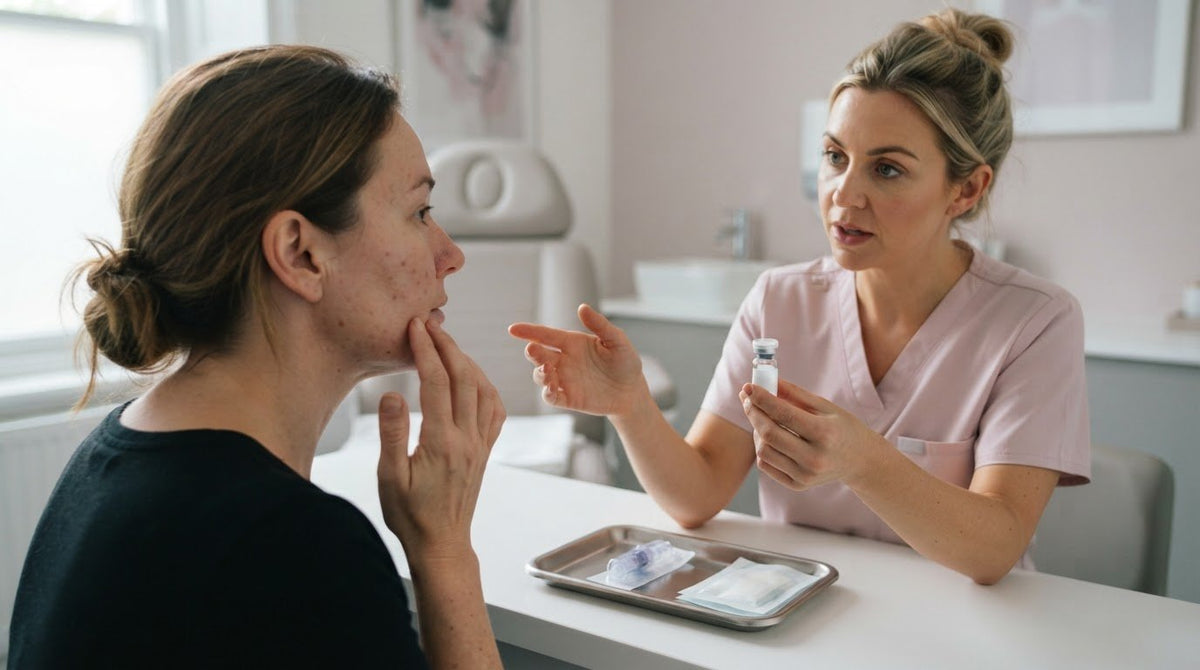
Before choosing a clinic, check who will perform the procedure, their relevant qualifications and their experience with that treatment. Ask how the consultation will assess your medical history, expectations and suitability. A clear answer should explain the proposed approach, possible complications and how the practitioner will manage them.
Consider the treatment environment, too. Injections and laser procedures should take place in a sterile clinical space, with infection-control and waste-disposal procedures in place. A tidy reception area alone tells you little about clinical practice. Ask how the treatment room is prepared, how equipment is handled and what steps staff take to reduce contamination risks.
Your assessment should cover more than the area you want treated. Share relevant medical conditions, allergies or hypersensitivity, medicines and previous aesthetic procedures. These details can affect suitability and outcomes. A physical examination may help the practitioner assess the treatment area and identify factors that a photograph or brief discussion could miss. Expect the plan to reflect your individual circumstances.
Consent should follow a balanced explanation of benefits, risks and aftercare, not pressure to proceed. Ask for time to consider the information and clarify unfamiliar terms. If a clinic mentions certification, ask what it relates to and who issued it. The word alone does not show a practitioner’s experience or ability to manage complications.
Medical expertise matters when an adverse event occurs. Ask how the clinic recognises complications, who responds and what follow-up arrangements are in place. A practitioner carrying out injections should understand facial vascular anatomy, tissue planes and danger zones. These skills are relevant to reducing risk and responding appropriately if a concern arises.
Finally, ask how practitioners maintain their knowledge through continuing professional development and relevant specialist education. Aesthetic medicine changes as techniques and safety protocols develop. A useful check is whether the practitioner can explain how recent learning informs their treatment choices, assessment process and complication management. Clear, specific answers help you judge the clinic’s approach before consenting.
3. How Do Qualified Aesthetic Practitioners Reduce the Risks of Complications?
Qualified practitioners combine clinical assessment with careful monitoring throughout cosmetic procedures. High-resolution ultrasound can help clinicians visualise blood vessels, nerves and facial fat pads before treatment. This information may support decisions intended to reduce complications such as vascular occlusion. Imaging is an additional aid, not a substitute for interpreting anatomy and choosing an appropriate treatment plan.
A clean clinic environment and consistent protocols support safer practice. Sterile, approved medical devices and treatment technologies form part of that approach. Practitioners should monitor patients during and after treatment to identify concerns and address issues promptly. Clear records of treatment and follow-up help the team understand what was done and respond to changes in a patient’s condition.
Managing complications also depends on preparation. The practice should have defined procedures for escalating concerns and ensuring the right practitioner responds. Patients need clear instructions on how to contact the practice after treatment and describe a problem. Staff should report adverse events and near misses, then use those reports to review safety protocols. Learning from an event can reveal where communication, monitoring or procedures need improvement.
Risks can affect physical health and psychological wellbeing. Practitioners should discuss both when explaining treatment, consent and aftercare. Insurance cover should address physical and psychological issues, as recommended for aesthetic practitioners. This supports responsible planning if a complication or distressing outcome occurs, although it prevents neither.
Continuous learning helps practitioners keep their knowledge and protocols current as techniques and technologies develop. Relevant education should inform how they assess patients, use imaging and manage complications. A clinic committed to a high standard of patient care makes these processes routine, rather than relying on the latest device alone. Ask how monitoring works, how concerns are escalated and how the team learns from near misses. Specific answers give you a clearer picture of how the practice maintains safety standards.
4. Public confidence and patient safety
Public confidence depends on clear information before, during and after aesthetic treatments. RIAMS recommends explaining each procedure’s benefits, risks and aftercare so patients can make an informed decision. Ask what outcomes are realistic, which adverse effects need attention, and what recovery involves. A thorough consent process gives patients time to understand these points and discuss concerns before agreeing to treatment.
Aftercare should include a practical route to advice, not just written instructions. Clinics should give patients access to their aesthetic practitioners during recovery so new symptoms can be discussed promptly. Remote monitoring apps can let patients share recovery photographs or videos. Practitioners may use these updates to identify possible complications before they worsen. This works best when patients know what to report and how the clinic will respond.
Honest communication matters because aesthetic procedures can have serious consequences. A 33-year-old woman died in the UK after a liquid Brazilian butt lift involving filler injections into the buttocks. The case underlines the importance of discussing treatment risks and suitability plainly, rather than treating every requested procedure as appropriate. Patients should be able to understand why a practitioner recommends a particular plan, or advises against one.
Confidence also depends on what happens when care falls short. Aesthetic practitioners should understand relevant cosmetic redress schemes and consider implementing one in their practice. A clear complaints process explains how concerns are recorded, reviewed and answered. Clinics can also build public trust by recording adverse events, learning from them and communicating changes to their safety protocols. These actions show accountability, not simply a claim to meet high standards.
For clinics reviewing their professional supplies alongside wider practice processes, explore aesthetic products. Product procurement supports clinic operations, while patient confidence depends on informed consent, suitable care and responsive follow-up.
Skin Candy
Skin Candy supports UK clinics and practitioners with professional aesthetic products for clinical practice. Once treatment suitability, practitioner qualifications and patient-care processes are in place, reliable access to appropriate consumables can help clinics manage procurement efficiently.
Its range includes Polynucleotides, Fat Dissolving Agents and Chemical Peels. These products form part of a wider professional supply range, giving clinics options to consider alongside their protocols and treatment plans. Product supply is separate from in-clinic treatment and does not replace practitioner assessment, training or patient follow-up.
For clinics reviewing their aesthetic product requirements, contact Skin Candy to discuss its professional range.
Make patient confidence part of everyday practice
Patient confidence grows through consistent decisions, not a single technology or product. Make safety part of routine clinic operations: align procurement with treatment protocols, keep clinical discussions clear, and ensure every patient understands the care pathway. This practical commitment gives teams a stronger foundation for ensuring patient safety in aesthetics.
For UK clinics reviewing professional product requirements, Skin Candy supplies premium dermal fillers and meso products. These options can support procurement planning, while treatment selection and patient care remain decisions for qualified practitioners within their clinical practice.
Contact Skin Candy to discuss your options and take the next step towards organised procurement. Keep patient needs and responsible practice at the centre of every decision.
Frequently Asked Questions
How does AI enhance patient safety in aesthetic procedures?
AI can analyse skin texture, elasticity and volume loss to inform treatment planning. For example, these assessments may help a practitioner consider whether dermal filler or laser treatment is appropriate. The technology provides information for professional judgement, not a standalone treatment decision. Ask how the practitioner interprets an AI assessment and how it fits with your clinical examination and agreed treatment plan.
How Can I Tell If an Aesthetic Clinic Is Safe and Reputable?
Look for a clinic that explains its processes clearly and gives you time to make an informed choice. Find out who is responsible for your care, what your written treatment plan includes, and how you can raise concerns during recovery. A reputable approach makes room for questions, explains why a treatment may not suit you, and avoids pressuring you to book or proceed.
How Do Qualified Aesthetic Practitioners Reduce the Risks of Complications?
Practitioners assess suitability, plan treatment around relevant anatomy and monitor patients during and after procedures. For injectable treatments, knowledge of facial blood vessels, tissue planes and danger zones can inform placement decisions. Practices should also record adverse events and near misses, then use those reports to improve procedures. Ask how the team escalates concerns and what follow-up arrangements apply.
What qualifications and training should an aesthetics practitioner have in the UK?
Patients are advised to look for a relevant medical qualification, such as doctor, dentist or nurse prescriber, and training appropriate to the procedure. Qualifications alone do not show how recently someone has developed their aesthetic skills or handled specific treatments. Ask about experience with the procedure, anatomical knowledge and complication-management education. For injectables, establish who prescribes and who performs the treatment.
What should happen during a safe aesthetics consultation and medical history assessment?
The consultation should cover your aims, medical conditions, medicines, allergies or hypersensitivity, and previous procedures. The practitioner can then assess suitability and explain the proposed approach, likely benefits, material risks and aftercare. Mention relevant changes in your health and ask how they affect the plan. Consent should be informed, with your questions answered before treatment begins.
What infection-control and hygiene standards should an aesthetics clinic follow?
Treatments such as injections and laser procedures should take place in a sterile clinical space with infection-control and waste-disposal procedures. Ask how the treatment room is prepared, how equipment is handled and how clinical waste is managed after your procedure. The clinic should use sterile, approved medical devices and follow relevant treatment protocols. Clear answers help show how hygiene is built into routine care.