Microneedling vs Chemical Peels: Which Wins?
A client asks for a brighter, smoother complexion before a wedding, holiday or big event. Another wants to soften acne scarring without committing to extended social downtime. Both may arrive asking for ‘a peel’ or ‘microneedling’, but the best protocol starts with the skin concern, barrier status, history and realistic recovery window - not the trendiest treatment on the menu.
For clinics, the microneedling vs chemical peels conversation is not about declaring one treatment the winner. It is about matching the mechanism to the indication, selecting professional-grade products responsibly and building treatment plans that clients can understand, afford and complete. Done well, both can be high-demand, repeatable services with visible glow-up potential.
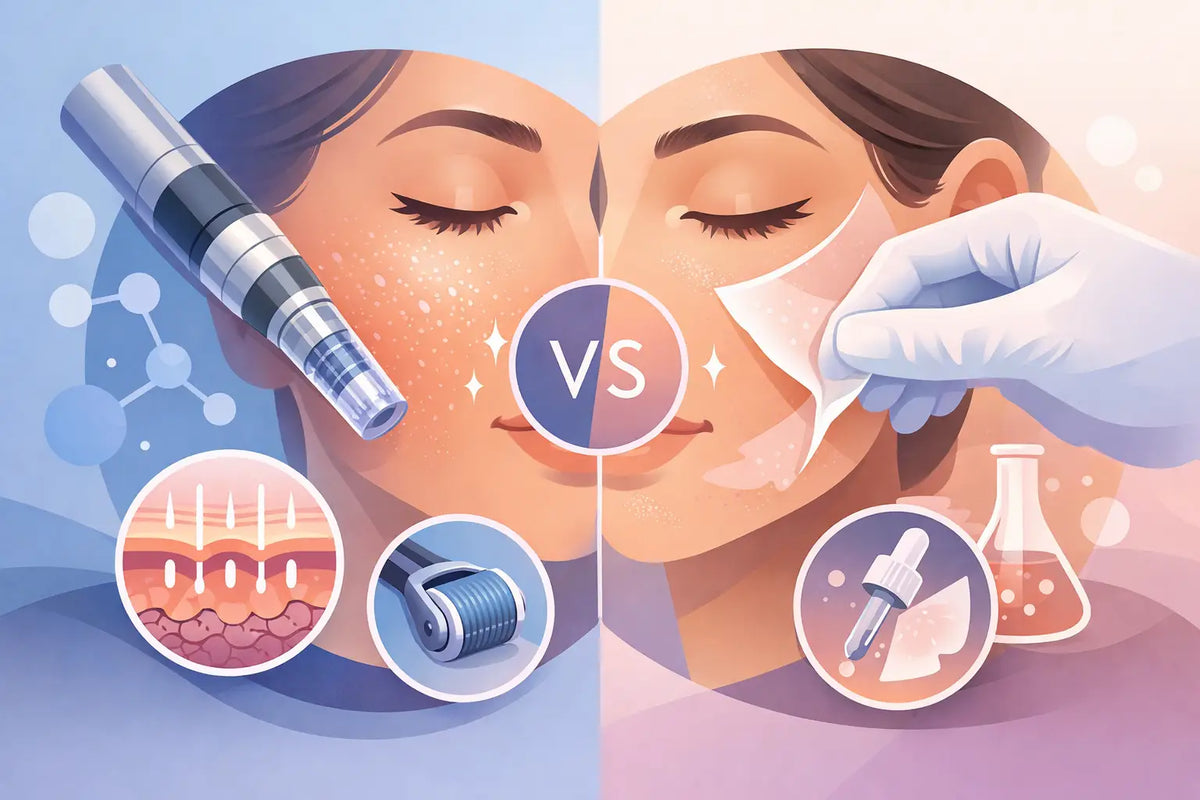
Microneedling vs chemical peels: the core difference
Microneedling creates controlled microchannels in the skin using a suitable professional device and sterile consumables. The aim is to trigger a wound-healing response that supports collagen and elastin remodelling, while also potentially improving the delivery of carefully selected topical products where appropriate to the device protocol and product instructions.
Chemical peels work through a different route. Acids or combination formulations create a controlled chemical exfoliation at a depth determined by the formulation, concentration, pH, application method, number of layers and skin response. Depending on the peel, the outcome may focus on surface radiance, congestion, pigment irregularities, texture or more substantial skin renewal.
In simple terms, microneedling is generally selected when dermal remodelling is the bigger conversation. Peels are often the sharper choice when epidermal turnover, clarity and tone are the immediate priority. There is overlap, of course. Both may improve the appearance of texture, fine lines and post-inflammatory marks, but they do not produce those changes in the same way.
When microneedling earns its place on the treatment menu
Microneedling has enduring commercial appeal because it speaks to concerns clients see every day in the mirror: enlarged-looking pores, uneven texture, fine lines and atrophic acne scarring. It is also easy for clients to grasp. The treatment is associated with collagen-focused skin improvement rather than a dramatic surface peel, which can make it attractive to those nervous about visible flaking.
For appropriate candidates, a course-based approach often makes the most sense. Collagen remodelling is not an overnight result, and honest consultation language protects both client expectations and clinic reputation. Explain that early radiance may appear quickly, while textural change and scar improvement need time, consistency and a treatment plan tailored to the individual.
Microneedling can be especially useful where the client has textural concerns but wants relatively manageable downtime. Temporary erythema, sensitivity and a tight or warm feeling are common after-effects, although their intensity varies with treatment parameters and individual skin response. A client who cannot tolerate any visible redness may still need a different option or a carefully scheduled appointment.
The trade-off is that not every concern responds best to needling. Active inflammatory acne, impaired barrier function, certain infection risks, a tendency towards problematic scarring and some medical histories require caution or exclusion. The practitioner’s consultation and contraindication process should lead the decision, not pressure to sell a course.
The consumables conversation matters
A polished microneedling service depends on more than the device. Sterile, compatible cartridges or needle modules, appropriate skin preparation, aftercare products and clearly documented protocols all support a professional client experience. Clinics should source products through reliable professional channels, check batch details and instructions for use, and avoid treating every serum as though it is suitable for post-needling application.
That last point is vital. Microchannels alter how products interact with the skin. Product sterility, intended use and manufacturer guidance matter. A ‘hero’ topical from the retail shelf is not automatically an appropriate companion to an invasive treatment.
Where chemical peels can deliver faster visible polish
Chemical peels are powerful treatment-menu workhorses because they can be positioned across multiple client goals. A well-chosen superficial peel may support brighter-looking skin, a more refined surface, clearer congestion-prone areas and a fresh pre-event glow. More active professional peel protocols can play a role in targeted programmes for photoageing, uneven tone and certain acne-related concerns, subject to training, product guidance and client suitability.
Clients frequently choose peels because the result can feel immediate. That does not always mean dramatic shedding. Many modern formulations are designed to create controlled renewal with little obvious peeling, while others produce visible desquamation. Neither experience is automatically better. The right result is the one that matches the client’s concern, tolerance and ability to follow aftercare.
For pigmentation-prone clients, chemical peeling demands thoughtful assessment. Skin type, previous post-inflammatory hyperpigmentation, recent sun exposure, current skincare and the peel’s mechanism all influence risk. A stronger approach is not necessarily a smarter one. Conservative escalation, disciplined homecare and clear sun-protection advice are often more commercially sustainable than chasing one aggressive session.
Peels are also not a shortcut around compromised skin. Active irritation, dermatitis flares, open lesions and unsuitable use of certain medications or actives can change the plan entirely. Clients should know that temporary sensitivity, tightness, redness and flaking can happen, and that picking at shedding skin risks an avoidable poor outcome.
Choosing by concern, not by hype
When a client presents with atrophic acne scarring, rough texture and early laxity concerns, microneedling may offer the more relevant mechanism. For dullness, superficial congestion and uneven-looking tone, a peel may be the cleaner first move. If melasma or persistent pigment is the concern, the answer becomes more nuanced: careful skin preparation, a conservative professional strategy and strong homecare compliance can matter as much as the in-clinic modality.
Age alone is not an indication. A 28-year-old with post-acne texture and a 52-year-old with photoageing may both be suitable for microneedling, just as both could benefit from a peel under the right protocol. Assess the skin in front of you, not a generic age bracket.
Budget and diary reality deserve a place in the conversation too. A client willing to commit to a structured course may be well suited to microneedling. Someone seeking an occasional radiance treatment before an event may favour a superficial peel. Treatment planning should feel like expert guidance, not a forced upsell.
Can clinics combine microneedling and chemical peels?
They can sit exceptionally well within the same skin programme, but they should not be treated as interchangeable or casually stacked. Sequencing depends on the peel type, needle depth, client skin condition, recovery response and the manufacturer’s instructions. Combining procedures too closely can increase irritation and compromise the very barrier function you are trying to improve.
A sensible programme may alternate modalities across separate appointments: for example, using peels to support clarity and surface refinement, then microneedling sessions to focus on texture and collagen-led improvement. The interval must be tailored, documented and adjusted according to how the client recovers. There is no universal timetable that replaces clinical judgement.
This approach can also create a more compelling long-term client journey. Rather than selling a single ‘miracle’ treatment, the clinic offers a clear pathway with checkpoints, photographs where consented, homecare review and honest assessment of progress. That is how one-off bookings become trust-led repeat business.
Protect results with consultation and aftercare
The most photogenic result can be undone by weak aftercare communication. Give clients clear, written guidance specific to the treatment performed. This should cover gentle cleansing, avoiding heat and friction where advised, pausing unsuitable active ingredients, strict broad-spectrum SPF use and when to contact the clinic. Do not rely on a rushed verbal handover at reception.
Practitioners should also maintain thorough records: consent, skin assessment, product and batch details, treatment settings or peel protocol, response during treatment, aftercare and follow-up. This is not paperwork for paperwork’s sake. It supports safer decision-making at the next appointment and demonstrates the standard clients expect from a serious aesthetics business.
Work only within your training, insurance and professional scope. Follow each manufacturer’s instructions for use precisely, maintain infection-control standards and refer where a client’s presentation falls outside an aesthetic treatment pathway. Great results begin with knowing when not to treat.
For a clinic building a results-led skin offering, the strongest choice is rarely microneedling or chemical peels. It is the confidence to prescribe the right one, at the right time, with the right stock and a plan your client is genuinely happy to follow.