
Managing client consent forms for aesthetic procedures
A signed form is only useful when it reflects the treatment and the client understands what they’re agreeing to. Client consent forms for aesthetic procedures in the UK should be tailored to each procedure, use clear language, and explain how the treatment is performed, its intended outcomes and limits, potential risks and side effects, including rare ones. Discuss each section with the client rather than treating a signature as the conversation.
That matters when your diary covers different treatments, practitioners or clinic and salon locations. A generic form can miss procedure-specific questions, while paper records can be harder to organise and may be lost or damaged.
This guide explains how to manage, complete and customise forms for different aesthetic treatments and locations. You’ll learn what to include, how to tailor questions to each procedure and how to send digital forms for clients to complete before appointments. It also covers aftercare guidance, image permissions and keeping forms organised and up to date.
Key Takeaways
- Keep forms organised by treatment and location so you can retrieve the right version for each appointment.
- Give clients time to complete forms, then review their answers and discuss any points that need clarification.
- Tailor questions to the procedure, covering relevant risks, expected outcomes, aftercare and image permissions.
- Send forms before appointments to help clients prepare and make better use of consultation time.
1. Managing forms for different treatments and locations
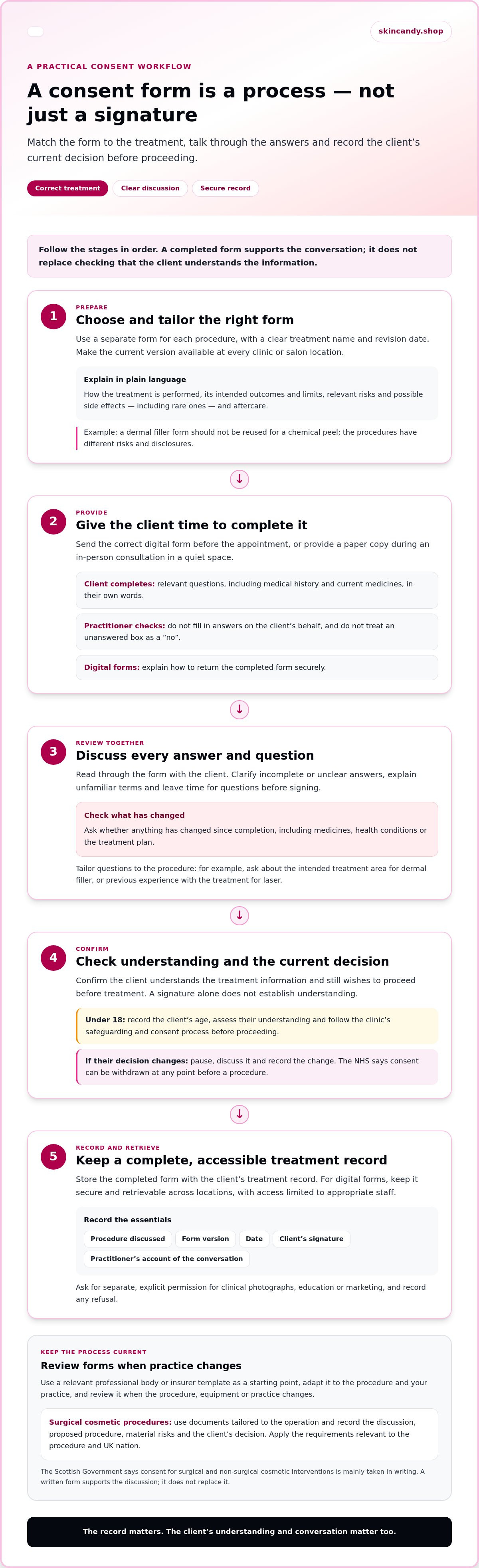
Use a separate consent form for each procedure, with the current version accessible at every clinic or salon location. Explain the treatment in plain language, including how it works, its intended outcomes, limitations, risks and possible side effects. For example, don’t reuse a dermal filler form for a chemical peel: the procedures involve different risks and disclosures. The Scottish Government says consent for surgical and non-surgical cosmetic interventions is mainly taken in writing. A written form supports the discussion, but does not replace it.
For non-surgical cosmetic procedures, build consent around the treatment, clear information and the client’s decision, while applying the legislation and professional standards relevant to the procedure and UK nation. A form alone cannot establish that the client understood the information. For a client under 18, record their age, assess their understanding and follow the clinic’s safeguarding and consent process before proceeding. Don’t treat a signature, or a parent’s involvement, as a substitute for checking the client’s understanding and applicable requirements.
Clients can change their mind after signing. According to the NHS, they can withdraw consent at any point before a procedure. Confirm their decision before treatment and record any change. For surgical cosmetic procedures, use documents tailored to the operation and record the discussion, proposed procedure, material risks and the client’s decision. Follow the requirements relevant to the procedure and location.
Keep the completed form with the client’s treatment record. Record the procedure discussed, form version, date, client’s signature and your account of the conversation. For digital forms, store the completed record securely and make it retrievable across locations. Ask for separate, explicit permission for clinical photographs, education or marketing, and record any refusal.
Use a relevant professional body or insurer’s template as a starting point, then adapt it to the procedure and your practice. Check that it explains the treatment, outcomes, limits, risks and aftercare in clear language. Review it when your procedure, equipment or practice changes. Discuss each section with the client, invite questions and document the answers before treatment.
2. Completing forms remotely or in person
Give clients a clear way to complete the form before treatment or at the clinic. You can email a digital form ahead of time or provide a paper copy during an in-person consultation. Either way, ask clients to read each section themselves and raise questions before signing. The completed form records information; it doesn’t replace a conversation about the proposed treatment.
For remote completion, send the correct form for the booked procedure and explain how to return it securely. Ask clients to answer every relevant question, including those about medical history and current medicines, in their own words. Discuss any unclear or incomplete response before deciding whether treatment can proceed. Don’t fill in answers on a client’s behalf or treat an unanswered box as a negative response. A consistent workflow for client consent forms for aesthetic procedures helps UK clinics prepare appointments without unnecessary steps.
At the appointment, review the form with the client and ask whether anything has changed since they completed it. Confirm updates to medicines, health conditions or treatment plans, for example. Explain unfamiliar terms and give clients time to ask questions. If a client changes their decision, pause and record the discussion.
For an in-person form, provide a quiet space and enough time to read it. Invite the client to complete their own details, then check that required sections are answered before the consultation moves forward. Whether the form is digital or paper, record the date, treatment discussed and practitioner involved. Store client consent forms for aesthetic procedures UK practitioners complete in the correct client record, with access limited to appropriate staff.
Use one consistent workflow across remote and in-person appointments: provide the relevant form, review responses, discuss questions, confirm the client’s current decision and save the completed record. Clinics refining their treatment workflow can also explore professional aesthetic supplies.
3. Customising questions for individual procedures
Start with a core form, then create a version for each procedure. Botox, dermal fillers, laser treatments, laser resurfacing and microneedling involve different processes, so one generic questionnaire can miss relevant details. Give every version a clear treatment name and revision date. This helps practitioners choose the right form and identify which version a client completed.
For each procedure, structure questions around the client’s decision. Ask what outcome they expect, what they understand about the treatment and whether they have questions about its limits. Explain how the procedure is performed and set out its specific risks, possible complications and side effects. Use plain language and explain technical terms rather than assuming the client understands them.
Tailor prompts to the treatment being considered. A dermal filler form should identify the intended treatment area and invite the client to describe relevant medical history. A laser form can ask about previous experience with that treatment and any concerns about the process. For microneedling, explain the planned procedure and ask the client to confirm they understand the information provided. These examples can guide the conversation, but they aren’t interchangeable checklists.
Separate shared questions from procedure-specific ones. Keep contact details and general medical history in a consistent section, then add relevant questions for each treatment. Use clear response options, such as “yes”, “no” or “please discuss”, and leave space for context. If an answer raises a concern, pause to discuss it rather than relying on the tick-box alone.
Before using a revised form, read it from the client’s perspective. Check that every question relates to the named procedure, uses clear language and supports a discussion of outcomes, risks and aftercare. Remove irrelevant prompts that could confuse the decision. Store the approved version separately from older copies, then review it when the treatment method, equipment or practice guidance changes. This keeps Botox, filler, laser and microneedling records distinct and easier to manage.
4. Sending forms to clients before appointments
Email the correct digital form before the appointment so clients can review it in advance. Include the treatment name, appointment details and a clear way to return the completed form. For example, a client booked for microneedling should receive the microneedling version, not a general template. Sending it ahead gives practitioners time to review responses and identify questions for the consultation.
Clients should receive treatment information before agreeing and have time to read and discuss it before the procedure. There isn’t one waiting period that fits every cosmetic appointment. Give clients space to consider the information, and don’t treat an emailed signature as a substitute for a proper conversation.
Make the email practical and easy to act on. Tell clients which sections to complete and how to flag questions they’d like to discuss. Ask them to answer based on their own circumstances, rather than leaving uncertain fields blank. Address any relevant change or concern during the consultation before proceeding.
When the form arrives, check that it matches the planned treatment and contains the client’s answers. Review any unclear responses with them in person or through an appropriate discussion before treatment. If the treatment plan changes, use the relevant form and revisit the information that informs consent. Keep the submitted form with the appointment record so the practitioner can refer to it during the consultation.
Sending forms early can save appointment time and avoid printing. Digital forms can also help practitioners manage records across treatments and clinic locations. Store completed forms securely, organise them by client and procedure, and make the right record available to the practitioner handling the appointment. Have a clear process for clients who cannot complete a digital form, so they can discuss and complete it in person instead.
Once your pre-appointment workflow is in place, browse aesthetic products to support your clinic’s treatment planning.
Skin Candy: Lumi Meso
Skin Candy supplies Lumi Meso, a product option for aesthetic practitioners planning clinic stock alongside their treatment workflows. If your practice uses consent forms tailored to individual procedures, keeping product and treatment records clearly organised can support consistent appointment preparation. Consent remains a separate process: explain the proposed procedure, discuss relevant risks and aftercare, and record the client’s decision before treatment.
Skin Candy also supplies Polynucleotides, Fat Dissolving Agents and Chemical Peels. These product categories can help practitioners organise procurement around the treatments they provide, while keeping each procedure’s consent documents distinct. Choose the relevant category for your clinic’s requirements and maintain clear records of what is planned for each appointment.
To discuss your requirements, contact Skin Candy or visit skincandy.shop.
Build a consent process your clinic can maintain
Make consent management part of your clinic’s operating routine, not a task squeezed into the minutes before treatment. Give responsibility for maintaining forms to a named team member, and make sure colleagues follow the same process across appointments. A clear routine helps your practice stay organised as its treatment menu and appointment schedule evolve.
Treat client consent forms for aesthetic procedures in the UK as one part of a wider plan for clinic readiness. Product procurement is a separate decision: Skin Candy supplies dermal fillers, meso products and polynucleotides for aesthetic practitioners. Keep purchasing decisions and consent discussions distinct, so product choice never replaces an informed conversation with the client.
Set your next step around the needs of your practice. Contact Skin Candy to discuss your needs and explore products relevant to your clinic. A consistent, thoughtful process gives your team a practical foundation to keep improving.
Frequently Asked Questions
What information should a UK aesthetic procedure consent form include?
Include the client’s details, proposed procedure and treatment area, plus the practitioner’s name and date of discussion. State the intended outcome and limitations, and leave space to record questions, agreed changes and the client’s decision. For example, if the planned area changes during consultation, update the record before treatment. Keep image-use permission separate from consent to the procedure.
What are the consent requirements for Botox and dermal fillers in the UK?
For Botox and dermal fillers, obtain informed consent specific to the planned treatment before proceeding. Explain the intended effect, limitations, relevant risks, alternatives and aftercare in language the client understands. Allow questions and record their decision. A generic injectable form may miss differences in treatment area, technique or product, so tailor the discussion and documentation to the appointment.
What risks, side effects, alternatives and aftercare should consent forms explain?
Explain risks and side effects relevant to the specific procedure, including uncommon complications, rather than relying on broad phrases such as “standard risks”. Set out realistic outcomes and alternatives, including delaying or declining treatment. Give practical aftercare instructions that match the procedure, such as what to do if recovery differs from expectations and how to raise concerns with the treating practitioner. Discuss these points before consent.
How should practitioners assess capacity and obtain informed consent from clients under 18?
Record the client’s age, assess their understanding and follow the clinic’s safeguarding and consent process before proceeding. Discuss the treatment and its risks, check that the client understands, and don’t treat a signature or parental involvement as a substitute for that assessment.