
How to Deal With Difficult Aesthetic Clients and Set Boundaries
A difficult client conversation needs a clear process, not an improvised response. If behaviour escalates, pause the service, acknowledge the concern, clarify the immediate issue, move to a private space if appropriate, and explain the next step. Dealing with difficult aesthetic clients also means recognising when expectations or behaviour make treatment unsuitable.
A calm conversation may resolve a concern, but repeated conflict can affect your team, clinic and quality of care. Setting a boundary is not about dismissing a client. It keeps communication respectful and makes the next step clear for everyone.
This guide explains how to set expectations from the outset, respond to complaints in stages, and keep a factual record of conversations and outcomes. It also covers when treatment should not proceed and how to end the professional relationship clearly, including what to communicate about ongoing treatment, administration and future contact.
Key Takeaways
- Pause an escalating interaction, clarify the concern and state a specific next step before deciding how to proceed.
- Use consultation to understand the client’s goals and explain realistic treatment outcomes before treatment begins.
- Keep a factual record of concerns, communications, decisions and follow-up actions.
- If the relationship must end, communicate the decision clearly, address outstanding administration and set a boundary for future contact.
Applying tiered resolution and boundary-enforcement policies
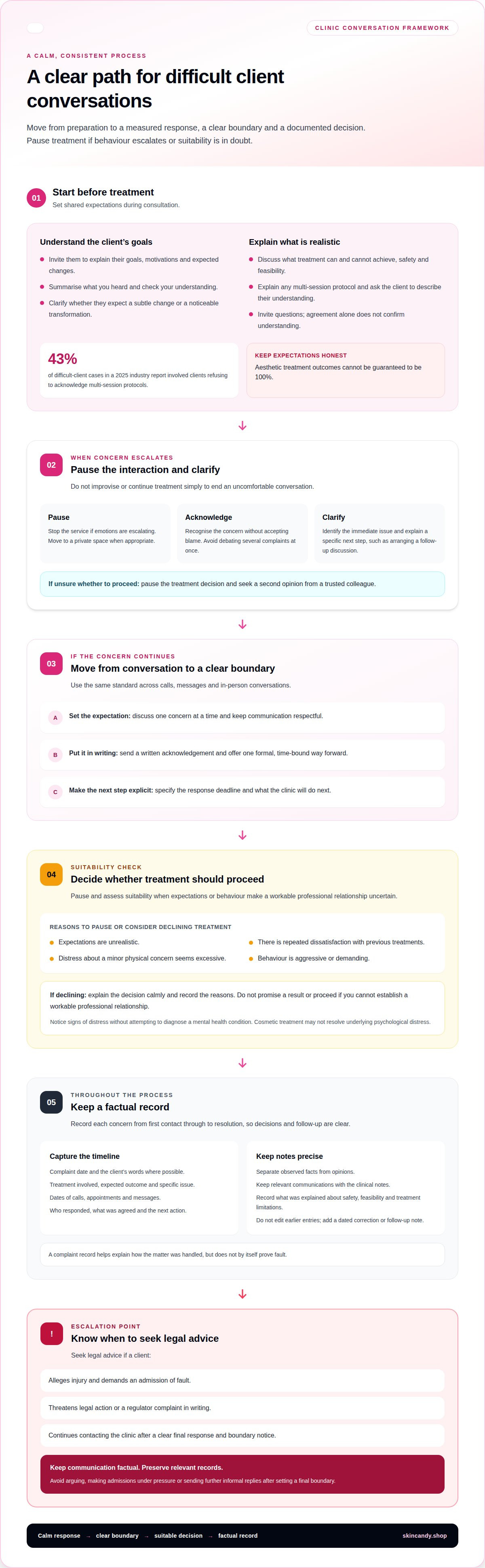
Use the same escalation path for each concern, moving from clarification to a firm decision. A consistent approach to dealing with difficult aesthetic clients starts with a prepared response, not an improvised one.
-
Apply tiered resolution policies
Start with a conversation, then move to a written response if the concern continues. Acknowledge the concern and clarify the immediate issue. Pause the service if emotions are escalating, and move to a private space when appropriate. State the next step plainly, such as arranging a follow-up discussion. Practise this sequence with staff through role-play based on common clinic situations. Avoid debating several complaints at once.
-
Set clear client boundaries
Set out the communication and conduct you expect, then explain what will happen if the boundary is crossed. For example, ask the client to discuss one concern at a time and keep messages respectful. If the issue persists, send a written acknowledgement and offer one formal, time-bound way forward. Specify the response deadline and what you will do next. Apply the same boundary across calls, messages and in-person conversations.
- Pause before responding to aggression or demands. Acknowledge the concern without accepting blame, clarify what needs attention now, and explain what happens next. When dealing with difficult aesthetic clients, do not continue treatment simply to end an uncomfortable conversation. If you are unsure whether to proceed, seek a second opinion from a trusted colleague.
- Consider declining treatment if expectations are unrealistic, dissatisfaction with previous treatments is repeated, or distress about a minor physical concern seems excessive. Aggressive or demanding behaviour is another reason to pause and assess suitability. Explain your decision calmly and record the reasons. Do not promise a result or proceed if you cannot establish a workable professional relationship.
- Seek legal advice if a client alleges injury and demands an admission of fault, threatens legal action or a regulator complaint in writing, or continues contacting the clinic after a clear final response and boundary notice. Keep communications factual and preserve relevant records. Avoid arguing, making admissions under pressure or sending further informal replies after setting a final boundary.
Building trust and setting treatment expectations during onboarding
Use onboarding to understand the client’s goals, motivations and expectations. Clarify what treatment can achieve before deciding whether to proceed.
-
Build rapport through consultations
Begin with a thorough consultation and invite the client to explain their goals. Ask why they want treatment and what physical and psychological changes they expect. Listen for details that could shape their expectations or satisfaction. Then summarise their goals in your own words and check that you have understood correctly. For example, clarify whether they expect a subtle change or a noticeable transformation. This gives both parties a shared basis for discussing suitability.
-
Manage treatment expectations
Explain clearly what the proposed treatment can and cannot achieve. Discuss safety and whether the desired outcome is feasible before proceeding. If results depend on multiple sessions, explain the protocol and ask the client to describe their understanding. A 2025 industry report states that 43% of difficult-client cases involved clients refusing to acknowledge multi-session protocols. Also discuss how budget or physical factors could limit outcomes. Don’t treat a client’s agreement as understanding; invite questions and clarify any mismatch.
-
Consider body dysmorphic disorder risks
Look for signs of intense distress about a minor physical concern, but do not attempt to diagnose a mental health condition. Ask what the client hopes treatment will change and whether their expectations remain focused on one feature. If distress seems excessive, or the requested change is unlikely to address their concern, pause the treatment decision. Cosmetic treatment may not resolve underlying psychological distress and could leave the client dissatisfied. Prioritise suitability and consider declining treatment if expectations remain unrealistic.
Documenting complaints, timelines, communications, and outcomes
Record each concern from first contact through to resolution. Clear notes help your clinic track decisions, explain treatment limitations and respond consistently.
- Log the complaint promptly, using the client’s own words where possible. Record when it arrived, the treatment involved, the outcome they expected and the specific issue raised. Add dates for calls, appointments and messages, then note who responded and what was agreed. For example, distinguish “results are slower than expected” from a concern about pain or a visible change. A dated, factual timeline makes the sequence easier to follow.
- Use a consistent process for handling UK complaints. Acknowledge the concern, identify the issue, record your response and document the agreed next action. Keep relevant communications with the clinical notes, and distinguish observed facts from opinions. A complaint record helps explain how the matter was handled, but does not by itself prove fault. Do not edit earlier entries; add a dated correction or follow-up note instead.
- Communicate treatment limitations in plain, specific language. Record what you explained about safety, feasibility, likely progress and factors affecting the outcome. Aesthetic treatment outcomes cannot be guaranteed to be 100%. UK-facing treatment information should describe what a procedure can and cannot achieve, without promising a particular result. Note the client’s questions and understanding, such as whether they understand that a multi-session protocol may be required.
- Document your decision if you decline treatment or recommend another step. Do not proceed if expectations remain unrealistic, dissatisfaction with previous treatments is repeated, distress about a minor concern seems excessive, or behaviour is aggressive or demanding. If you are unsure, record the concern and seek a second opinion from a trusted colleague. Include the reason, what you explained, any referral recommendation and the client’s response. These details support clear, consistent follow-up.
Ending a client relationship professionally
- Decide whether continuing the professional relationship is workable. Consider ending it if expectations remain unrealistic, dissatisfaction keeps recurring, or communication becomes aggressive. First review the treatment history and complaint record. Distinguish an isolated misunderstanding from a repeated pattern. If you are unsure whether to proceed, seek a trusted colleague’s second opinion before deciding.
- Send a clear written message confirming the end of the professional relationship. Acknowledge previous conversations and summarise the concern without assigning blame. State directly that treatment will not continue, then give a concise reason, such as an ongoing mismatch between expected results and feasible outcomes. Avoid vague wording that suggests the decision might change. Keep the tone neutral and professional.
- Address outstanding administration in the same message. Identify any appointment that needs cancelling and explain any remaining practical steps. If a complaint is unresolved, state how your final response addresses it. Make sure the client knows what happens next. Keep each point specific, factual and consistent with the clinic’s records.
- Set a clear communication boundary. Explain which channel to use for necessary administrative follow-up and what subjects you will address. For example, you might limit further contact to arranging collection of records or resolving an outstanding matter. Do not invite open-ended discussion after confirming your decision. Apply the same boundary to calls, emails and messages.
- Keep the termination message with the consultation notes, complaint timeline and previous responses. Record when you sent it and any reply received. If the client contacts the clinic again, compare their message with the boundary already set. Respond only to necessary practical matters, and avoid restarting arguments about the treatment decision.
- Seek legal advice if the client alleges injury and demands an admission of fault, threatens legal action or a regulator complaint in writing, or continues contacting the clinic after a clear final response and boundary notice. Preserve relevant messages and notes. Do not make admissions under pressure or send an angry reply. A concise, documented final response keeps the clinic’s position clear.
Skin Candy: Lumi Meso
Skin Candy supplies Lumi Meso to clinics planning their professional aesthetic product procurement. It is a practical next step once your clinic has reviewed its treatment protocols and identified the products needed for its service mix.
Alongside Lumi Meso, Skin Candy supplies polynucleotides, fat dissolving agents and chemical peels for professional clinic use. These products do not replace consultation, clear expectations or appropriate client-care decisions. Align procurement with the treatments your clinic plans to provide and its established processes.
If you are arranging clinic supplies, visit skincandy.shop to explore the range.
Build a more consistent clinic experience
A clear boundary can protect the quality of future client interactions. Make your next step practical: review your clinic’s procedures, identify where staff need clearer guidance, and keep the approach consistent across the team. A steady process for dealing with difficult aesthetic clients helps you make decisions deliberately rather than under pressure.
Operational planning matters too. Align product procurement with the treatments your clinic intends to provide and its established processes. Skin Candy supplies professional aesthetic products and polynucleotides for clinical use. Keep product selection separate from decisions about client suitability, treatment expectations and ongoing care.
For your clinic’s supply requirements, contact Skin Candy to discuss your needs. Keep building a professional environment where clear communication and sound planning support confident decisions.
Frequently Asked Questions
How can aesthetic practitioners handle difficult clients professionally?
Keep the conversation focused on the client’s specific concern and the next practical decision. Ask, “What would you like us to address first?” Then listen without interrupting and summarise the point before replying. If the client raises several issues, agree to take them one at a time. Do not match their volume, argue about motives or make promises just to end the conversation.
How can an aesthetics clinic de-escalate complaints?
Pause the interaction and reduce pressure before discussing solutions. If others can hear, offer a private space without making the client feel surrounded by staff. Use a steady voice, acknowledge the impact of their concern and ask what happened from their perspective. For example, clarify whether they are reporting discomfort, a visible change or dissatisfaction with progress. Address immediate safety concerns before discussing service recovery.
What boundaries should aesthetic practitioners set with clients?
Set boundaries around respectful conduct, communication channels and the subjects staff can address. Explain how clients should raise concerns, who will respond and how urgent clinical matters are handled. Make clear that abuse or threats will end the conversation, while a practical route remains open for relevant follow-up. Apply the same expectations to reception, clinicians and written messages so clients receive a consistent response.
How should clinics respond to dissatisfied clients or refund requests?
Acknowledge the request, review the appointment record and establish what the client believes went wrong. Compare their concern with the treatment discussed, the documented outcome and the clinic’s stated terms. Explain your decision in plain language and address any separate clinical concern appropriately. Do not offer a refund, repeat treatment or another remedy before assessing the facts and applicable terms. Record the request and response.
How should clinics document consultations, consent and complaints?
Create a dated record for each consultation, consent discussion and complaint. Note the client’s stated goals, the treatment discussed, material limitations explained, questions raised and their recorded decision. Keep the relevant consent document with the clinical record, and log complaint messages alongside your response. If details change, add a dated entry rather than replacing earlier notes. This creates a clear account of what was discussed and when.