Fat dissolving injections for targeted areas and expected results
Fat dissolving injections are for contouring, not weight loss. The right fat dissolving injection techniques depend on the product and area being treated. The agent is injected into the fat layer to break down fat cells, making treatment more suited to small, localised deposits than overall weight reduction.
If you’re considering treatment, it’s reasonable to want clear information about what happens and what changes to expect. Fat dissolving injections can target specific areas without an incision or general anaesthetic, but they aren’t a substitute for weight-loss treatment.
This guide explains how the injections work, who they may suit and which areas may be treated. It also covers treating multiple areas, factors that shape a treatment plan, possible side effects and the kind of results to expect over time.
Key Takeaways
- Understand how treatment planning accounts for different areas, including why sessions are generally spaced several weeks apart.
- Assess whether localised, stubborn fat is your concern; these injections are not a weight-loss or obesity treatment.
- Set realistic expectations by considering the product, treatment area and amount of fat, which all affect the number of sessions and the results.
- Weigh the appeal of targeted contouring without an incision or general anaesthetic against possible swelling, bruising, pain or tenderness.
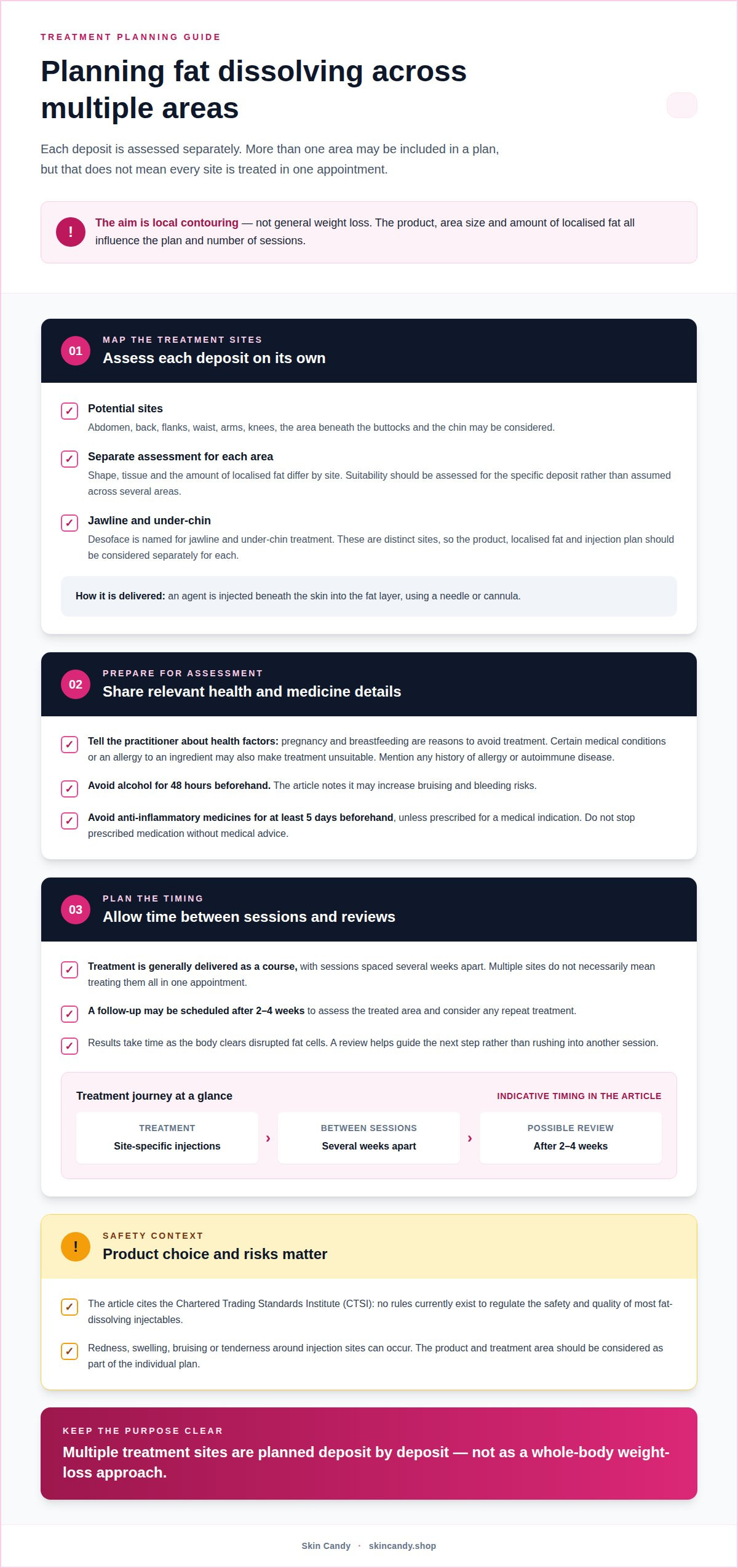
Can I treat multiple areas at once?
A treatment plan can cover more than one area, but the sites and timing need individual assessment. “Fat dissolving” does not itself mean an injectable ingredient has UK approval for cosmetic fat reduction. The Chartered Trading Standards Institute (CTSI) says no rules currently exist to regulate the safety and quality of most fat-dissolving injectables.
Injection procedure and treatment sites
The procedure involves injecting beneath the skin into the fat layer, using a needle or cannula. Possible sites include the abdomen, back, flanks, waist, arms, knees and area beneath the buttocks. For multiple areas, each deposit is considered separately rather than treating the body as a weight-loss target. The number of sessions depends on the product, area size and amount of fat.
Jawline and under-chin treatment
Desoface is named for jawline and under-chin treatment. These are distinct sites, so suitability and the injection plan should be considered separately for each. The area, amount of localised fat and product used all shape the approach. Redness, swelling, bruising or tenderness around injection sites can occur after treatment.
Preparation matters when planning treatment across several sites. Avoid alcohol for 48 hours before treatment, as it may increase bruising and bleeding risks. Avoid anti-inflammatory medicines for at least 5 days beforehand unless they’re prescribed for a medical indication. Don’t stop prescribed medication without medical advice; share relevant medicines and health details during the assessment.
Multiple areas don’t necessarily mean treating them all in one appointment. Fat-dissolving treatment is generally delivered as a course, with sessions spaced several weeks apart. Follow-up may be scheduled after 2-4 weeks to assess the treated area and plan any repeat treatment. Results take time to develop as the body clears disrupted fat cells, so a review helps guide the next step rather than rushing into another session.
Treatment suitability and weight-loss limitations
Fat dissolving injections are intended for localised deposits, not general weight loss. Suitability depends on the deposit, treatment area and relevant health factors.
Contraindications to treatment
Pregnancy and breastfeeding are reasons to avoid treatment. Certain medical conditions or an allergy to an ingredient can also make injections unsuitable. A history of allergy or autoimmune disease may affect the assessment, so share this information before a treatment plan is made.
Suitability also depends on the tissue being treated and the product’s intended use. These injections aren’t a treatment for obesity or a substitute for changes aimed at overall weight loss. The goal is to address a specific fat deposit, not reduce body weight generally.
Abdominal fat treatment suitability
Abdominal treatment is intended for a small, localised pocket of fat rather than a larger area of overall weight gain. A common candidacy measure is being within one stone of recommended body weight and being able to pinch around 3 cm of fat at the site. These measures help distinguish a targeted deposit from a weight-loss concern.
The amount of tissue and size of the area also affect suitability and how many sessions may be considered. A larger abdomen doesn’t automatically mean more injections are appropriate. The objective is local contouring, not substantial weight reduction.
Suitable treatment areas
Potential treatment sites include the abdomen, back, flanks, waist, arms, knees and area beneath the buttocks. The chin is another possible area. Each site differs in shape and the amount of underlying fat, so suitability is assessed for the specific deposit rather than assumed across several areas.
Fat dissolving injections are most relevant when diet and exercise haven’t shifted a small localised pocket. They aren’t suitable as a general approach to weight loss. For practitioners reviewing treatment supplies, professional aesthetic products can be considered alongside the intended treatment area and patient criteria.
What results are expected from fat dissolving?
Fat dissolving injections target localised fat, not overall weight. Many formulations contain deoxycholate, which disrupts fat cells’ outer membranes. The body then clears the affected cells through the lymphatic system. Some abdominal fat reduction may appear within a week, whilst contour changes can become noticeable after 2-4 weeks. The treatment area and amount of fat affect the outcome.
There’s no single session count for every treatment. The product, deposit size and amount of fat all affect how many sessions may be needed. Fat cells destroyed by treatment are described as permanently gone when a healthy, balanced lifestyle is maintained. Remaining fat cells can still change as body weight changes, so treatment doesn’t prevent future changes in contour.
Redness, swelling, pain and bruising around injection sites are common effects. Mild to moderate pain can occur, along with numbness, hardness or lumpiness in the treated tissue. These effects often settle within a few days; swelling, redness or tenderness can take up to a week to subside. Recovery varies by treated area and individual response.
Cold compresses can be applied in 15-minute intervals during the first 24 hours. Avoid strenuous physical activity for 24-48 hours after abdominal treatment, and avoid non-steroidal anti-inflammatory medicines for the first 48 hours. Follow the treating professional’s aftercare instructions, particularly if symptoms worsen rather than improve.
More serious complications include infection, nerve damage, allergic reactions and uneven results. Increasing pain or worsening symptoms after an injection warrant medical advice. In the UK, the Chartered Trading Standards Institute (CTSI) says no rules currently exist to regulate the safety and quality of most fat-dissolving injectables. Careful consideration of product choice and treatment risks is therefore important.
Benefits of fat dissolving injections
For a small, stubborn pocket, the main benefit is targeted contouring rather than general weight reduction. Fat-dissolving injections work on localised deposits, such as a defined area beneath the chin or on the abdomen. This may suit someone whose weight is stable but who wants to address a specific contour concern.
The procedure doesn’t require an incision or general anaesthetic. It’s a non-surgical option compared with an operation, although injections still involve needles and can cause side effects. Swelling, redness, bruising and tenderness are possible, so “non-surgical” doesn’t mean risk-free or recovery-free.
Another benefit is that the body clears disrupted fat cells through the lymphatic system. Changes develop over time rather than appearing immediately, and the amount of reduction depends on the product, treated area and fat deposit. A treatment plan can focus on one localised pocket instead of aiming to change overall body weight.
For a UK safety perspective, the Chartered Trading Standards Institute (CTSI) says no rules currently exist to regulate the safety and quality of most fat-dissolving injectables. Fat-dissolving injections should be carried out by an experienced medical professional. Product choice and injection technique matter because they affect both the intended result and potential complications.
In the UK, cost varies with the product, treated area and number of sessions in the plan. Compare the full treatment course rather than just the price of one appointment; no single cost applies to every patient or treatment area.
Fat dissolving may suit people seeking focused contouring without surgery, but it isn’t a weight-loss method. Consider the targeted benefit alongside swelling, bruising and other possible effects before deciding whether it fits your concerns. For clinic teams sourcing products for aesthetic practice, browse professional aesthetic supplies.
Skin Candy: Fat Dissolving Agents
Skin Candy supplies Fat Dissolving Agents to aesthetic practitioners sourcing products for clinic use. Practitioners can assess the intended treatment area and plan the procedure, then consider whether these products fit their requirements.
Keep product choice aligned with the intended use and the practitioner’s treatment protocol. Skin Candy also offers Lumi Meso, Polynucleotides and Chemical Peels for clinics sourcing other professional aesthetic products.
For a focused procurement decision, identify the product category your practice needs and how it supports planned treatments. Contact Skin Candy to discuss Fat Dissolving Agents and your requirements.
Plan your next clinic decision
Turn your interest in fat dissolving injection techniques into a considered product decision for your clinic. Match the products you source to your practice’s protocols, intended use and the needs of the professionals delivering treatment. A clear procurement process keeps product selection connected to clinical planning.
Skin Candy offers Fat Dissolving Agents, alongside Lumi Meso and Polynucleotides. These options support clinics sourcing professional aesthetic products across different treatment categories. Focus on the category relevant to your planned services, then consider how it fits your existing product range.
For the next step, contact Skin Candy to discuss products for your clinic’s treatment plans. Make your decision at a pace that suits your practice, with the information you need to plan confidently.
Frequently Asked Questions
How does fat dissolving work?
Many formulations contain deoxycholate, which disrupts the outer membrane of fat cells in the treated area. The body then clears affected cells through the lymphatic system, so changes develop gradually rather than during the appointment. The fat dissolving injection techniques used depend on the product and treatment area. This action is local: it targets the injected deposit, not fat throughout the body.
How many sessions will I need?
The number of sessions depends on the product, area size and amount of localised fat. A course may be planned in stages, with a review between appointments to assess the area’s response before deciding on further treatment. For example, a small deposit and a larger treatment area may need different plans. There isn’t one session count that applies to everyone.
What does a fat dissolving injection do?
The treatment is used to reduce a small, targeted pocket of fat, such as a defined area beneath the chin. Unlike a procedure that physically extracts tissue during the appointment, injections trigger a process in the treated area, and the body clears affected cells over time. The aim is contouring, not general weight reduction or treatment for obesity.
Does the procedure hurt?
Mild to moderate pain is expected, and people may feel discomfort as the needle is inserted. Tenderness, swelling or bruising can follow and may cause temporary discomfort. Numbing cream or a cold pack may help ease it. The injection technique and treated area can influence the experience, so follow the treating professional’s aftercare advice and seek help if symptoms worsen.
Who is an ideal candidate?
A suitable candidate is generally someone seeking to address a small, localised fat deposit rather than lose weight overall. The assessment should consider the treatment area, medical history and possible ingredient allergies. Pregnancy and breastfeeding are reasons to avoid treatment; certain medical conditions may also affect suitability. Someone seeking a solution for obesity or substantial weight loss needs a different approach.
Are the results permanent?
Fat cells destroyed by treatment are described as permanently gone, provided a healthy, balanced lifestyle is maintained. This doesn’t mean body shape can never change: remaining fat cells can change in size as weight fluctuates. Think of treatment as addressing a particular deposit, not preventing future weight gain or replacing habits that support a stable weight.