Expanding Your Aesthetic Clinic Menu: How to Choose Services
A bigger treatment list isn’t automatically a stronger clinic. When expanding an aesthetic clinic service menu, use 60 to 90 days of appointment data to identify demand, then introduce one to three services before widening the offer. This phased approach helps you assess patient response and operational fit before committing more capacity and stock.
It’s tempting to add treatments that look popular elsewhere, but the right choice depends on your patients, clinic positioning and the resources needed to deliver each service well. A focused menu is easier to explain and helps direct investment towards services with a clear business role. This guide shows how to assess demand, understand your audience and local market, plan a budget and promote new services clearly. You’ll also learn how to expand in stages and use performance measures to decide what to refine or add. The aim is a deliberate menu that supports your clinic’s priorities, not a longer list for its own sake.
Key Takeaways
- Use appointment patterns and your ideal patients’ needs to identify which services fit your clinic’s positioning.
- Build a budget around launch costs, ongoing supplies and operational needs, then track performance against clear review criteria.
- Start with one to three services and use 60 to 90 days of appointment data to guide your next expansion decision.
- Explore established treatment categories such as skin boosters and chemical peels, then select options that match patient demand and your clinic’s capabilities.
1. Researching clinic treatments, audiences and competitors
Start with evidence from your own clinic, not another clinic’s longest menu. Review appointment enquiries, repeat bookings and common concerns, such as acne scarring or facial rejuvenation. Compare these patterns with Google searches and nearby clinic menus. Note which treatments appear repeatedly, how clinics describe them and whom they target. Use this research to identify a patient need your clinic can serve, rather than simply copying another offer.
No single qualification covers every aesthetic treatment. Practitioners need training and competence appropriate to each procedure and their professional scope. For injectables, lasers and skin treatments, include compliance in your service assessment: consider practitioner competence, consent, treatment records and marketing claims. UK clinics should account for ASA and CAP rules when marketing prescription-only medicines such as Botox, and keep claims clear.
Check capacity before adding a treatment. Map room availability, appointment length, practitioner skills, equipment, consumables and aftercare workload. For example, a service requiring a dedicated device may compete with existing bookings for the same room. Estimate how the new appointment pattern could affect waiting times and the proportion of enquiries that become bookings. A tailored menu works only if the clinic can deliver it consistently.
Aesthetic clinic menus commonly include anti-wrinkle injections, dermal fillers, lip fillers, skin boosters, chemical peels and non-surgical facial treatments. New options might include peels, skin boosters or other rejuvenation services that complement the existing patient journey. Consider whether combining treatments addresses a coherent concern, such as pairing a peel with a skin-focused treatment. Base combinations on suitability and clear patient outcomes, not simply a larger transaction.
For expansion funding, calculate the cash needed for equipment, stock, room changes and promotion before committing. The UK Government guarantees 70% of the outstanding balance on Recovery Loans. Treat that figure as a financing detail, not evidence that a loan suits your clinic. Compare projected bookings with available capacity, then prioritise services that meet audience demand and fit your operating model.
3. Setting budgets and review criteria
Build a separate budget for each proposed service before adding it to your booking system. Include consumables, practitioner time, room use, equipment, maintenance, administration and launch marketing. For an advanced platform, assess versatility, ease of use and expected profitability alongside purchase and operating costs. A treatment requiring new equipment may have a different cost profile from one that uses existing clinic resources.
Set a break-even target by calculating the contribution from each appointment. Subtract direct costs, such as products and practitioner time, from appointment revenue. Then estimate how many bookings are needed to cover setup and recurring costs. Keep fixed overheads separate from per-treatment expenses. This helps show whether the service can support a sustainable budget as demand grows.
UK treatment prices and profit margins vary according to treatment, location, appointment time, consumables and operating costs. Set prices using these inputs. Calculate gross margin by dividing revenue minus direct costs by revenue, then assess net profitability after overheads.
Choose review criteria before launch so early results inform decisions rather than assumptions. Track enquiries, bookings, conversion, repeat appointments, average spend and stock use. Review KPIs monthly, combining appointment reports with feedback and cancellation patterns. Google Business Profile activity can indicate whether local visibility contributes to enquiries, but compare it with actual bookings.
- Demand: Compare enquiries and completed bookings for the new service.
- Contribution: Review revenue against direct costs and staff time.
- Capacity: Check room use, appointment availability and stock requirements.
Set a decision point for each measure. If enquiries rise but bookings remain low, review how you present the service and whether appointment access suits patients. If bookings are steady but contribution is weak, examine product use, appointment length and overhead allocation. Use the same recorded measures to decide whether to retain the service, adjust its delivery or pause further investment.
4. Phased service-menu expansion
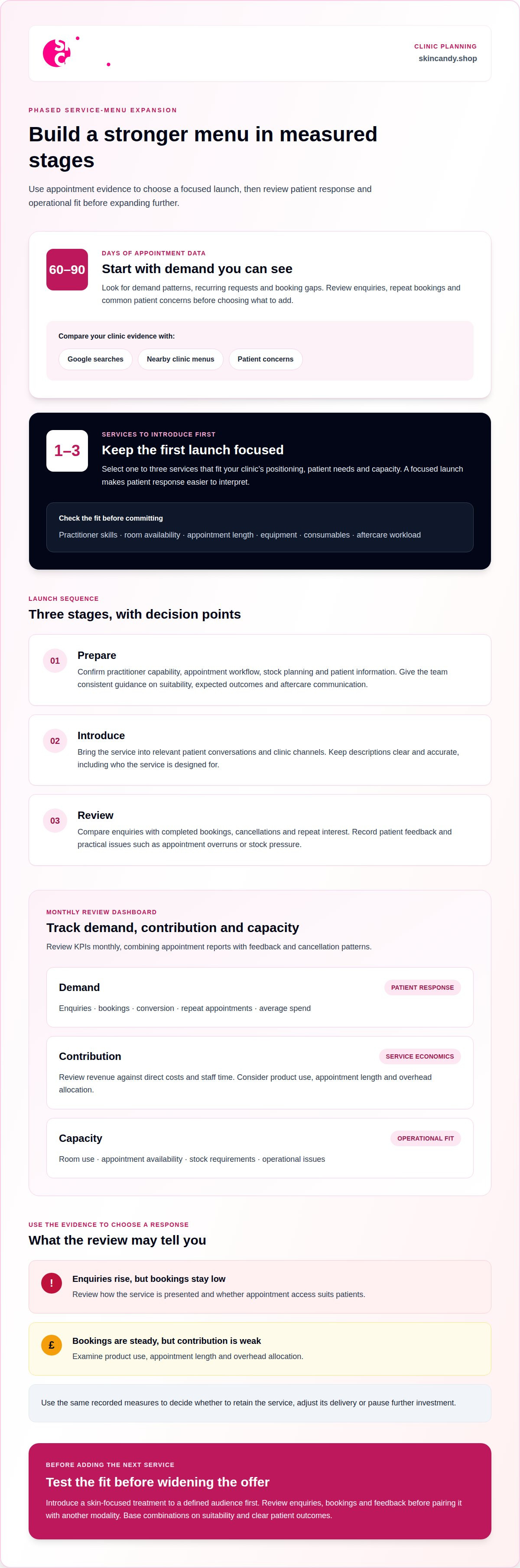
Treat a new service line as a controlled trial, not a permanent menu overhaul. Use 60 to 90 days of appointment data to identify demand patterns, recurring requests and booking gaps. Then choose one to three services that fit your clinic’s positioning and capacity. This keeps the launch focused and makes patient response easier to interpret.
Plan the launch in stages, with clear decision points. Prepare the service before advertising it, then assess delivery and patient response before widening promotion. For example, introduce a skin-focused treatment to a defined audience first. Review enquiries, bookings and feedback before pairing it with another modality. This tests how well the service fits your clinic’s patient journey.
- Prepare: Confirm practitioner capability, appointment workflow, stock planning and patient information. Give the team consistent guidance on suitability, expected outcomes and aftercare communication.
- Introduce: Add the service to relevant patient conversations and clinic channels. Keep advertising clear and accurate, with descriptions that explain who the service is designed for.
- Review: Compare enquiries with completed bookings, cancellations and repeat interest. Record operational issues, such as appointment overruns or stock pressure, alongside patient feedback.
Use the review to choose a specific next action: continue, refine or pause. If enquiries are strong but bookings are weak, improve the service explanation or booking journey. If delivery strains room capacity, adjust scheduling before increasing advertising. If patients respond well and the workflow remains manageable, consider a related option that supports the same clinic focus.
Keep communication consistent across staff, booking pages and patient follow-ups. Explain the service’s purpose without promising outcomes, and make clear how you assess suitability. A phased approach makes expansion repeatable: test a focused offer, learn from real activity, then scale only when demand and delivery align.
4. Top aesthetic clinic services in demand in the UK?
There is no verified UK-wide ranking that establishes a single most-demanded treatment. Clinic menus commonly include anti-wrinkle injections, dermal fillers, lip fillers, skin boosters, chemical peels and non-surgical facial treatments. Treat these as categories to investigate, not a ready-made ranking. The best fit depends on patient enquiries, your clinic’s focus and your ability to deliver each service consistently.
Compare demand by treatment category and patient concern. For example, separate enquiries about skin texture or quality from requests for facial contouring. Record which questions lead to consultations and bookings, then track repeat interest and cancellations. This helps distinguish curiosity from stronger booking intent. Google searches can add local context, but your own enquiries show what prospective patients are asking your clinic.
- Injectables: Review enquiries about anti-wrinkle injections, dermal fillers and lip fillers. Consider how each fits your clinic’s positioning and practitioner capability.
- Skin-focused services: Assess interest in skin boosters and chemical peels. Group requests by concern, such as texture or rejuvenation.
- Facial treatments: Explore non-surgical facial treatments where patient requests align with your service focus and available capacity.
Use the same review method for every option. Compare enquiry volume, booking conversion, repeat interest, appointment requirements and stock demands. A treatment that attracts attention may still be a poor menu fit if it strains capacity or conflicts with your intended patient experience. Prioritise the category with the clearest demand and delivery fit, then introduce it in a measured phase.
For a focused assessment of treatment categories and product options, explore professional aesthetic products as you shape your clinic’s next service decision.
Skin Candy
Skin Candy supports the product-sourcing side of expanding your clinic menu, supplying professional aesthetic products to clinics and practitioners. Once you’ve identified patient demand and chosen services that fit your capacity, the right product range can help you plan the consumables needed to deliver them.
The range includes Polynucleotides, Fat Dissolving Agents and Chemical Peels. Consider how each category fits your clinic’s focus, patient enquiries and planned service mix. A considered selection helps organise procurement around the services you intend to introduce, rather than adding stock without a clear role in your menu.
If you’re planning a menu expansion and need products for your chosen services, contact Skin Candy.
Make your next menu decision count
Choose a service direction that strengthens your clinic’s identity, then include procurement in the rollout plan. A clear product plan connects the intended patient experience with the stock needed to support it. This is a practical next step in expanding your aesthetic clinic service menu.
Skin Candy supplies premium dermal fillers, mesotherapy products and polynucleotides for clinics considering different treatment categories. Align product selection with the services you plan to introduce and your clinic’s purchasing needs. Keep the rollout focused, and base your next decision on how the new service fits your operation.
Contact Skin Candy to discuss your plans and explore product options for your clinic’s next stage of growth. A considered next step can help you move forward with clarity and confidence.
Frequently Asked Questions
Should You Add Medical Aesthetic Services to Your Business?
Yes, when the service fits your clinical expertise, governance and business model. Expanding an aesthetic clinic service menu makes sense when a new treatment supports your positioning and integrates with existing operations. Before launch, consider who will deliver it, what equipment it needs and how it affects scheduling. For example, a treatment requiring a dedicated room may disrupt bookings if space is already constrained.
How should a clinic assess local demand and competitors before adding services?
Compare how nearby clinics position their menus, describe treatment benefits and present booking information. Review local Google search results and Google Business Profiles, then identify a point of difference your clinic can deliver. When expanding an aesthetic clinic service menu, use patient conversations to test whether that distinction addresses a genuine local need, rather than relying only on competitors’ visible offers.
What consultation, consent and aftercare processes are needed for new treatments?
Document medical history, treatment goals, suitability, alternatives, potential risks and informed consent. Give patients time to ask questions before they decide, and record the discussion and agreed plan in clinical notes. Provide written, treatment-specific aftercare instructions, explain how patients can raise concerns and schedule follow-up where appropriate. Consistent templates help staff communicate clearly at every appointment.
What insurance and licensing requirements apply when adding aesthetic clinic services in the UK?
Practitioners need training and competence appropriate to each procedure and their professional scope. Assess compliance by reviewing practitioner competence, consent, treatment records and the clarity of marketing claims.
What are typical UK prices and profit margins for aesthetic clinic treatments?
UK treatment prices and profit margins vary by treatment, location, appointment time, consumables and operating costs. Calculate gross margin by dividing revenue minus direct costs by revenue, then assess net profitability after overheads.