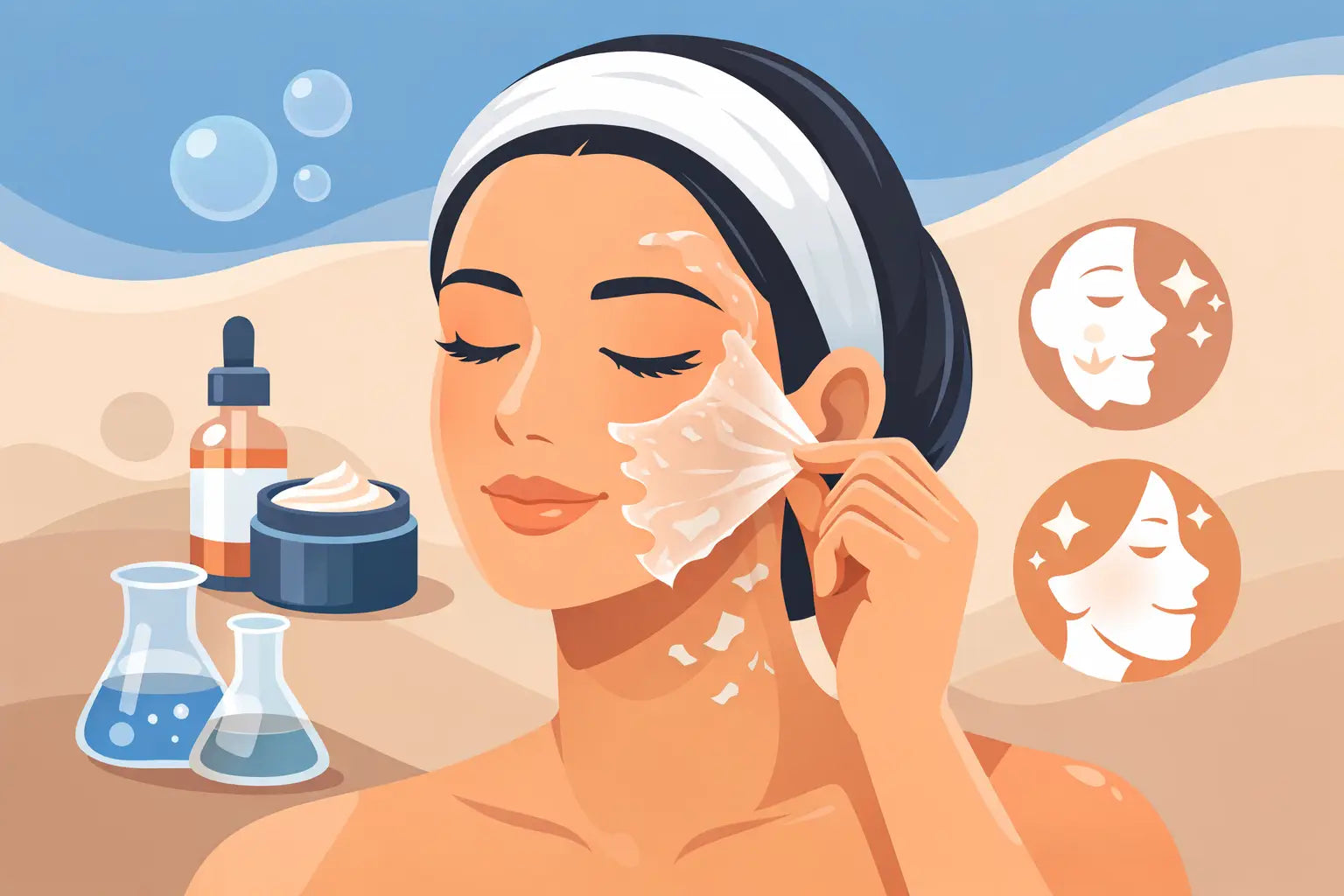
Do All Chemical Peels Make Your Skin Peel?
A client books in for a chemical peel expecting sheets of skin to shed by day three. Another panics because nothing flakes at all and assumes the treatment has failed. Both reactions are common, which is why the question do all chemical peels make your skin peel matters more than it sounds. For practitioners, setting expectations properly is part of the treatment result.
The short answer is no. Not all chemical peels cause visible peeling, and visible peeling is not the only sign that a peel is working. The level of exfoliation depends on the acid blend, pH, concentration, contact time, pre-treatment skin condition, post-care, and how aggressively the protocol is designed. In clinic terms, peel does not always mean peel.
Do all chemical peels make your skin peel in a visible way?
Not necessarily. Some peels trigger obvious desquamation, with flaking around the mouth, chin or nose a few days later. Others work in a more controlled, less dramatic way, accelerating cell turnover without creating the kind of shedding clients can see in the mirror.
That distinction is where a lot of confusion starts. Clients often judge effectiveness by what they can physically see, but practitioners know a superficial exfoliating treatment and a stronger resurfacing protocol can both be effective for the right indication. If the skin looks brighter, smoother and more even, the peel may have done exactly what it needed to do, even without dramatic skin shedding.
This is especially relevant when treating clients who want social downtime kept to a minimum. A peel that gives glow, refines texture and supports acne or pigment management without obvious flaking can be commercially attractive for clinics and more acceptable for repeat bookings.
Why some peels flake and others barely show
The biggest factor is depth. Superficial peels generally target the stratum corneum and upper epidermis. These are the peels most likely to deliver freshening, radiance and mild textural improvement with little or no visible shedding. Clients may report tightness, dryness or very fine roughness instead of large flakes.
Medium-depth and more aggressive resurfacing treatments are more likely to produce noticeable peeling because they create a stronger controlled injury response. That usually means more downtime, more post-procedure management and a higher need for careful patient selection.
Formulation also matters. Glycolic acid, lactic acid, mandelic acid, salicylic acid, TCA, Jessner-type blends and combination peel systems all behave differently. A salicylic acid peel may create a pseudo-frost from crystallisation without necessarily leading to dramatic post-treatment peeling. A mandelic-based peel can be well tolerated and relatively light on downtime. A stronger TCA-led approach is a different conversation entirely.
Then there is skin preparation. Clients who have been using active skincare, especially retinoids, acids or pigment-control products, may respond differently from those with a thickened, congested or poorly prepped stratum corneum. Even application technique counts. Degreasing, layering, timing and neutralisation choices can all change the outcome.
Visible peeling is not the same as better results
This is the message worth repeating in clinic. More peeling does not automatically mean a better treatment, just as no peeling does not automatically mean no result. Chasing a dramatic shed for every client is not smart practice.
The right peel is the one matched to the indication, the skin condition, the Fitzpatrick type, the downtime tolerance and the treatment plan as a whole. A client with mild acne, dullness and early textural change may do brilliantly with a course of superficial peels and excellent homecare. Another with more established photodamage or pigmentation may need a stronger protocol, or a staged plan using multiple modalities rather than one aggressive session.
From a business point of view, this matters too. Predictable outcomes, manageable downtime and happy returning clients often outperform one-off dramatic treatments that generate anxiety, social disruption or inconsistent compliance.
What practitioners should tell clients before treatment
Expectation management is where good clinics protect both outcomes and trust. Instead of telling clients they will peel, it is better to explain that they may experience anything from no visible flaking to moderate shedding, depending on the peel selected and how their skin responds.
Be specific. Explain that common post-treatment responses can include tightness, dryness, mild erythema, transient sensitivity and fine micro-flaking. If a medium-depth option is planned, explain the realistic timeline of redness, darkening, tightness and subsequent peeling rather than presenting it as a surprise.
It also helps to reframe the goal. The goal is controlled skin renewal, not simply making skin fall off. That language sounds cleaner, more professional and more clinically accurate.
Do all chemical peels make your skin peel if the client has tough skin?
Skin type changes the presentation, but not in the way clients often think. People who describe their skin as thick, oily or resilient may assume they need a stronger peel to see anything happen. Sometimes they do need a more assertive protocol, but not always. Sebum levels, barrier condition, past skincare use and the actual concern being treated matter more than a casual label like tough skin.
Equally, clients with sensitive or reactive skin may show more redness and irritation yet less obvious flaking. That does not mean they had a deeper peel. It means their inflammatory response is more visible. Practitioners need to separate irritation from efficacy and avoid escalating treatment just because the visible peeling was minimal.
This is where assessment earns its keep. If the client presents with impaired barrier function, rosacea tendencies, active inflammation or poor product tolerance, a lighter touch may deliver a better long-term result than pushing for peel-heavy downtime.
Frosting, flaking and shedding - what is actually happening?
Clients often bundle every post-peel change into one idea, but practitioners should keep the terms clear. Frosting during treatment can indicate protein coagulation with certain peels, although pseudo-frosting can also occur, particularly with salicylic acid crystal formation. That is an immediate treatment-room phenomenon.
Flaking and shedding happen later as the skin turns over. They may appear as fine dry patches, especially around mobile areas like the mouth and nose, or as broader peeling depending on the protocol. Some clients only feel roughness when applying moisturiser. Others get visible sheets. Neither response should be judged in isolation.
The real question is whether the skin is progressing as expected for that peel type. Excessive inflammation, swelling, cracking, prolonged erythema or post-inflammatory pigment risk deserve attention. A neat, controlled recovery is always the target.
Choosing the right peel means choosing the right downtime
For advanced beauty providers and aesthetic clinics, the commercial sweet spot is often the treatment clients can repeat. That usually means balancing efficacy with tolerability. Not every client wants a week of obvious shedding, and not every indication requires it.
Superficial peel programmes work well for clients wanting lunch-break style refresh, acne support, pigment management in stages, or maintenance between other treatments. More aggressive peels have their place, but they need stronger consultation, stricter aftercare compliance and more careful timing around work, events and sun exposure.
This is also why product selection matters at purchasing level. Clinics need peel systems that are clear in their indications, predictable in use and aligned with practitioner competence. Stocking only strong peels because they sound impressive is rarely the smartest move. A tight, versatile peel menu usually performs better than an overcomplicated one.
The aftercare piece clients often underestimate
Post-peel care affects whether peeling becomes obvious, prolonged or problematic. If a client picks, overuses actives, skips SPF or applies the wrong products, the recovery can become rougher than necessary. On the other hand, excellent aftercare can keep the healing phase controlled and reduce unnecessary drama.
That means straightforward instructions, no mixed messages and no glamourising the shed. Clients should know when to leave the skin alone, how to support barrier recovery and when to contact the clinic. If they understand that the endpoint is healthy renewal rather than dramatic peeling, compliance tends to improve.
For UK clinics, seasonal timing is worth mentioning too. Peel bookings in periods of strong sun exposure or just before holidays need a more cautious conversation, especially for pigment-prone clients.
What to remember when a client says, “I didn’t peel”
The right response is not to assume the treatment failed. Review the peel used, the skin prep, the indication, the expected endpoint and the current skin changes. Is the skin brighter? Smoother? Less congested? More even in tone? Those are treatment outcomes too.
If the plan called for a gentle first session, then minimal visible peeling may be exactly right. If the result was underwhelming across the board, it may be time to adjust concentration, layering, prep or session spacing rather than promising a stronger peel for the sake of making something happen visibly.
Clients remember confidence. They also remember whether their practitioner explained the process properly. A clinic that can clearly answer questions like do all chemical peels make your skin peel sounds experienced, trustworthy and in control.
The best peel result is not the one that looks dramatic on day four. It is the one that fits the skin, fits the client’s life and keeps them coming back because the outcome made sense from start to finish.