Best Dermal Filler for Non-Surgical Rhinoplasty: 2026 Guide
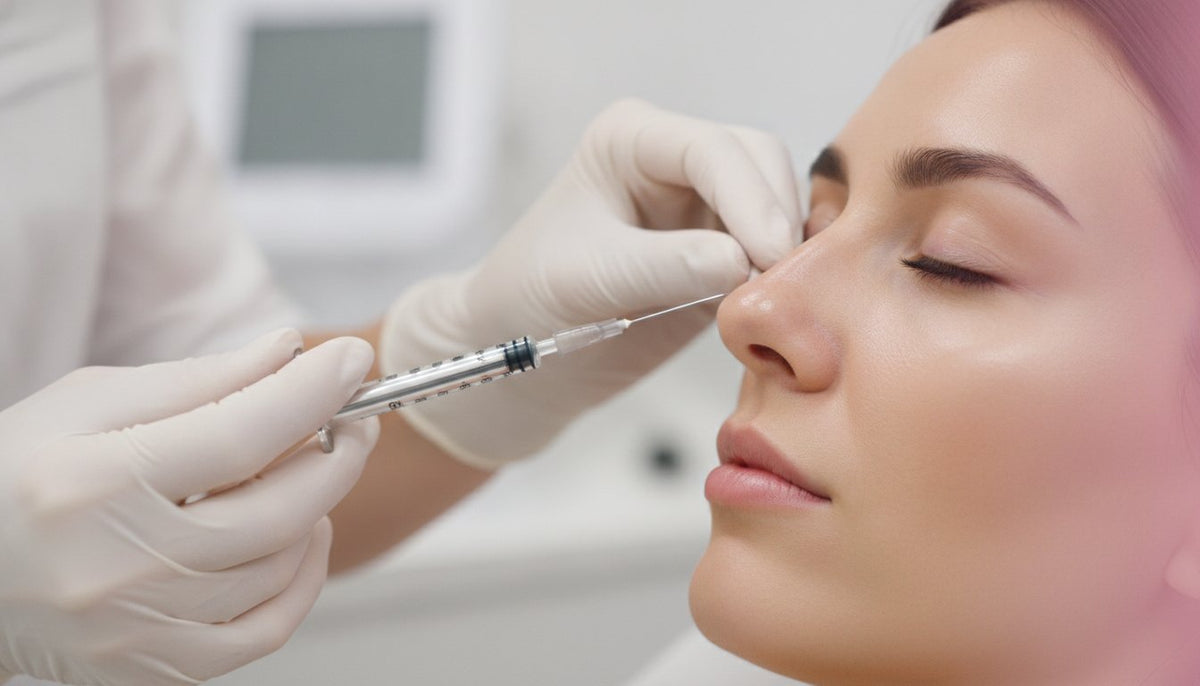
In the high-stakes environment of liquid rhinoplasty, volume is often the enemy of precision. Selecting the best dermal filler for non-surgical rhinoplasty isn't about simply filling space; it's about structural integrity and resisting the lateral spread that results in a widened nasal bridge. You understand that the nose is a high-risk zone where vascular safety and product rheology aren't just technical details. They're the critical factors that separate a sharp, defined dorsal hump from a serious complication or an aesthetic failure.
We recognise the daily pressure of managing patient anxiety regarding vascular occlusion whilst trying to maintain a consistent clinic inventory. This 2026 guide delivers the technical clarity you require to achieve high-precision results. You'll learn why high G-prime hyaluronic acid fillers are the industry standard for mimicking nasal cartilage and ensuring tip-lift longevity. We also detail how partnering with an efficient UK wholesaler provides the logistical confidence your business needs to thrive. From superior product rheology to rapid fulfilment, this is your roadmap to safer, more defined outcomes.
Key Takeaways
- Understand the critical role of G-prime and cohesivity in preventing filler migration and maintaining a sharp, defined nasal bridge.
- Identify the best dermal filler for non-surgical rhinoplasty by evaluating the structural performance of high-density ranges like Lumifil and Regenovue.
- Minimise the risk of complications in high-risk vascular zones through the use of high-quality, predictable hyaluronic acid fillers.
- Improve clinic margins and operational efficiency by implementing bulk-buying strategies for high-performance structural products.
- Optimise your supply chain with reliable next-day UK delivery to ensure your clinic meets the demands of high-volume patient lists.
Why Rheology Matters: Selecting Fillers for Structural Support
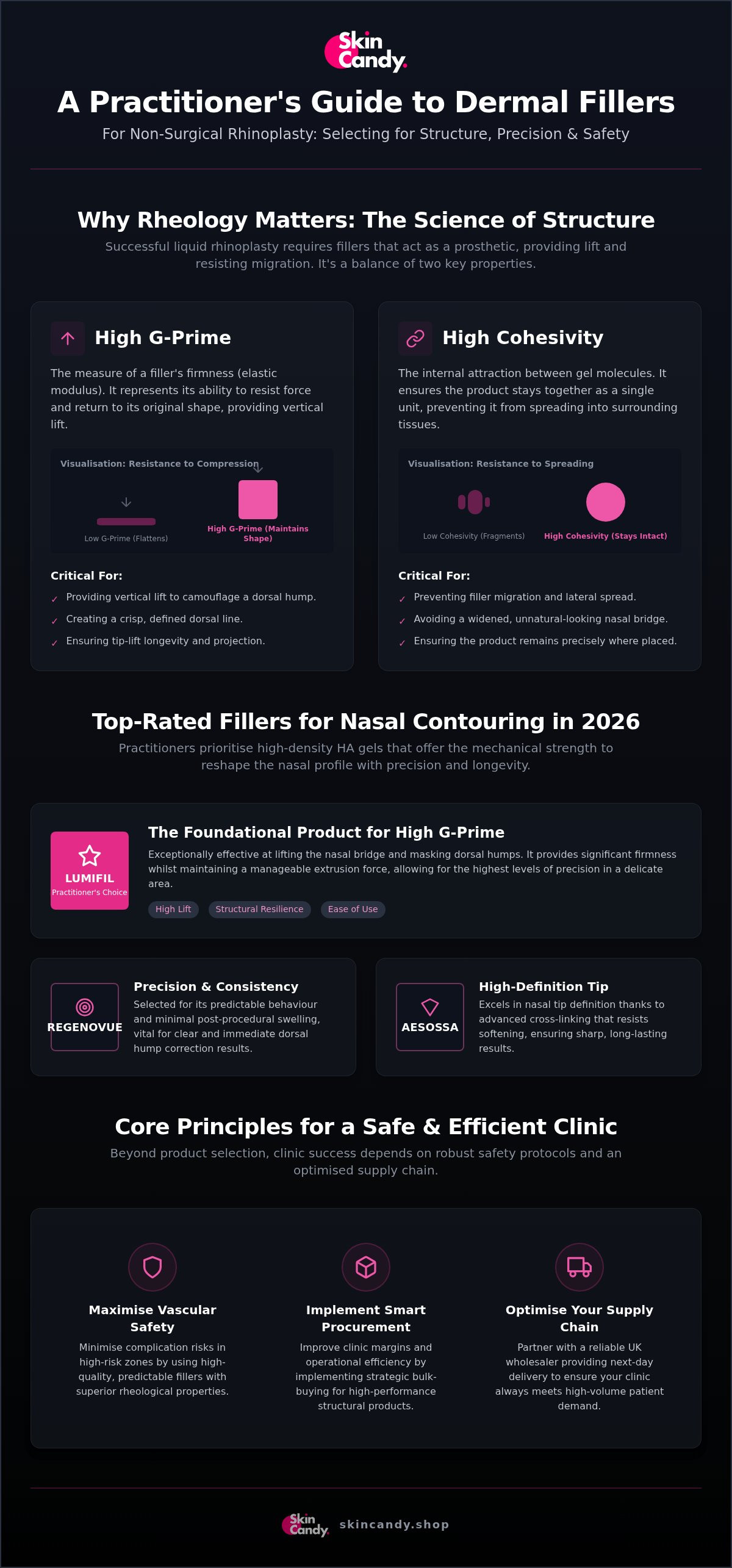
Successful liquid rhinoplasty depends on the filler's ability to act as a prosthetic. Standard volumising fillers designed for the mid-face often lack the mechanical strength required for the nose. For a Non-surgical rhinoplasty overview, practitioners must focus on products that provide lift rather than just mass. Selecting the best dermal filler for non-surgical rhinoplasty requires a deep understanding of rheological properties, specifically G-prime and cohesivity. These factors dictate how the gel behaves under the pressure of the nasal skin envelope.
Understanding G-Prime in Nasal Contouring
G-prime is the measure of a filler's elastic modulus, representing its ability to return to its original shape after being subjected to shearing force. In the nasal region, you need a high G-prime to provide enough vertical lift to camouflage a dorsal hump. Without this hardness, the filler will simply flatten under the pressure of the skin envelope. High cross-linking density ensures the product maintains this structural integrity over time, providing the necessary projection for a crisp dorsal line.
The Role of Cohesivity in Preventing Migration
Cohesivity refers to the internal attraction between the molecules of the hyaluronic acid gel. High cohesivity ensures the product stays together as a single unit rather than fragmenting or spreading into surrounding tissues. In the nose, muscle movement can push low-cohesivity fillers laterally. Biphasic gels often provide the projection needed, whilst monophasic gels offer smooth integration. For the bridge, a highly cohesive, high-density gel is the safest choice to ensure the product remains exactly where it is placed.
Migration is the primary cause of patient dissatisfaction and long-term aesthetic failure. When a filler spreads, it creates a thickened, unnatural bridge that lacks definition. You must select products with superior rheology to ensure the results remain sharp. This precision is why professional clinics prioritise structural performance over simple volume. Choosing the best dermal filler for non-surgical rhinoplasty involves balancing these technical traits to prevent long-term aesthetic drift. Products like Lumifil and Aesossa are engineered specifically to provide this resistance to lateral movement. They ensure the results are predictable and the dorsal hump remains corrected without the risk of a widened appearance. Reliability in your supply chain is equally important, ensuring you always have these high-performance gels in stock for your patients.
Top-Rated Dermal Fillers for Liquid Rhinoplasty in 2026
Selecting the best dermal filler for non-surgical rhinoplasty requires a shift from general volumising to targeted structural support. In 2026, the UK market is dominated by high-density hyaluronic acid gels that offer the mechanical strength needed to reshape the nasal profile without surgical intervention. Practitioners now prioritise products that provide immediate projection and maintain their position against the tension of the nasal skin. When you evaluate your clinic's needs, focus on high G-prime formulations that ensure long-term stability and patient satisfaction.
Lumifil: The Practitioner’s Choice for High G-Prime
Lumifil has established itself as a foundational product for nasal work. Its high G-prime makes it exceptionally effective at lifting the nasal bridge and masking dorsal humps. You'll find that whilst it offers significant firmness once injected, the extrusion force remains manageable, allowing for the high levels of precision required in such a delicate area. This combination of ease of use and structural resilience is a primary reason Why Lumifil Dermal Filler is Leading the UK Market in 2026. It provides the reliable lift that patients expect from a premium liquid rhinoplasty treatment.
Regenovue and Aesossa: Precision and Stability
Regenovue is frequently selected for its consistency and minimal post-procedural swelling. This predictable behaviour is vital for dorsal hump correction, where even slight oedema can obscure the final aesthetic result. Aesossa, on the other hand, excels in nasal tip definition. Its advanced cross-linking technology allows for high-definition results that resist the softening often seen with lower-quality fillers. For clinics focusing on high-volume procurement, both brands offer an excellent price-to-performance ratio, ensuring you can deliver elite results whilst maintaining healthy margins.
Secondary refinements often require a lighter touch. Teofil and Volifil are excellent choices for minor adjustments or smoothing transitions between the bridge and the tip. These fillers integrate well with the primary structural gel to create a seamless, natural profile. Regardless of the brand chosen, practitioners should always consult FDA information on dermal filler safety to stay updated on the latest regulatory standards and risk mitigation strategies for injectable devices. Using standardised, medical-grade products is the only way to ensure predictable dissolving should a reversal be necessary.
Maintaining a versatile inventory of these top-rated products allows you to tailor every treatment to the patient's specific anatomy. Whether you need the sheer lifting power of Lumifil or the sharp definition provided by Aesossa, having the right tools on hand is essential for clinical success. You can browse the full range of high-performance structural gels at Skin Candy to ensure your clinic is always prepared for high-precision nasal contouring.
Safety and Precision: Managing High-Risk Injection Zones
Safety in liquid rhinoplasty is paramount due to the complex vascular network of the nose. The angular artery and dorsal nasal artery represent high-risk zones where accidental intravascular injection can lead to skin necrosis or visual impairment. Practitioners must prioritise a deep understanding of clinical guidelines for non-surgical rhinoplasty to mitigate these risks. Achieving a safe outcome requires more than just anatomical knowledge; it demands the use of high-quality, predictable hyaluronic acid (HA) gels that respond immediately to reversal agents if a complication occurs.
When selecting the best dermal filler for non-surgical rhinoplasty, you aren't just looking for projection. You're looking for a product that behaves consistently. Standardised HA fillers from reputable manufacturers ensure that the cross-linking technology is uniform. This uniformity allows for predictable dissolving with hyaluronidase, which is the most critical safety net in any aesthetic clinic. Using non-standardised or low-quality products increases the risk of delayed inflammatory reactions and makes emergency management far more difficult.
Risk Mitigation through Product Choice
Choosing fillers with high purity and low BDDE residue is a fundamental step in patient safety. Excess unreacted BDDE can lead to hypersensitivity and chronic swelling, which are particularly problematic in the tight skin envelope of the nasal bridge. High-performance brands like Lumifil and Aesossa undergo rigorous purification processes to ensure clinical safety. For patients with compromised skin or those requiring tissue preparation, consult our 2026 Practitioner Guide to Polynucleotides to understand how to optimise the injection site prior to filler placement.
Emergency Preparedness in the Clinic
Emergency preparedness is a logistical requirement for every high-volume clinic. You should never perform a liquid rhinoplasty without a fresh stock of hyaluronidase and the necessary consumables for a vascular emergency protocol. A well-stocked clinic is a safe clinic. Your procurement strategy should integrate structural fillers alongside these emergency agents to ensure you're never caught without the tools to reverse a procedure. Practitioners should also employ specific techniques to enhance safety with high-viscosity gels:
- Aspiration: Always perform a pull-back for at least five seconds before injecting.
- Slow Injection: Deliver the gel in small increments to monitor skin blanching or pain.
- Low Pressure: Avoid high-pressure boluses that can force product into the vasculature.
Maintaining a sterile and well-organised environment is essential for preventing secondary infections. By sourcing your supplies from a reliable UK wholesaler, you ensure that every syringe of the best dermal filler for non-surgical rhinoplasty meets the highest safety standards. This logistical confidence allows you to focus on the technical precision required for elite results while knowing your clinic is fully prepared for any eventuality.
Procurement Strategy: Bulk Buying and Just-in-Time Logistics
Clinical excellence requires operational efficiency. In a high-volume aesthetic practice, the cost of consumables directly impacts your bottom line. Sourcing the best dermal filler for non-surgical rhinoplasty shouldn't be a fragmented or reactive process. By standardising your inventory on a select group of high-performance structural brands, you reduce administrative overheads and simplify your clinical workflow. This allows your team to focus on patient care rather than managing dozens of different product specifications or multiple supplier accounts.
Maximising Margins with Wholesale Fillers
Bulk procurement is a primary driver for improving clinic profitability. When you purchase structural fillers like Regenovue or Volifil in volume, the unit cost drops significantly, which directly increases the profit margin on every procedure. This financial buffer allows for reinvestment into clinic technology or staff training. For a deeper analysis of supply chain optimisation, refer to Mastering Aesthetic Clinic Procurement UK. Balancing premium product selection with smart wholesale sourcing ensures you maintain elite clinical standards whilst protecting your commercial interests.
Reliable Fulfilment for UK Practitioners
Rapid fulfilment is a necessity for maintaining a professional reputation. High-demand clinics often operate with lean inventory levels to avoid tying up capital, making just-in-time logistics essential. Skin Candy’s distribution network provides a significant advantage by offering same-day and next-day delivery options across the UK. This reliability ensures you always have the best dermal filler for non-surgical rhinoplasty available for your next consultation. Sourcing from a single distributor also provides peace of mind regarding batch consistency. You receive standardised products that behave identically in every syringe, ensuring your results remain predictable and your patients remain satisfied.
Integrating your procurement into a weekly workflow prevents emergency orders and keeps your clinic running smoothly. You should treat your filler supply as the engine of your business. Consistent access to high-G-prime gels and necessary consumables like dissolving agents is non-negotiable for safety and success. You can order premium dermal fillers in bulk today to secure your inventory and improve your operational efficiency.
Enhancing Clinic Outcomes with Skin Candy Supplies
Delivering elite results in liquid rhinoplasty requires a synthesis of technical skill and high-performance product selection. The best dermal filler for non-surgical rhinoplasty must provide a high G-prime for structural lift, superior cohesivity to prevent migration, and a clean safety profile for predictable reversal. As a practitioner, your choice of product defines your clinical reputation. Transitioning from generic volumisers to specialised structural gels ensures that your dorsal hump corrections and tip lifts remain sharp and defined over the long term.
Before placing your next order, use this final checklist to ensure your stock meets the rigorous demands of nasal contouring:
- Structural Integrity: Does the gel provide the mechanical resistance necessary to lift the nasal skin envelope?
- Safety Profile: Is the product a standardised, medical-grade hyaluronic acid that responds immediately to hyaluronidase?
- Supply Reliability: Can your wholesaler guarantee next-day delivery to prevent clinic downtime?
- Margin Protection: Does the bulk-buy price allow you to maintain competitive treatment rates whilst protecting your business profits?
Why Skin Candy is the Preferred Distribution Partner
Skin Candy acts as the logistical engine for high-demand UK clinics. By specialising in the distribution of Lumifil, Regenovue, and Aesossa, we provide practitioners with direct access to the most resilient structural fillers on the market. We understand that your business relies on more than just product quality; it relies on the certainty of supply. Our commitment to professional-only, medical-grade supplies ensures that you are using products designed for elite clinical environments. For those looking to expand their treatment menu beyond fillers, explore our Mesotherapy Products Wholesale UK guide to discover complementary skin rejuvenation options that enhance overall patient outcomes.
Secure Your 2026 Clinic Supplies Today
Your procurement strategy should be as precise as your injection technique. Review your current inventory and assess whether your current fillers offer the rheology required for high-precision nasal work. If you are experiencing filler spread or inconsistent lift, it is time to upgrade your structural stock. Skin Candy provides the rapid logistics and premium brands necessary to keep your patient list moving without delay. Take control of your clinic’s operational efficiency and aesthetic results. Visit the Skin Candy shop today to secure your 2026 supplies and ensure you are always equipped with the best dermal filler for non-surgical rhinoplasty.
Elevate Your Liquid Rhinoplasty Results
Selecting the best dermal filler for non-surgical rhinoplasty is a decision that defines both patient safety and your professional reputation. You now understand that high G-prime structural gels like Lumifil and Aesossa are essential for achieving sharp, lasting dorsal lifts without the risk of lateral spread. By prioritising products with superior rheology and predictable dissolving properties, you protect your patients and ensure consistent clinical outcomes across every procedure.
Operational excellence relies on a dependable supply chain. Skin Candy acts as your dedicated distribution partner and an official distributor for Lumifil and Aesossa, providing the logistical engine your clinic needs to thrive. We maintain a comprehensive stock of high-performance fillers and provide next-day UK delivery to keep your practice running at peak capacity. This reliability allows you to focus on technical precision whilst we handle the complexities of your procurement.
Browse our professional range of structural dermal fillers for non-surgical rhinoplasty to optimise your inventory today. We're committed to supporting your commercial success through reliable fulfilment and elite product performance. We look forward to helping you achieve the high-precision results your patients demand.
Frequently Asked Questions
Which filler has the highest G-prime for non-surgical rhinoplasty?
Lumifil and Aesossa are widely recognised for offering the high G-prime required for nasal contouring. These products provide the necessary mechanical resistance to lift the dense skin of the nasal bridge without flattening. Selecting the best dermal filler for non-surgical rhinoplasty involves choosing a gel that mimics the rigidity of cartilage. High-density formulations ensure the results remain sharp and defined while resisting the lateral spread that often affects lower-quality alternatives.
Is it safer to use a needle or a cannula for liquid rhinoplasty?
Safety depends on the specific anatomical plane and the practitioner's expertise. Cannulas are often preferred to reduce the risk of direct vascular entry in high-risk zones. However, many experts use needles for precise supraperiosteal injections to ensure the product stays exactly where it is placed. Regardless of the tool, slow injection techniques and frequent aspiration are essential. Using high-quality fillers ensures predictable product behaviour during these delicate manoeuvres.
How long do the results of a non-surgical rhinoplasty typically last?
Results generally persist for 12 to 18 months depending on the specific product rheology and the patient's metabolism. Because the nose is a low-mobility area, high-G-prime fillers tend to degrade more slowly than those used in the lips or cheeks. Choosing a premium structural gel with advanced cross-linking technology helps maintain the desired projection for longer. Consistent results build patient trust and reduce the frequency of corrective top-up appointments in your clinic.
Can I buy dermal fillers for my clinic with next-day delivery?
Yes, you can secure next-day delivery for all professional filler orders across the UK through our distribution network. We understand that high-volume clinics require rapid fulfilment to manage patient lists without tying up excessive capital in stock. Our logistics system is designed for speed and reliability, ensuring you never face downtime. Simply place your order through the Skin Candy shop to receive your structural fillers and consumables by the next working day.
What is the risk of filler migration in the nasal bridge?
Migration typically occurs when a practitioner uses a filler with low cohesivity or low G-prime that cannot withstand the tension of the nasal skin. This results in the product spreading laterally, which creates a widened and unnatural appearance. You can mitigate this risk by selecting the best dermal filler for non-surgical rhinoplasty with high internal gel strength. These cohesive products stay as a single unit, ensuring the dorsal line remains crisp and well-defined.
Should I use a monophasic or biphasic filler for the nose?
Biphasic fillers have traditionally been favoured for the nose due to their superior lifting capacity and high G-prime. However, modern monophasic gels with high cross-linking density now offer comparable structural support with the added benefit of smoother integration. The choice often depends on whether you require maximum projection or a softer transition. Both types are available in our range, allowing you to tailor the treatment to your patient's specific nasal anatomy and aesthetic goals.
How much filler is typically required for a non-surgical rhinoplasty?
Most procedures require between 0.5ml and 1.0ml of hyaluronic acid gel to achieve a significant profile correction. It is vital to avoid overfilling, as excessive volume can increase the pressure on local vasculature and lead to complications. Practitioners often find that high-performance structural fillers require less volume to achieve the same lift as standard volumisers. This efficiency improves your clinic margins whilst ensuring a safer, more natural outcome for the patient during their treatment.
Does Skin Candy supply hyaluronidase for emergency use?
We provide a comprehensive range of medical-grade aesthetic consumables, including essential agents for emergency use. Every clinic performing liquid rhinoplasty must maintain a fresh stock of dissolving agents to manage potential vascular complications or aesthetic dissatisfaction. Our rapid UK delivery ensures you can restock these critical supplies alongside your structural fillers. Maintaining emergency preparedness is a hallmark of a professional practice and provides both you and your patients with essential peace of mind.