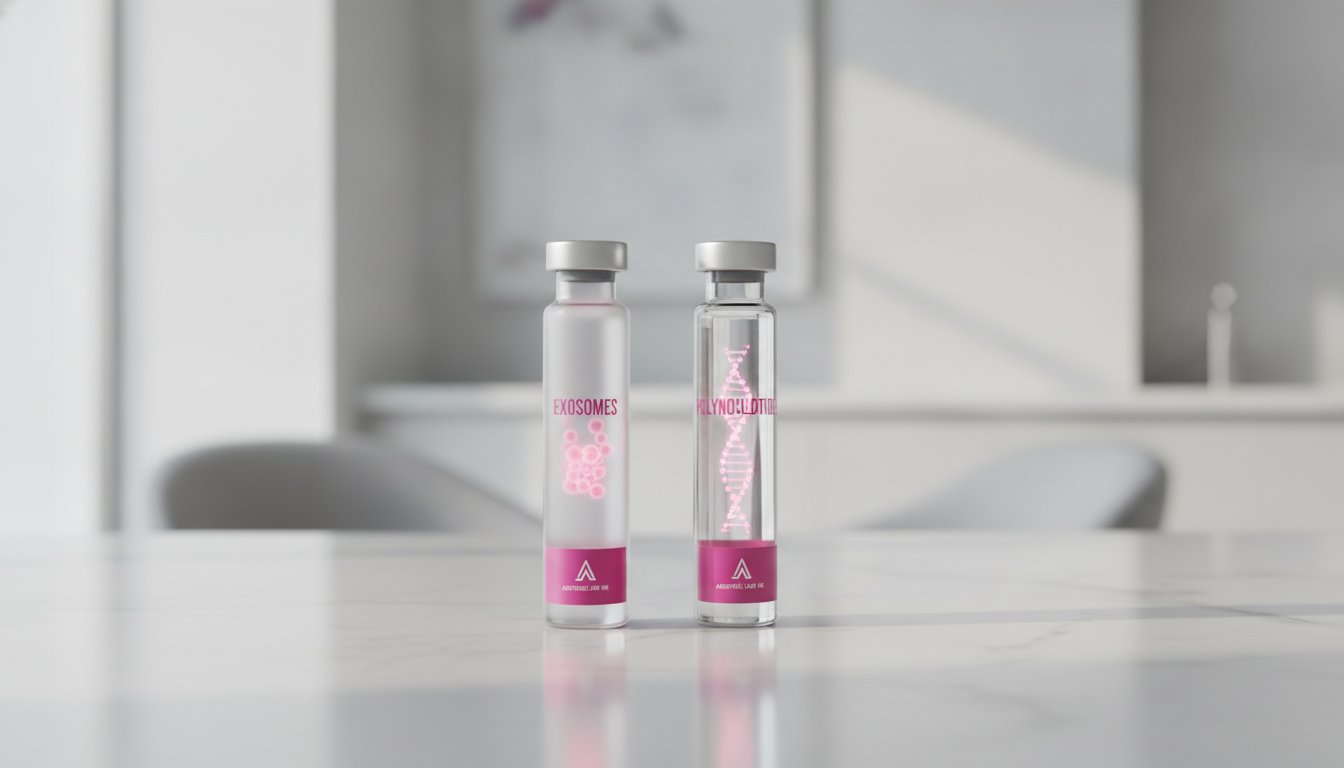
Exosomes vs Polynucleotides: 2026 Procurement Guide
The most successful UK practitioners in 2026 aren't choosing between exosomes and polynucleotides; they're mastering the logistical and clinical synergy of both. You've likely noticed that the conversation around exosomes vs polynucleotides for clinics has shifted from experimental novelty to a core procurement priority. It's understandable if you feel frustrated by conflicting information regarding MHRA classifications for injectables versus topical applications. You want to offer the latest biostimulators without compromising on regulatory compliance or risking your clinic's reputation on unreliable supply chains.
This guide provides a definitive comparison framework to help you optimise your 2026 treatment menu. We'll break down the technical distinctions between cellular messengers and DNA building blocks, alongside the practical realities of cold-chain storage and shelf-life management. You'll learn exactly which patient demographics benefit from each modality and how to integrate these regenerative tools into your existing protocols. We'll also highlight how to secure these essentials through a reliable UK wholesale source that prioritises next-day delivery and clinical standards.
Key Takeaways
- Distinguish between the biological mechanisms of extracellular vesicles and DNA fractions to ensure precise patient selection for every regenerative procedure.
- Establish a clear clinical framework for exosomes vs polynucleotides for clinics by mapping specific indications like scarring and laxity to the correct modality.
- Optimise your inventory management and reduce waste by mastering the logistical differences between ambient and refrigerated storage requirements.
- Future-proof your 2026 treatment menu by strategically transitioning from traditional hyaluronic acid fillers to high-performance bio-stimulator protocols.
- Streamline your procurement process with a professional-only supply model that ensures next-day delivery and clinical-grade reliability for your practice.
The Regenerative Revolution: Why UK Clinics are Prioritising Bio-Stimulation
The UK aesthetic market has reached a definitive turning point. Patients are increasingly moving away from the "frozen" or "over-filled" aesthetic in favour of results that look and feel naturally youthful. This shift from "filling" to "fixing" has positioned bio-stimulation as the dominant market force in 2026. Practitioners are no longer just masking the signs of ageing; they are actively repairing the skin at a cellular level. When deciding between exosomes vs polynucleotides for clinics, the goal is to choose the most effective tool for triggering the body's own healing mechanisms. High-growth clinics recognise that volume alone cannot solve the problem of poor skin quality or structural laxity.
The role of the practitioner has evolved from a simple injector to a biological architect. To remain competitive, you must understand how to deploy these high-performance modalities to meet the rising demand for "quiet luxury" in aesthetics. Patients are better informed than ever. They are specifically asking for treatments that improve collagen density, elastin production, and overall tissue vitality. Providing these solutions requires a robust understanding of the science and a reliable procurement partner to ensure your treatment menu remains at the cutting edge of regenerative medicine.
The 2026 Market Landscape for Aesthetic Consumables
Traditional skin boosters, whilst still useful for basic hydration, are now being supplemented or replaced by advanced regenerative agents. In a crowded UK market, offering "future-proof" treatments is the only way to maintain premium pricing and patient loyalty. Regenerative aesthetics is the use of biological messengers to trigger endogenous repair. This approach relies on complex signalling to reset the skin's behaviour. To understand the foundation of these signals, it is helpful to ask: What are exosomes? These extracellular vesicles act as the communication network for this new era of skin health. By stocking both exosomes and polynucleotides, you ensure your clinic can address the full spectrum of regenerative needs, from intense repair to preventative maintenance.
The Clinical Shift: From Volume to Vitality
Integrating bio-stimulators into your practice doesn't mean abandoning dermal fillers; it means making them work harder. Regenerative products improve the physiological environment of the skin, which in turn enhances the longevity and appearance of fillers like Lumifil or Aesossa. This holistic approach addresses the "over-filled" look by restoring the skin's natural tension and texture first. Consider these benefits for your patient journey:
- Enhanced Canvas: Improving skin quality ensures that any subsequent volume replacement looks more natural.
- Reduced Product Volume: Healthier, firmer skin often requires less filler to achieve the desired lift.
- Long-Term Results: Bio-stimulators provide cumulative benefits that continue to improve months after the initial session.
The transition to vitality-focused treatments is a commercial necessity. It allows clinics to offer tiered treatment plans that focus on long-term skin health rather than one-off corrective procedures.
Decoding the Science: Extracellular Vesicles vs DNA Fractions
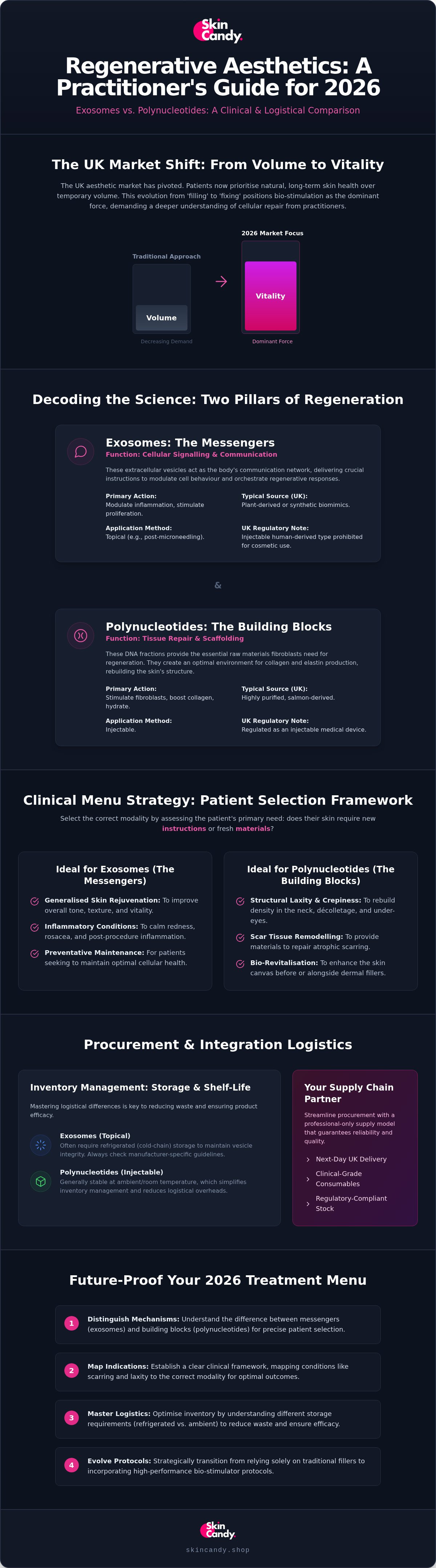
Understanding the biological mechanism is critical when evaluating exosomes vs polynucleotides for clinics. Whilst both fall under the regenerative umbrella, they perform entirely different roles within the skin. Think of exosomes as the "messengers" and polynucleotides as the "building blocks". One provides the instructions; the other provides the raw materials. Choosing the right one depends on whether you need to signal a cellular change or provide the physical foundation for repair.
The source of your regenerative material is a major factor for clinic insurance and regulatory compliance. In the UK, injectable polynucleotides are largely salmon-derived and regulated as medical devices. However, injectable human-derived exosomes are currently prohibited for cosmetic use. Most legal exosome products in the UK are plant-derived or synthetic and intended for topical application following microneedling or laser. Always verify the origin of your stock to protect your practice. You can browse our compliant regenerative range to ensure your inventory meets current standards.
Exosomes: The Biological Couriers
Exosomes are nanometer-sized extracellular vesicles that facilitate intercellular communication. They work through signal transduction, carrying a payload of proteins, lipids, and nucleic acids. Once they reach a target cell, they facilitate horizontal gene transfer and stimulate protein synthesis. This effectively "reboots" the cell's behaviour. Professional-grade exosomes must maintain a high growth factor concentration to ensure clinical efficacy. For specific protocols on how to use these signals effectively, refer to our Professional Exosome Applications guide.
Polynucleotides: The DNA Repair Kit
Polynucleotides consist of filtered and purified DNA fractions, typically derived from salmon sperm. These PDRN (Polydeoxyribonucleotide) chains act as a template for tissue repair. They stimulate fibroblasts to increase the production of collagen type I and elastin. This makes them exceptionally effective for structural repair and deep hydration. Practitioners frequently favour them for periocular rejuvenation because of their ability to thicken thin, crepey skin without the risk of oedema associated with hyaluronic acid. You can explore polynucleotide indications for aesthetic clinics to see how they fit into targeted treatment plans.
Selecting between these two isn't about finding a superior product. It's about matching the biological need to the patient's specific pathology. Polynucleotides provide the structure for new tissue, whilst exosomes provide the rapid-fire signals required to accelerate the healing process. Using them in tandem can create a synergistic effect that far exceeds the results of either treatment alone.
Clinical Menu Strategy: Selecting the Right Modality for Your Patients
Designing a high-performance treatment menu requires more than just following industry trends. It demands a clinical understanding of how different biological agents interact with specific skin pathologies. When assessing exosomes vs polynucleotides for clinics, the decision usually rests on the patient's primary concern: is it a structural deficit or a signalling failure? Since the average person loses approximately 10% of their collagen per decade starting from around age 30, your 2026 strategy must address both prevention and intensive repair.
Polynucleotides are your primary tool for structural restoration. They excel in treating delicate areas like the periocular region, where they thicken the dermis and improve laxity without the risk of swelling. Conversely, exosomes are superior for surface-level "rebooting". Use them to target stubborn pigmentation, rosacea, and active scarring. For mature patients with significant photo-damage, a "Combo Protocol" is often the most effective route. Pairing topical exosomes with microneedling or radiofrequency creates micro-channels for maximum absorption, whilst polynucleotides provide the underlying building blocks for long-term tissue synthesis.
The Practitioner’s Comparison Framework
Managing patient expectations is vital for retention. Polynucleotides typically require 2 to 4 sessions, spaced 2 to 4 weeks apart, to achieve noticeable firmness. Exosomes offer a faster initial response, with patients often reporting improved radiance and skin softness within 7 to 14 days. Use the following framework to guide your procurement and patient consultations:
| Feature | Polynucleotides | Exosomes (Topical) |
|---|---|---|
| Primary Benefit | Deep structural repair and dermal thickening | Cellular signalling and inflammatory control |
| Best For | Dark circles, laxity, and fine lines | Pigmentation, rosacea, and post-laser healing |
| Downtime | 24-48 hours (potential papules) | Minimal (typically limited to delivery method) |
| Session Frequency | 3-4 sessions every 2-4 weeks | 3-5 sessions every 2 weeks |
Synergy in the Treatment Room
You don't need to choose a single winner. The "Regenerative Stack" is becoming the gold standard for UK clinics. This involves using polynucleotides to provide the DNA fractions required for repair, whilst exosomes act as the messengers that tell those cells to start building. This dual-action approach justifies a premium price point. Position these as elite upgrades to your standard facial or injectable programmes. By offering tiered packages, you can cater to both the 30-something patient seeking preventative care and the 50-plus patient requiring intensive rejuvenation. This strategic inventory management ensures your clinic remains the "silent engine" of results-driven aesthetics.
Procurement and Integration: Logistics of Regenerative Consumables
Managing high-value regenerative stock requires logistical precision that traditional fillers don't always demand. Whilst you've mastered the clinical application, the commercial success of your 2026 treatment menu hinges on efficient inventory management. The stakes are high; these are premium products with specific storage requirements and finite shelf lives. When evaluating exosomes vs polynucleotides for clinics, you must account for the physical footprint and handling needs of each modality to avoid costly expiry waste.
Storage protocols vary significantly between brands. Most injectable polynucleotides are ambient-stable, making them easy to integrate into standard clinical storage. Exosomes, however, present a more complex challenge. Depending on the manufacturing process, some professional-grade exosomes require strict cold-chain maintenance, whilst others use lyophilised technology for room-temperature storage. Failing to maintain the correct temperature can denature the growth factors and proteins, rendering the treatment ineffective and wasting your investment. Verify the specific requirements for your chosen brands before committing to large volumes.
Maximising Clinic Efficiency with Just-in-Time Procurement
Holding excessive stock of high-value regeneratives can severely restrict your cash flow. In a fast-paced UK market, your capital is better spent on marketing and patient acquisition than sitting on a shelf. This is where a "just-in-time" model becomes essential. Partnering with a wholesaler that offers reliable next-day delivery allows you to order specifically for your scheduled appointments. For a deeper look at optimising your supply chain, read our guide on just-in-time inventory aesthetic clinic management. This approach ensures you always have the freshest stock without the burden of heavy upfront costs.
Sourcing Medical-Grade Regeneratives
Vetting your supplier is a non-negotiable part of your professional duty. The rise of "grey market" products in the UK poses a significant risk to your professional registration and patient safety. Authenticated sourcing ensures that the products you inject or apply topically have been handled correctly from the point of manufacture to your clinic door. Skin Candy acts as the silent engine behind your business, providing authenticated, high-performance brands like Lumifil and Aesossa alongside our regenerative range. Batch consistency is vital for predictable results. When you source through a professional-only platform, you eliminate the variables that lead to treatment failure or adverse reactions. Protect your reputation and your patients by choosing a partner that understands the high-pressure environment of a modern aesthetic practice.
Ready to upgrade your inventory with medical-grade regeneratives? Order your professional supplies from Skin Candy today for guaranteed next-day UK delivery.
Future-Proofing Your Inventory with Skin Candy
Success in the regenerative era requires more than clinical expertise; it demands a supply chain that never falters. Navigating the commercial landscape of exosomes vs polynucleotides for clinics is simpler when you have an industry insider managing the logistics. Skin Candy acts as your silent engine, ensuring that your treatment room is always stocked with high-performance consumables. We curate the best regenerative brands so you can focus on patient outcomes rather than tracking shipments. In a market where patient demand for cellular-level repair is peaking, your ability to provide these treatments without delay is a significant competitive advantage.
Our professional-only wholesale platform is designed for the high-pressure environment of modern aesthetics. We understand that clinical schedules are volatile and patient needs can change overnight. That's why we prioritise logistical excellence alongside product quality. By streamlining your procurement through a single, reliable source, you reduce administrative friction and ensure your clinic stays at the forefront of the regenerative revolution. Whether you are stocking up on Lumifil dermal fillers or the latest PDRN boosters, we provide the certainty you need to grow your business.
Why Practitioners Choose Skin Candy Wholesale
Reliability is the foundation of our service. We don't just sell products; we support the operational health of your clinic. Practitioners across the UK choose us because we respect their time and their professional standards. Consider the benefits of partnering with a dedicated wholesaler:
- Reliability and Speed: Next-day delivery comes as standard across the UK. We ensure your "just-in-time" procurement model works perfectly every time.
- Comprehensive Range: Access everything from Lumifil and Aesossa dermal fillers to premium polynucleotides and fat-dissolving agents in one place.
- Professional Support: We operate a professional-only model. This ensures that clinical-grade products stay in the hands of qualified practitioners, maintaining industry standards.
Ready to Upgrade Your Treatment Menu?
The transition to a regenerative-focused menu is a strategic move that pays dividends in patient satisfaction and clinic revenue. If you are ready to integrate these advanced modalities into your practice, we are here to facilitate that growth. Explore our current range of exosomes aesthetic supplier UK options to find the right fit for your patient demographic. Our platform allows you to view technical specifications and batch information with ease, ensuring total transparency for your procurement team.
Setting up a professional account is straightforward and grants you immediate access to bulk pricing and our full inventory of medical-grade consumables. Don't let supply chain delays limit your clinic's potential in 2026. Register for your Skin Candy wholesale account today and experience the satisfaction of streamlined, reliable procurement.
Mastering Your 2026 Regenerative Menu
Regenerative medicine is no longer an optional extra for high-growth UK practices. Mastering the technical nuances of exosomes vs polynucleotides for clinics allows you to transition from basic volume replacement to sophisticated cellular repair. By understanding exactly when to deploy signalling messengers versus structural DNA fractions, you provide the precise, results-driven care that today's patients demand. Success in this category requires a balance of clinical expertise and logistical precision.
Skin Candy simplifies this transition by acting as the silent engine behind your business. We provide rapid UK-wide fulfilment for all clinic orders and exclusive access to medical-grade regenerative brands. Our professional-only model ensures you receive authenticated stock with the reliability required for a high-volume aesthetic practice. Trusted by leading UK aesthetic practitioners, we are ready to support your clinic’s commercial and clinical evolution.
Browse our professional regenerative range and secure next-day delivery. Build a future-proof inventory today and lead the market in regenerative excellence.
Frequently Asked Questions
What is the main difference between exosomes and polynucleotides for clinical use?
The primary distinction lies in their biological function: exosomes act as intracellular messengers whilst polynucleotides serve as the structural building blocks for repair. Exosomes signal target cells to reboot protein synthesis and modulate inflammatory responses. Polynucleotides provide the DNA fractions required to physically rebuild the dermal matrix. Choosing between exosomes vs polynucleotides for clinics depends on whether the patient requires immediate cellular signalling or long-term structural restoration.
Do exosomes require cold-chain storage in my clinic?
Storage requirements depend entirely on the manufacturing technology of the specific brand. Lyophilised (freeze-dried) exosome powders are typically ambient-stable and don't require refrigeration until they are reconstituted. However, many liquid-form professional exosomes require strict cold-chain maintenance at temperatures between 2°C and 8°C. Always verify the manufacturer's instructions before procurement to avoid denaturing the growth factors and wasting high-value inventory.
Can I use polynucleotides and exosomes in the same treatment session?
Yes, combining these modalities is known as the "Regenerative Stack" and is a leading trend for 2026. You can inject polynucleotides into the deep dermis to provide structural support whilst applying topical exosomes after microneedling to accelerate surface healing. This dual-action approach addresses both structural laxity and surface texture simultaneously. It allows clinics to offer premium, tiered packages that deliver superior results compared to single-modality treatments.
Which is better for treating the under-eye area, exosomes or polynucleotides?
Polynucleotides are currently considered the gold standard for periocular rejuvenation. Their ability to thicken the delicate skin of the under-eye area and reduce dark circles without the risk of water retention makes them superior to traditional fillers. Whilst topical exosomes can improve surface pigmentation and fine lines in this area, they don't provide the same level of deep dermal thickening and structural repair that PDRN chains offer.
How many sessions are typically required for regenerative skin treatments?
Expect to schedule 3 to 4 sessions for a standard course of polynucleotides, spaced 2 to 4 weeks apart. For topical exosome protocols, a course of 3 to 5 sessions every 14 days is common. Results are cumulative; patients will see initial radiance within a week, but the full structural benefits of collagen synthesis usually peak 3 months after the final session.
Are there any specific contraindications for regenerative aesthetic products?
Standard contraindications include pregnancy, breastfeeding, active skin infections, and certain autoimmune conditions. Crucially, most polynucleotides are salmon-derived, so they are strictly contraindicated for patients with fish or seafood allergies. Always conduct a thorough medical history to ensure patient safety when evaluating exosomes vs polynucleotides for clinics. Ensure your practitioner insurance covers these specific biological agents before administration.
How do I choose a reliable UK supplier for exosome products?
Prioritise suppliers that operate a professional-only model and provide full batch transparency. A reliable partner should offer next-day delivery to support "just-in-time" procurement and hold authenticated, medical-grade stock. Avoid grey-market sources that cannot guarantee the storage conditions of the product during transit. Skin Candy supports practitioners with a secure, high-performance supply chain for all regenerative consumables.
What is the average shelf-life of professional polynucleotide boosters?
Most medical-grade polynucleotide products have a shelf-life of approximately 24 months from the date of manufacture. They are generally ambient-stable, but they must be stored away from direct sunlight and extreme temperature fluctuations. Always check the individual expiry dates on each box during your monthly inventory audits to ensure you are using the freshest stock and minimising clinical waste.