
Dermal Filler Cost Per Treatment: A Practitioner's Guide
Profitability in the aesthetics industry is won in procurement, not just at the treatment chair. You likely feel the constant tension between maintaining high clinical standards and the pressure to compete on price whilst operating in a saturated market. It's frustrating to see a busy diary but inconsistent profit margins because you aren't accurately calculating cost per treatment for dermal fillers. Hidden costs like consumables and shipping fees often erode your bottom line before you've even opened a syringe.
This guide provides a precise framework to master the financial side of your business and protect your margins. You'll learn a clear formula that accounts for often-overlooked expenses, such as emergency safety stock and merchant processing fees. We'll also identify strategies for choosing wholesale fillers like Lumifil or Aesossa that balance quality with a high return on investment. By the end, you'll understand how a streamlined supply chain can reduce inventory lag and keep your clinic's cash flow healthy.
Key Takeaways
- Master a precise step-by-step formula for calculating cost per treatment for dermal fillers that accounts for syringes, consumables, and hidden overheads.
- Discover why the "Just-in-Time" procurement model is the gold standard for reducing inventory lag and improving your clinic's liquid cash flow.
- Identify high-ROI wholesale brands like Lumifil, Volifil, and Aesossa to balance exceptional patient results with sustainable clinical profitability.
- Learn to identify and mitigate "hidden" expenses, including merchant processing fees and sterile waste allowances, that silently erode your margins.
- Implement actionable waste reduction techniques and bulk procurement strategies to lower your total cost of delivery whilst maintaining strict safety standards.
The Importance of Accurate Cost Analysis in Aesthetic Clinics
"Guesstimating" your clinical outgoings is a primary driver of stagnant business growth. Many practitioners operate on a vague understanding of their margins, often mistaking the invoice price of a syringe for the actual cost of the procedure. This oversight ignores the Total Cost of Delivery (TCD). TCD accounts for every variable required to perform a safe injection, from sterile consumables to clinical waste disposal. In 2026, supply chain shifts and rising overheads mean that precision is no longer optional. Master the art of calculating cost per treatment for dermal fillers to ensure your clinic remains a viable commercial entity whilst upholding the highest patient standards.
Financial transparency is a clinical duty. A clinic that isn't profitable cannot reinvest in the latest training or high-quality injectable dermal fillers. If you don't understand your exact expenditure, you risk compromising the safety of your practice by cutting corners elsewhere. Professionalism in aesthetics requires a firm grasp of the balance sheet, ensuring that every 1ml syringe used contributes to the long-term health of your business.
The Relationship Between Cost and Pricing Strategy
You must understand your break-even point for every treatment offered. Competing on price alone is a race to the bottom that erodes the perceived value of your expertise. Instead, use your cost analysis to set prices that reflect both your skill and your operational reality. Variable costs fluctuate amongst different treatment areas; a lip augmentation may require fewer consumables than a complex mid-face restoration involving multiple entry points and cannulas. Your pricing strategy should reflect these nuances. When you know your exact cost per treatment, you can defend your prices with confidence and avoid the trap of reactive discounting.
Protecting Profit Margins Against Rising Overheads
Profit margins are often destroyed by the "creep" of small, uncounted expenses. The cost of a single sterile swab or a high-gauge needle might seem negligible, but when aggregated across hundreds of treatments, these figures impact your bottom line. Practitioners are increasingly moving towards a structured procurement model to combat this. By choosing reliable wholesale fillers such as Lumifil or Aesossa, you can maintain consistent margins without sacrificing the rheological properties required for excellent results. A streamlined supply chain reduces the "inventory lag" that ties up your cash flow, allowing you to respond quickly to patient demand whilst keeping your overheads predictable and under control.
A Step-by-Step Formula for Calculating Cost Per Treatment
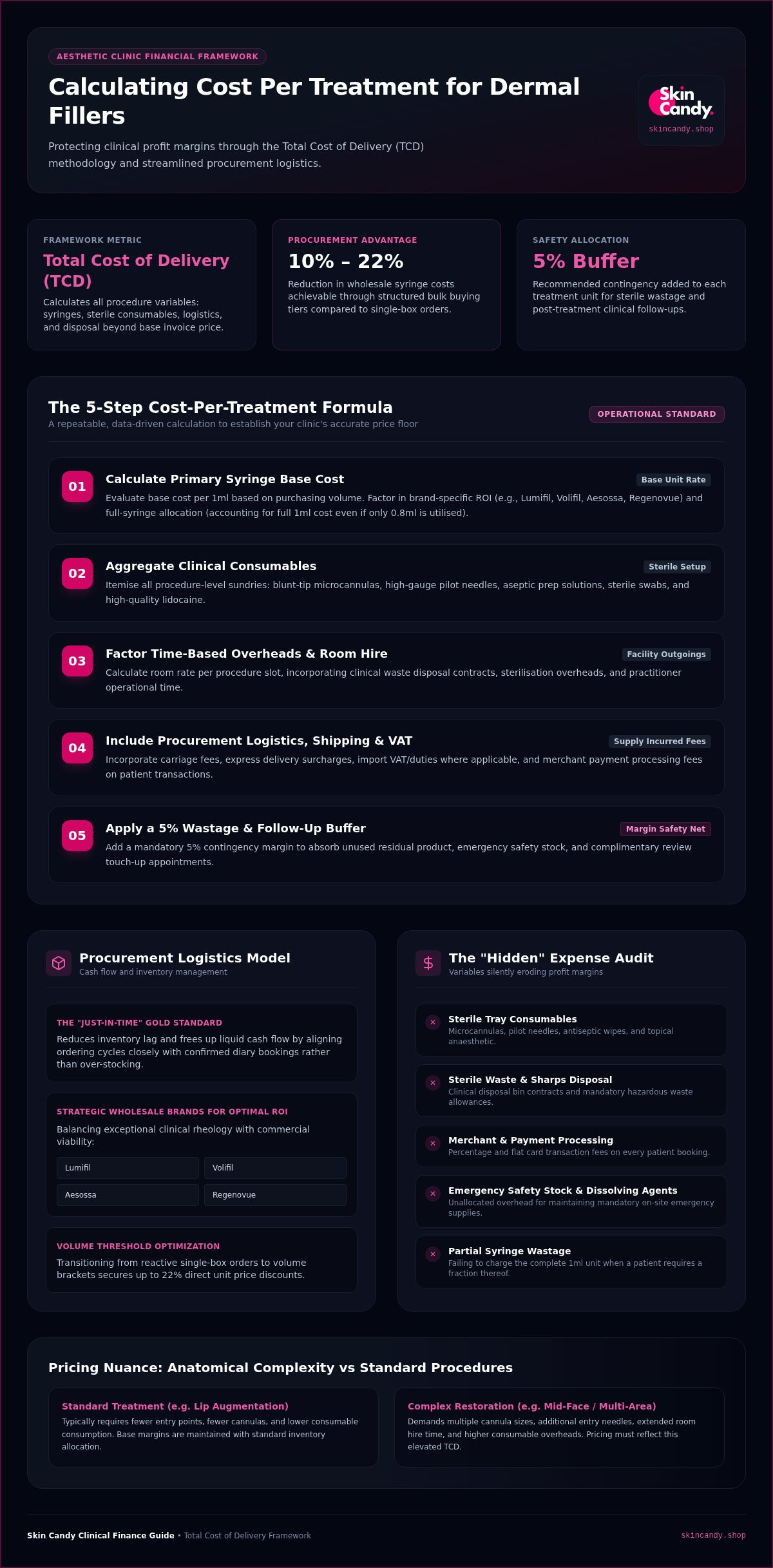
Achieving a healthy gross margin requires more than just marking up your syringe price. You need a repeatable, data-driven framework for calculating cost per treatment for dermal fillers. This ensures every procedure remains profitable after accounting for all tangible and intangible outgoings. Use this five-step formula to establish your clinic's price floor.
- Step 1: Calculate the base cost of the primary filler syringe.
- Step 2: Aggregate the cost of clinical consumables.
- Step 3: Factor in time-based overheads and room hire.
- Step 4: Include procurement logistics, including shipping and VAT.
- Step 5: Add a 5% buffer for wastage and clinical follow-ups.
Calculating the Syringe Base Rate
The syringe is your most significant direct expense. Evaluate your cost-per-ml based on your current purchasing volume. Bulk buying tiers often provide a 10% to 22% reduction in wholesale syringe costs compared to single-box orders. Brand choice also dictates your baseline; premium options like Lumifil offer a different ROI profile compared to high-performance alternatives like Regenovue. Don't forget wastage management. If you frequently use only 0.8ml of a 1ml syringe, you must account for the full 1ml cost unless you've developed a multi-area package that utilises the entire product.
The "Hidden" Consumable Checklist
Small items quickly erode profits if they aren't itemised. Every standard dermal filler procedure requires a sterile tray setup. This includes blunt-tip microcannulas, pilot needles, aseptic prep solutions, and high-quality lidocaine. Whilst these items seem inexpensive individually, they typically add a significant amount to every treatment ticket. You can find detailed inventory tips in our guide on mastering aesthetic clinic procurement UK to help streamline these costs.
Beyond the tray, consider time-based overheads. Your room hire and practitioner time are fixed costs that must be amortised across your daily patient volume. According to American Society of Plastic Surgeons cost benchmarks, national averages for product costs are only one part of the equation; provider expertise and facility fees are vital components of the final retail price. Finally, ensure your logistics are efficient. Sudden stock-outs lead to expedited shipping fees that can wipe out your net margin on a single syringe. You can browse professional-grade fillers with reliable delivery options to avoid these last-minute expenses and keep your margins secure.
Procurement Logistics: How Delivery Speed Impacts Your Bottom Line
Logistics are the silent engine of clinic profitability. Whilst clinical skill drives patient satisfaction, your procurement strategy dictates whether that satisfaction translates into a sustainable margin. In 2026, the "Just-in-Time" (JIT) procurement model has become the industry gold standard. Rather than locking up thousands of pounds in stagnant inventory, successful practitioners order exactly what they need for the upcoming week. This approach requires a reliable UK-based wholesale partner capable of rapid fulfilment to ensure your treatment room never sits empty due to a stock-out.
Failing to account for logistics when calculating cost per treatment for dermal fillers is a common oversight. You must consider the "Cost of Delay." If a patient requests a specific product like Volifil or Regenovue and you don't have it, you lose the immediate revenue. Conversely, stockpiling high volumes of niche fillers risks "dead stock" if patient trends shift or products reach their expiry date. Every expired syringe is a 100% loss that must be absorbed by your successful treatments. Authenticity is equally vital; always ensure your supply chain aligns with FDA guidelines on soft tissue fillers to avoid the catastrophic financial and legal risks associated with grey-market sourcing.
Reducing Inventory Lag and Improving Cash Flow
Inventory lag occurs when capital is tied up in products sitting on a shelf rather than being converted into service revenue. High-volume stockpiling, once a common recommendation, is now a liability in a fast-moving market. Rapid fulfilment allows you to maintain a responsive treatment menu without the cash-flow burden of excessive stock. By leveraging next day delivery dermal fillers UK, you can book patients with confidence, knowing your supplies will arrive exactly when required. This agility keeps your liquid capital available for other business needs, such as marketing or equipment upgrades.
Shipping and Fulfilment Costs
Shipping fees are a direct component of your Total Cost of Delivery (TCD). If you frequently pay for expedited delivery because of poor planning, you're actively eroding your profit. Evaluate your supplier’s distribution network for consistency. A partner with national coverage ensures that your cost-per-treatment remains stable, regardless of your location. Skin Candy’s next-day delivery service eliminates the need for expensive, last-minute replenishment orders. When your logistics are predictable, your margins are protected. Focus on partners that offer transparent, reliable shipping to ensure that delivery costs don't become a hidden drain on your clinical profits.
Comparing Wholesale Filler Brands for Optimal ROI
Brand selection is the pivot point for clinic profitability. Whilst heritage brands have name recognition, high-performance alternatives like Aesossa and Volifil offer the same clinical precision with a significantly better ROI. Balancing patient expectations with your bottom line is essential when calculating cost per treatment for dermal fillers. Choosing the right brand allows you to maintain high standards whilst lowering your acquisition costs. Practitioners are increasingly prioritising products that offer predictable results without the legacy brand surcharge. This shift allows for a more flexible pricing strategy that can withstand market fluctuations.
Lumifil vs. Traditional Premium Brands
Lumifil has disrupted the market by offering premium-grade rheology without the inflated heritage price tag. Evaluating the price-to-performance ratio shows that Lumifil dermal filler UK is a primary driver for clinic growth. Practitioners report high patient satisfaction rates because the product integrates seamlessly into the tissue, providing natural-looking results. By lowering procurement costs, you can offer competitive pricing whilst protecting your gross profit margins. This brand allows you to cater to different price points without compromising the quality of the aesthetic outcome. It's a reliable choice for practitioners who want to scale their business without sacrificing clinical integrity.
Expanding the Menu: Skin Boosters and Specialised Fillers
Diversifying your treatment menu is a strategic way to increase clinical revenue. Mesotherapy and skin boosters, such as Lumi Meso and Hyaron, offer a high ROI because they often require fewer high-cost consumables than full-face balancing. These treatments appeal to a broader demographic and encourage repeat visits, providing a steady stream of recurring revenue. Polynucleotides are another high-margin addition to consider for regenerative aesthetics. When calculating cost per treatment for dermal fillers, compare these margins to your standard HA injections to identify your most profitable service lines. You can explore a full range of mesotherapy products wholesale UK to refine your clinical strategy and maximise your room utilisation rates.
Order your clinical supplies from Skin Candy to secure your margins with reliable next-day delivery.
Strategies for Reducing Treatment Costs Without Compromising Safety
Reducing costs in a clinical setting must never involve compromising on product quality or patient safety. Instead, profitability is found in the elimination of operational waste and the standardisation of your clinical environment. When you are calculating cost per treatment for dermal fillers, every minute of practitioner time and every single-use consumable must be accounted for. Efficiency is the engine that protects your margins in a competitive market. It allows you to maintain high standards whilst remaining commercially agile.
Smart Bulk Procurement
Moving from single syringe orders to wholesale bundles is a natural progression for high-volume clinics. Acquisition costs are typically tiered. Ordering in larger quantities can significantly reduce the unit price of your primary fillers. However, managing shelf-life is critical. You don't want capital tied up in slow-moving stock that reaches its expiry date before it can be used. Use Skin Candy’s wholesale platform to organise your procurement around your busiest periods. This ensures you benefit from bulk pricing whilst maintaining the "Just-in-Time" efficiency discussed earlier in this guide. Focus your bulk purchases on high-turnover products like Lumifil or Volifil to ensure a rapid return on your investment.
Operational Efficiency and Time Management
Time is a finite resource. Practitioners often fail to price it accurately. Avoid the "Hourly Rate" trap by ensuring your treatment slots account for the full clinical cycle, including set-up and post-treatment advice. Streamlining your consultations is a powerful way to maximise room turnover. Use digital consent forms and pre-treatment questionnaires to reduce administrative time during the appointment. This allows you to focus purely on clinical excellence whilst increasing the number of productive visits per day. Every minute saved in administration is a minute that can be reinvested into billable clinical work.
Predictability is the foundation of a stable business. Standardise your consumable kits for specific treatments to ensure your expenditure is consistent. A set "Lip Kit" or "Cheek Kit" containing the exact needles, swabs, and aseptic solutions required prevents the "creep" of small expenses. Implement a monthly cost-review routine to audit your stock usage against your treatment records. This final check ensures that your actual costs align with your projected margins. By refining these internal systems, you secure the commercial success of your clinic without ever lowering your clinical standards.
Future-Proof Your Clinic's Profitability
Precision in financial analysis is the foundation of a resilient aesthetics business. You've now mastered the framework for calculating cost per treatment for dermal fillers, moving beyond simple syringe markups to account for every clinical variable. By adopting a "Just-in-Time" procurement model, you eliminate inventory lag and keep your liquid capital available for strategic reinvestment. Standardising your consumable kits and auditing your monthly expenditure will ensure your margins remain protected against rising overheads and supply chain shifts.
Choosing high-performance brands like Lumifil or Aesossa ensures you maintain exceptional patient outcomes whilst protecting your bottom line. Reliability in your supply chain is non-negotiable for consistent room turnover and professional peace of mind. Skin Candy acts as the silent engine behind your commercial success. As an official distributor, we provide next-day UK delivery on all professional aesthetic supplies to ensure your clinic remains fully operational and responsive to patient demand. Optimise your clinic margins with Skin Candy’s wholesale fillers and secure your commercial future today. You have the tools to build a highly profitable, results-driven practice.
Frequently Asked Questions
How do I calculate the VAT on dermal fillers for my clinic?
VAT is typically applied at the standard rate of 20% on aesthetic consumables in the UK. When calculating cost per treatment for dermal fillers, always ensure you are using the "gross" price including VAT unless your clinic is VAT-registered and can reclaim the input tax. Consult with a specialist accountant to verify if your specific medical treatments qualify for exemptions, as most elective cosmetic procedures do not meet the criteria for medical relief.
Is it cheaper to buy dermal fillers in bulk or as needed?
Buying in bulk offers lower unit costs through wholesale bundles, but "as needed" procurement via a Just-in-Time model protects your immediate cash flow. High-volume clinics benefit from bulk tiers for staple products like Lumifil. However, smaller practices often find that ordering as needed reduces the risk of expired "dead stock." Skin Candy’s next-day delivery makes JIT a viable strategy to keep your liquid capital free whilst maintaining a full treatment menu.
What are the most common hidden costs in a dermal filler treatment?
Common hidden costs include clinical waste disposal, merchant credit card processing fees, and emergency safety stock like hyaluronidase. You must also account for sterile consumables such as blunt-tip cannulas, pilot needles, and antiseptic prep. These small expenses silently erode your margins if they aren't itemised. Including a 5% buffer for sterile waste and clinical follow-ups is a professional standard for accurate financial planning and protecting your clinic's bottom line.
How much should I mark up my fillers to ensure a healthy profit?
Target a gross profit margin of 60% to 70% to ensure your clinic remains sustainable. Rather than a simple markup, use a margin divisor formula where you divide your total cost of delivery by your desired profit percentage. This ensures your retail price covers not just the syringe, but also your practitioner time, room hire, and marketing overheads. Competing on price alone is a race to the bottom that devalues your clinical expertise.
Does the type of needle or cannula affect the cost per treatment?
Yes, the choice between a needle and a high-quality blunt-tip microcannula significantly impacts your total cost of delivery. Cannulas are specialised sterile instruments that carry a higher unit price than standard needles. Whilst they improve patient safety and reduce bruising in areas like the jawline, you must factor this additional expense into your final treatment quote. Standardising your tray setups helps make these variable consumable costs more predictable across your entire patient list.
Should I charge more for premium filler brands like Regenovue or Aesossa?
Your pricing should reflect the acquisition cost and the specific clinical results of the brand used. Whilst high-performance fillers like Aesossa or Regenovue offer exceptional rheological properties, your patient is paying for the outcome and your expertise. If a premium brand requires a higher wholesale investment, your retail price must scale accordingly to protect your margin. Many practitioners use tiered pricing to offer patients a choice between different filler ranges based on their aesthetic goals.
How can I reduce wastage of dermal fillers in my practice?
Reduce wastage by implementing strict inventory controls and refining your injection techniques. Never split single-use syringes between patients due to infection risks. Instead, design treatment packages that utilise the full volume, such as mid-face restoration or multi-area balancing. Conduct monthly audits to match your product orders against your clinical records. This identifies if specific practitioners are over-using consumables or if stock is reaching its expiry date prematurely, allowing for better procurement planning.
What is the impact of next-day delivery on my clinic’s cash flow?
Reliable next-day delivery is a critical component of calculating cost per treatment for dermal fillers because it reduces inventory lag. By ordering supplies only when you have confirmed bookings, you avoid tying up thousands of pounds in stagnant stock. This "Just-in-Time" approach ensures your cash flow remains liquid for other business needs, such as marketing. It also eliminates the need for expensive, last-minute replenishment orders that carry high expedited shipping fees.