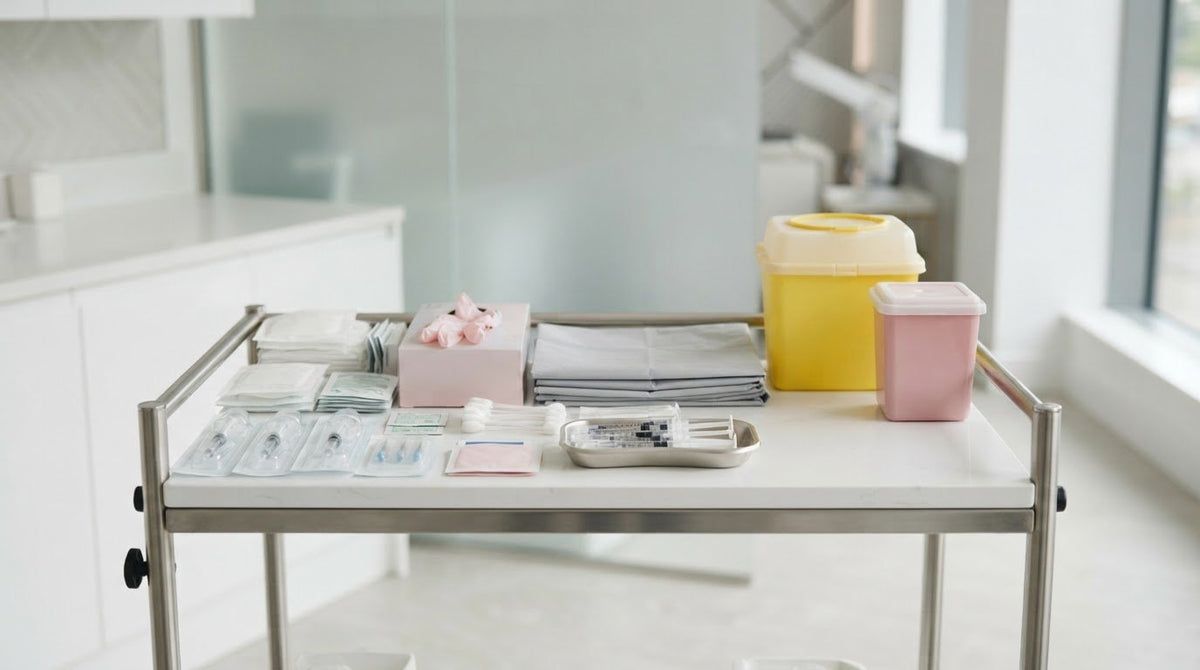
Consumables Needed for a Dermal Filler Procedure: UK Checklist
The most reliable filler tray isn’t the one with the most items. It’s the one built around the product being used and the clinic’s procedure protocol. Knowing which consumables needed for dermal filler procedure are essential, and which depend on the product or technique, helps prevent last-minute gaps without overstocking.
It’s easy to focus on the filler and needles, then overlook sterile supplies, waste disposal or the paperwork needed to document the procedure. A dependable setup covers the full workflow, from preparing the treatment area to managing used materials and completing records.
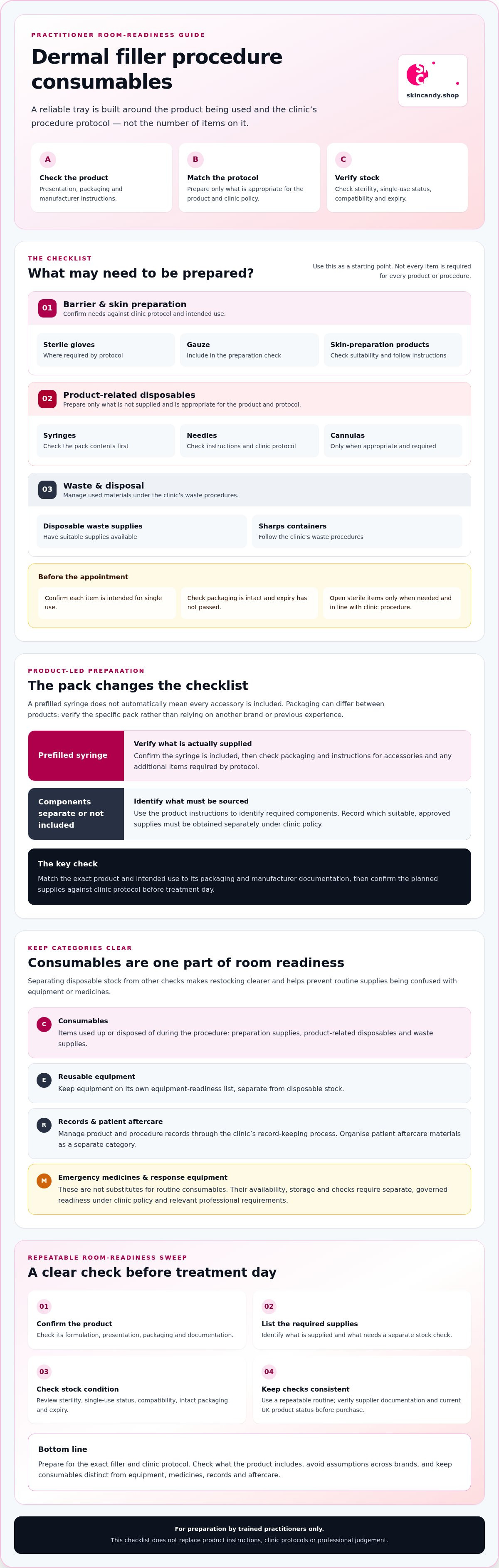
This practitioner-focused checklist explains how to prepare the right consumables, confirm product-specific requirements and keep treatment-room stock consistent. It covers core sterile and skin-preparation supplies, injection-related items, waste and documentation, and what to verify against product instructions and clinic protocol. It also separates consumables from reusable equipment and patient aftercare, making the checklist easier to use and maintain.
Key Takeaways
- Use the consumables needed for dermal filler procedure as a product- and protocol-led checklist, not a one-size-fits-all tray.
- Check the filler’s presentation and product documentation to confirm which components are supplied and what else must be prepared.
- Compare stock by sterility, single-use status, compatibility, expiry and traceability before treatment day.
- Keep consumables distinct from reusable equipment, medicines, records and patient aftercare to make stock checks clearer.
- Build a repeatable room-readiness routine and verify supplier documentation and current UK product status before purchase.
Consumables needed for a dermal filler procedure: what belongs on the checklist?
Prepare treatment-room supplies around the selected filler’s presentation and your clinic protocol. A reliable checklist helps you identify what must be available, what may come with the product and what needs a separate stock check. The Injectable fillers overview describes the range of materials used, but it doesn’t replace the instructions for the specific product being prepared.
Keep categories distinct. Consumables are items used up or disposed of during the procedure. Reusable equipment, medicines, procedure records and patient aftercare each need their own checks. Separating them makes restocking clearer and helps prevent a medicine or piece of equipment being treated as a routine disposable supply.
Which single-use items may a clinic need to prepare?
Use this as a starting list, then adjust it to the manufacturer’s instructions and clinic policy. Not every item is required for every product or procedure.
- Barrier and preparation supplies: sterile gloves where required by protocol, gauze, appropriate skin-preparation products and dressings where indicated.
- Product-related disposables: syringes, needles or cannulas only when they aren’t supplied with the filler and are appropriate for its instructions and the practitioner’s protocol.
- Waste supplies: suitable disposable waste and sharps containers, managed under the clinic’s waste procedures.
Before the appointment, confirm that each item is intended for single use, its packaging is intact and its expiry date hasn’t passed. Check that skin-preparation products are suitable for the intended use and follow their instructions. Open sterile items only when needed and in line with clinic procedure.
What should not be mistaken for a consumable?
Reusable treatment-room equipment belongs on an equipment-readiness list, not the disposable stock count. Prepare documentation, including product and procedure records, through the clinic’s record-keeping process. Patient aftercare materials are a separate category too, even if they’re organised in the room.
Emergency medicines and response equipment require separate, governed readiness checks. They aren’t substitutes for routine consumables. Their availability, storage and checking should follow clinic policy and relevant professional requirements.
Exact inclusions vary with filler formulation, presentation and manufacturer instructions. Some components may be supplied with a product; others may need to be sourced separately. Check the contents before treatment day rather than assuming every filler arrives with the same accessories. This checklist supports preparation by trained practitioners only. It doesn’t replace product instructions, clinic protocols or professional judgement.
How the filler product changes your dermal filler procedure supplies
The consumables needed for dermal filler procedure can vary with the formulation, product presentation and intended use. Don’t build a tray around a generic assumption about a brand. Check the packaging and manufacturer documentation for the exact product, then confirm the planned supplies against your clinic protocol before treatment day.
How do prefilled syringes and supplied components affect the checklist?
A prefilled syringe doesn’t automatically mean every accessory is included. Packaging may differ between products, so check the contents of the specific pack rather than relying on experience with another brand. Use this comparison as a verification prompt, not as a claim about what any particular filler supplies:
| Presentation to check | What to verify before assembling supplies |
|---|---|
| Prefilled syringe | Confirm the syringe is included, then check the packaging and instructions for supplied accessories and any additional items required by protocol. |
| Components supplied separately or not included | Identify each required component in the product instructions. Record which suitable, approved supplies must be obtained separately under clinic policy. |
Never assume different brands, formulations or presentations provide identical syringes, needles or accessories. Note the additional supplies required for the chosen product and intended use. This helps staff prepare consistently without duplicating included items or overlooking missing ones.
Why do instructions and intended use matter?
Before use, match the product to its packaging and accompanying documentation. Check the product identity, batch details and expiry, and ensure the documentation relates to that exact product and intended use. If information is missing, unclear or doesn’t match, pause and resolve the discrepancy through the clinic’s established process instead of making assumptions based on another filler.
Formulation and presentation can affect preparation requirements. Don’t generalise accessory requirements or technique from one product to another. Follow the manufacturer’s instructions alongside clinic protocol, and use professional standards to guide safe, documented practice. The JCCP Code of Practice is a reference point for standards in non-surgical aesthetics; it doesn’t replace product-specific directions.
For a procurement example, the Lumifil dermal filler market guide provides product-focused context. Skin Candy supplies professional aesthetic products, including dermal fillers. Review available product information and verify current documentation and UK status before purchase.
How to compare procedure consumables and keep clinic stock ready
A dependable stock system checks more than the quantity on the shelf. Compare each item with the procedure it supports, the product instructions and your clinic’s requirements. This helps distinguish routine supplies from items needed only for a particular filler presentation or protocol, reducing last-minute gaps and avoidable over-ordering.
Which checks help assess a consumable before use?
Apply the same checks when stock arrives and before use. If packaging is damaged, an expiry date has passed or an applicable sterility indicator raises concern, follow clinic policy and don’t use the item. Confirm intended use and compatibility through reliable product documentation rather than appearance or assumption.
- Packaging and sterility: Check that packaging is intact and review sterility indicators where applicable.
- Expiry: Confirm the stated expiry remains valid for the planned use.
- Compatibility: Match the item to the product instructions and clinic protocol.
- Traceability: Record receipt details and relevant batch or lot information according to clinic procedures.
Keep routine supplies, such as protocol-required gauze and skin-preparation products, on a separate stock list from product-specific accessories. This makes it easier to see which items support regular appointments and which should be replenished only when a particular product or protocol requires them.
How can clinics reduce stock gaps and avoid unnecessary waste?
Set a procedure-based par level for each item. Use appointment schedules and actual product turnover to decide the minimum stock that should trigger replenishment. A threshold that is too low risks a shortage; a threshold set without regard to demand can leave the clinic holding supplies that expire before use. Document each threshold and assign responsibility for reviewing it.
Rotate stock using first-expiry-first-out (FEFO): place items with the earliest expiry where they’ll be selected first, while keeping storage conditions aligned with the manufacturer’s instructions and clinic policy. Review expiry dates routinely, remove unsuitable stock from use and record adjustments so the inventory count stays accurate.
Replenishment planning also depends on the supplier. Check current availability, delivery terms and lead times before relying on a delivery schedule. Don’t treat a previous order experience as a standing guarantee. For wider inventory planning, see the 2026 clinic procurement and just-in-time logistics guide. Apply its planning ideas to your own demand patterns, then review par levels as appointment volumes and product use change.
Use the same review cycle for all consumables needed for dermal filler procedure: check condition, expiry, compatibility and records, then replenish against documented need. A consistent process keeps stock usable, traceable and ready for the relevant clinic protocol.
How to prepare the treatment room and manage consumables responsibly
A room-readiness sequence helps staff prepare consistently without turning a stock checklist into an injection guide. Start by confirming the planned product and procedure-specific supplies. Then prepare the environment, check protective items and waste arrangements, and complete the clinic’s required records. Follow clinic policy throughout, including hand hygiene, surface preparation and the selection and use of personal protective equipment (PPE).
What should be checked before the patient appointment?
Confirm the selected product, its accompanying documentation and the supplies required for that appointment. Check that sterile items remain sealed and within expiry, and that required PPE is available. Prepare surfaces in line with clinic cleaning procedures. Make sure suitable sharps containers and the clinic’s designated waste routes are accessible before starting, rather than searching for them during room preparation.
- Product and records: Match the planned product to its documentation and prepare the relevant procedure records.
- Room and PPE: Complete hand hygiene and surface preparation, then check PPE against clinic policy.
- Waste readiness: Confirm sharps containers and appropriate waste receptacles are available and positioned according to local procedures.
Use current MHRA guidance and applicable clinic governance requirements to verify the details relevant to your setting. Requirements and procedures can differ, so don’t rely on a general checklist in place of current guidance or local policy.
How should used and unused materials be handled?
Keep clean, unused supplies separate from materials that have been opened or used. Don’t reuse single-use items or return opened supplies to clean stock, even if they appear unused. Segregate sharps, clinical waste and uncontaminated packaging according to current local procedures and the clinic’s waste arrangements. If you’re unsure how an item should be handled, follow the designated procedure rather than assuming it belongs in general waste.
Close and manage waste containers in line with the clinic’s process. Record product traceability and waste-handling details where clinic governance requires them. Clear documentation supports an auditable workflow, while consistent separation reduces the risk of clean stock being mixed with used materials.
Make these checks part of the room reset as well as pre-appointment preparation. Staff can then identify missing supplies, unsuitable stock or a waste-management issue before the next appointment is due. For product procurement to support your clinic’s stock planning, browse professional dermal fillers at Skin Candy.
Where to source dermal filler procedure consumables and complete your checklist
Use a consistent procurement check before ordering the consumables needed for dermal filler procedure. Confirm that the supplier can provide relevant product documentation and batch traceability, and check its current professional supply requirements. Verify the product’s identity and current UK status using appropriate documentation before purchase. Don’t rely on a product name alone or on general claims that aren’t supported by records.
What should a practitioner verify when choosing a supplier?
Check the documentation available for the specific product and how batch details can be traced through your purchasing and clinic records. Before placing an order, confirm stock availability, delivery options and fulfilment terms directly with the supplier. These can change, so don’t build appointment planning around an unverified delivery estimate. Keep a record of checks and supplier follow-up as part of your clinic’s procurement process.
Skin Candy is a professional aesthetic product wholesaler serving clinics and practitioners. Its dermal filler range includes Lumifil, Regenovue and Aesossa. These are examples of products available through the supplier, not recommendations for a particular patient or procedure. Verify current product documentation, UK status and supply terms for the specific item you’re considering.
What belongs on the final pre-appointment checklist?
Keep this checklist with your clinic’s procedure-readiness process. Confirm each item against the selected product instructions and clinic protocol:
- Product: Check the product identity, intended use, packaging and accompanying documentation.
- Sterile supplies: Confirm required items are compatible, sealed, intact and within expiry; identify any components that need to be supplied separately.
- Records: Prepare the required procedure documentation and a process for recording product traceability.
- Room and waste: Confirm room readiness, PPE, sharps containers and waste arrangements under clinic policy.
- Stock: Note low or expiring items, record replenishment needs and assign supplier follow-up.
This final check turns purchasing into a repeatable clinic process: order against documented need, verify what arrives, then update stock records. For professional aesthetic products, including dermal fillers, explore Skin Candy’s professional product range. Check current availability and fulfilment terms directly before ordering.
Make your next procedure setup more dependable
A reliable checklist starts with the selected filler and clinic protocol. Confirm which components are supplied, check sterile items and expiry dates, and include documentation, waste arrangements and stock rotation in the same readiness process. This product-led approach helps clinics prepare the consumables needed for dermal filler procedure without relying on assumptions or a one-size-fits-all tray.
For professional procurement, Skin Candy serves UK clinics and practitioners, with dermal filler offerings including Lumifil, Regenovue and Aesossa. Same-day and next-day delivery options are available, but check current availability and terms directly before relying on them for treatment planning.
Explore Skin Candy’s professional aesthetic product range and verify product documentation and supply details before ordering. With clear checks and organised stock, you can prepare consistently and keep your clinic checklist ready for the next appointment.
Frequently Asked Questions
What consumables are needed for a dermal filler procedure?
The consumables needed for dermal filler procedure depend on the selected product and clinic protocol. A checklist may include protocol-required gloves, gauze, skin-preparation products and dressings, plus a syringe, needle or cannula if appropriate and not supplied with the product. Include suitable sharps and clinical waste supplies. Check manufacturer instructions, packaging integrity and expiry dates, and keep documentation, reusable equipment and medicines on separate readiness lists.
Are needles or cannulas included with dermal fillers?
Some product packs may include injection components, but contents vary. Check the packaging and instructions for the exact filler rather than assuming every brand supplies the same needles, syringes or accessories. If a component isn’t included, confirm the appropriate additional supply through the product documentation and clinic protocol. Record what must be sourced separately, and don’t substitute a component based only on familiarity with another product.
Do clinics need sterile gloves for dermal filler procedures?
Follow clinic policy and the relevant professional guidance for glove selection. Whether sterile gloves are required depends on the procedure protocol and clinical circumstances, so don’t treat them as a universal substitute for hand hygiene. Prepare the required gloves before the appointment, check their packaging is intact and confirm they’re within expiry. Keep other PPE available as specified by clinic policy and the relevant risk assessment.
How should dermal filler consumables be stored?
Store each consumable according to its manufacturer’s instructions and clinic policy. Keep sterile items in intact packaging, protected from conditions that could compromise them, and organise stock so staff can check expiry dates easily. Use first-expiry-first-out rotation, placing items with the earliest expiry for use first. Store the filler itself under its own product-specific requirements, which may differ from those for needles, gauze or other supplies.
Can dermal filler consumables be reused?
No. Don’t reuse items labelled for single use, and don’t return opened supplies to clean stock, even if they appear unused. Dispose of sharps and other used materials through the clinic’s current waste procedures. Reusable equipment is a separate category and must be managed according to its manufacturer’s instructions and the clinic’s validated cleaning or reprocessing process. If packaging is damaged or sterility is uncertain, follow clinic policy and don’t use the item.
What emergency supplies should a clinic have for filler procedures?
Clinics should maintain an accessible emergency kit and a response plan under their governance arrangements. Standard emergency-kit items for aesthetic practice include adrenaline and high-dose hyaluronidase, at least 1,500 units. Hyaluronidase is a prescription-only medicine in the UK and must be prescribed by a qualified prescriber following a face-to-face consultation. Confirm required medicines, equipment, storage and checks with current professional guidance and clinic policy.
How can a clinic check whether a dermal filler is suitable for UK supply?
Check the exact product’s identity, supplier documentation, batch traceability and current regulatory status before purchase. In Great Britain, dermal fillers must carry a CE or UKCA mark to be legally placed on the market; MHRA transitional arrangements allow qualifying CE-marked fillers to be sold until 30 June 2030. Verify current MHRA guidance and requirements for the part of the UK where the product will be supplied, including any differences that may apply.