
Client Aftercare Instructions for Fat Dissolving: A Practitioner Checklist
What makes client aftercare instructions for fat dissolving reassuring is not a generic list of rules, but clear guidance on what applies to that client’s treatment and what to do if they have questions or concerns. Recommendations can vary by product, treatment area and individual circumstances. Check every instruction against the product’s current instructions for use and your clinical judgement, without promising a particular result.
A concise, consistent handout can help your team explain what happens next. But if it leaves out product-specific directions or how to raise a concern, clients may be unsure what to do. Use a template to organise the information, then verify and personalise its content before giving it to the client.
This practitioner checklist covers what to include, how to set expectations, what concerns to escalate and how to record instructions and follow-up. It is a framework for clear communication, not a one-size-fits-all protocol. Use it to prepare client-facing guidance that reflects the product used and gives clients a clear route back to the treating clinic.
Key Takeaways
- Build client aftercare instructions for fat dissolving around the product used, the treatment and the individual client.
- Make handouts easy to scan, with clinic contact details and follow-up information alongside verified product guidance.
- Separate reusable wording from product-specific directions and advice that requires practitioner judgement.
- Use a consistent workflow to verify guidance, explain it to the client and document what was provided.
- Keep product sourcing and clinical aftercare responsibilities distinct when organising your clinic’s processes.
Client aftercare instructions for fat dissolving: what the checklist needs to achieve
Client aftercare instructions for fat dissolving are treatment-specific directions provided and explained by the practitioner who carried out the procedure. They help clients understand what guidance applies, how to raise concerns and what follow-up has been planned. Their purpose is clear communication, not a promise of a particular result.
Before issuing instructions, the treating practitioner should check them against the current product information and clinic protocols. A useful checklist prompts the team to provide accurate, consistent information while leaving clinical decisions with the practitioner. For neutral background on the procedure and its history, see Injection lipolysis, which also discusses controversy around its use.
Why a generic fat-dissolving aftercare sheet can fall short
Products, treatment plans and individual circumstances can differ. A standard handout can provide a consistent structure, but it should not turn one client’s directions into universal guidance.
Separate reusable information from content that needs clinical verification. For example, a template can prompt the practitioner to record the product used, the treated area, relevant directions and the clinic’s contact route. The practitioner must confirm the actual instructions for each case. Don’t present unverified timelines, restrictions or expected reactions as applying to every product or client.
One template cannot replace product-specific guidance because instructions may differ by product and treatment plan.
Who owns the aftercare conversation?
The treating practitioner is responsible for tailoring and explaining the client’s instructions. They can check the directions against the product information and clinic protocols, clarify what applies to that client, and explain how to contact the clinic with questions or concerns. A handout supports this conversation, but does not replace it.
Clients should contact their treating clinic for advice about their own treatment, rather than relying on a generic template or information intended for another product. If guidance is unclear, the clinic should clarify it directly and document any follow-up in line with its processes.
A wholesaler has a different role. Skin Candy supplies professional aesthetic products, including fat-dissolving agents, but does not provide in-clinic treatment or patient-specific aftercare advice. Product sourcing and clinical communication are related operationally, but remain distinct responsibilities: the clinic selects and uses products within its processes, and the treating practitioner provides the client’s tailored guidance.
What to include in a fat-dissolving client aftercare handout
A practical handout should help the client find the relevant instructions quickly and help the clinic record what was explained. Keep it specific to the treatment, concise enough to scan and checked against the product information and clinic protocol before use. These client aftercare instructions for fat dissolving should distinguish verified guidance from details the practitioner has personalised.
A useful aftercare handout is clear, tailored to the treatment and consistent with verified product guidance.
A practical structure for client-facing instructions
Start with the essentials: the treating clinic’s name, contact details and treatment date. Identify the product and treated area where appropriate under clinic procedures, then include any planned follow-up. Use short headings, checkboxes and space for practitioner notes so clients can find the information they need without searching through dense paragraphs.
- Confirmed aftercare actions: list only instructions verified for the product and treatment plan.
- When to seek advice: explain which concerns should prompt contact with the clinic and how to get in touch.
- Personalised notes: record directions or follow-up details specific to the client.
Keep action points direct. Use plain language, one instruction per bullet and clear labels such as “Follow-up” or “Contact the clinic”. Avoid abbreviations or technical terms unless the practitioner explains them. Before handing over the sheet, check that the contact details are correct and that any blank fields have been completed or removed.
Set expectations without making unsupported claims
Describe possible post-treatment experiences only when the practitioner has confirmed they apply to the product and protocol. Don’t copy effects, restrictions or recovery timings from a different product’s handout. Avoid guarantees, fixed recovery timelines and claims about results. If information has not been verified for the treatment, leave it out until the practitioner confirms what is appropriate.
Reference material also needs context. The Official FDA Kybella Prescribing Information is a US product label for Kybella. It may inform understanding of that product, but it is not a universal aftercare protocol or a substitute for checking the relevant product information and clinic guidance in the UK.
Ask the practitioner to explain which concerns require clinic follow-up and what contact route the client should use. Make the route easy to find on the handout, so clients do not have to guess whom to contact if they are unsure.
For clinic teams reviewing procurement alongside their own clinical processes, explore professional fat-dissolving agents from Skin Candy, a wholesale supplier. Product sourcing supports procurement; client-specific aftercare remains the treating practitioner’s responsibility.
Are standard fat-dissolving aftercare instructions enough for every client?
A standard handout can make communication more consistent, but it cannot replace practitioner review. The product, treatment plan and individual client can affect which instructions apply. Use a template to prompt a clear conversation, not to assume every client needs identical advice.
A template standardises communication, whilst clinical review personalises advice. This distinction helps clinics work efficiently without turning general wording into unverified guidance. If information is missing or unclear, resolve it before giving the client their instructions.
What can be standardised and what must be checked
Standardise the handout’s layout, contact details, documentation prompts and plain-language presentation. Then check the clinical content against the current product instructions for use and the clinic’s protocol. The treating practitioner should tailor individual advice. This keeps the process consistent while showing which details need verification for the product and client.
| Information type | What to do |
|---|---|
| Reusable wording | Use a consistent layout, clinic contact route, treatment-date field and prompts for follow-up or practitioner notes. |
| Product-specific details | Verify directions and any information about possible effects against the current instructions for use and clinic protocol. |
| Client-specific advice | Have the treating practitioner tailor and explain guidance for the individual treatment plan and relevant circumstances. |
Keep these categories distinct when preparing client aftercare instructions for fat dissolving. For example, the contact-details field can stay the same across handouts, while the clinical content must be checked before each handout is issued.
When should the client contact the treating clinic?
Give clients a clear contact route for questions or concerns, and make it easy to find on the handout. The practitioner should specify which concerns need follow-up and what action the client should take, using wording appropriate to the product, treatment and clinic protocol.
Don’t copy symptoms, severity thresholds or recovery timelines from a generic template unless they have been clinically verified for the treatment. If the practitioner cannot confirm the right wording, pause before issuing the handout and resolve the uncertainty. Clear escalation guidance helps clients know where to turn without implying that every post-treatment experience is the same.
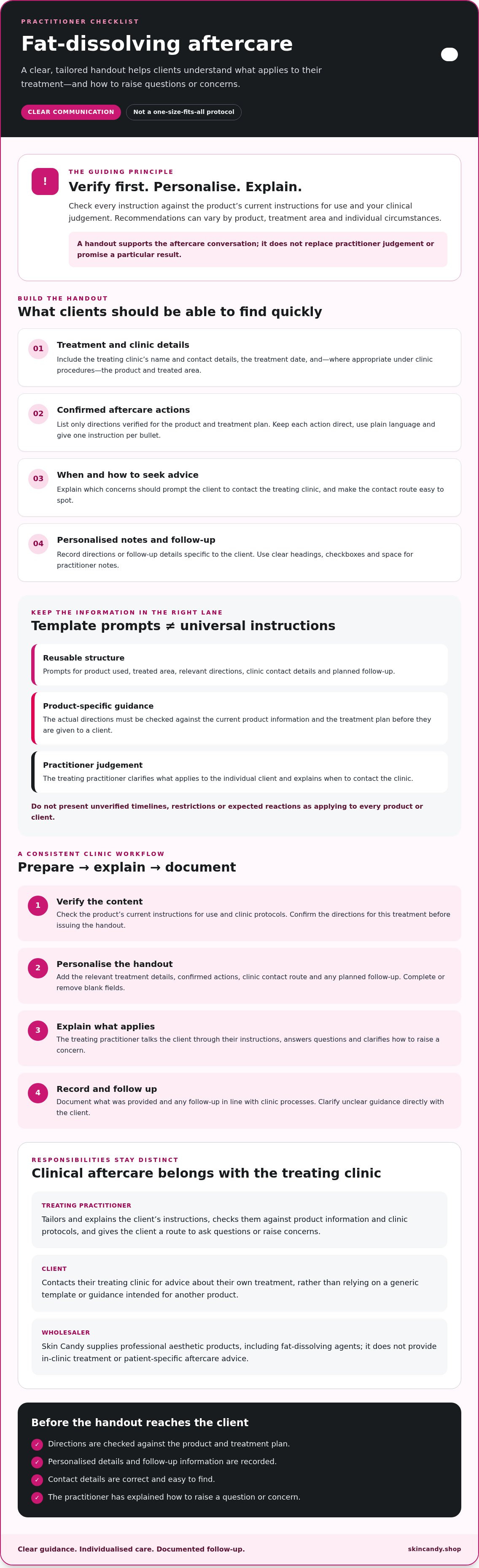
A clinic workflow for preparing and explaining fat-dissolving aftercare
A repeatable workflow helps the team prepare client aftercare instructions for fat dissolving without treating a checklist as a substitute for clinical judgement. Keep product selection separate from aftercare decisions: a professional fat-dissolving agents guide can support product research, but it does not replace the product’s current instructions for use or the treating practitioner’s advice.
Use this sequence before the client leaves:
- Verify the product. Confirm the exact product used and consult its current instructions for use. Check that the information applies to the treatment being discussed.
- Review the handout. Make sure it reflects the practitioner-approved protocol and the conversation with the client. Remove outdated, conflicting or unverified wording rather than relying on a template that may no longer apply.
- Personalise the details. Add the treatment date, relevant guidance, follow-up information and any practitioner notes. A staff checklist can prompt these steps, but the practitioner must decide what applies to the individual client.
- Explain the instructions. Talk the client through the key actions and the clinic’s guidance on when to seek advice. Invite questions and check that they know which contact route to use, rather than assuming the handout is self-explanatory.
- Document and arrange follow-up. Record what information was provided, any personalised advice and agreed follow-up details in the clinic records. Use the clinic’s established process to manage post-treatment questions or concerns.
Make the handover clear
Before the client leaves, point out the clinic contact details on their copy and explain whom they should contact with a question or concern. Confirm the route the clinic has designated for follow-up, and make sure the client knows where to find it later. Don’t imply that a supplier provides patient-specific support: the treating clinic owns the aftercare conversation and response process.
A checklist reduces omissions by prompting staff to verify, personalise, explain and document. It does not decide which advice is clinically appropriate. Keep that judgement with the treating practitioner, and pause the handover if information needs checking. For clinic procurement, explore professional fat-dissolving agents from Skin Candy, a wholesale supplier, separately from decisions about individual client aftercare.
Keep aftercare consistent while sourcing professional fat-dissolving agents
Reliable clinic processes connect procurement records with current product information and the handouts practitioners prepare. These are distinct responsibilities. Product selection is a procurement and clinical decision; product information supports the practitioner’s review; and tailoring client aftercare remains the treating practitioner’s responsibility. A supplier’s role does not establish whether a product is suitable for a particular client, its regulatory status or its clinical effectiveness.
Build a repeatable product-information process
Make current product documentation accessible to practitioners who prepare or check aftercare instructions. When product information or clinic protocols change, use a clear review process to identify and amend outdated wording before it reaches clients.
Follow clinic record-keeping procedures to connect procurement records with the exact product used. This gives the team a practical reference when reviewing relevant product information or checking which instructions were provided. Keep the process administrative and traceable, without treating a supplier listing as a substitute for clinical review.
Choose a supplier that supports clinic operations
Assess suppliers against your clinic’s operational requirements. Consider the professional product range, ordering process and delivery options, then verify current stock and delivery details directly before making plans or commitments. Availability can change, so check the information relevant to your order rather than relying on an old listing or assumption.
Skin Candy is a UK-wide wholesale supplier of professional aesthetic products, including fat-dissolving agents. It supplies products, not in-clinic treatments, training or patient-specific aftercare advice. Keep that boundary clear: procurement can help organise clinic operations, while product suitability and client instructions require separate practitioner consideration.
For a structured look at procurement considerations, read the fat-dissolving wholesale buying guide. Use it to support supplier and product-range research, then verify product information through the appropriate current documentation and your clinic’s processes.
A consistent sourcing and document-review process can help your team keep client aftercare instructions for fat dissolving aligned with the product used, without presenting general procurement information as clinical guidance. To review the available category, explore professional fat-dissolving agents from Skin Candy.
Put a clear aftercare process into practice
Strong client aftercare instructions for fat dissolving start with verified product information, then make the guidance clear and relevant to the individual treatment. A reusable handout can organise key details, but the treating practitioner must personalise the advice, explain when and how to contact the clinic, and document what was provided.
Keep that clinical process distinct from procurement. Skin Candy supplies professional aesthetic products, including fat-dissolving agents, to clinics and practitioners nationally across the UK. Product sourcing supports clinic operations; it does not replace practitioner judgement or determine suitability and outcomes.
When reviewing your clinic’s product range, explore professional fat-dissolving agents from Skin Candy. Keep your documentation current, your handover straightforward and your client communication consistent. With a practical checklist and clear ownership at each step, your team can deliver aftercare guidance with greater clarity and confidence.
Frequently Asked Questions
What should client aftercare instructions for fat dissolving include?
They should include the treatment date, the treating clinic’s contact details, product-specific guidance verified against current product information, relevant follow-up details and clear advice on when to contact the clinic. Use plain language and distinguish confirmed care actions from escalation guidance. The treating practitioner should personalise and explain the instructions, then record what was provided in the clinic’s records. Don’t include unverified timelines, restrictions or expected effects.
Are fat-dissolving aftercare instructions the same for every product?
No. Instructions can vary by product and treatment plan, so practitioners should check the current instructions for use and clinic protocol before preparing client guidance. A standard layout can support consistency, but it should not carry unverified clinical wording from one product to another. If the applicable directions are unclear, resolve that uncertainty before issuing the handout or explaining what the client should do.
How long should clients follow fat-dissolving aftercare advice?
There is not one duration that can safely be stated for every product and treatment. The treating practitioner should tell the client how long each relevant instruction applies, using current product information and the clinic’s protocol. If a handout does not specify a timeframe, or the client is unsure whether an instruction still applies, they should contact the treating clinic for clarification rather than guessing or following advice intended for another product.
What should a client do if they are worried after fat-dissolving treatment?
They should contact the treating clinic using the contact route provided and explain what is concerning them. The practitioner can advise on the appropriate next step using the product information, treatment details and clinic protocol. The handout should make this route easy to find and clarify how concerns are handled. If the client believes they need urgent medical help, they should seek appropriate urgent assistance rather than wait for a routine clinic response.
Can a clinic use one standard aftercare template for all clients?
A clinic can standardise the template’s layout, contact details and documentation prompts, but one unchanged handout is not suitable for every product and client. Practitioners should verify product-specific wording against current instructions for use and tailor advice to the treatment plan and client discussion. Remove outdated or uncertain content before issuing it. Use the template as a prompt for consistent communication, not as a replacement for clinical review.
Should clients receive fat-dissolving aftercare instructions in writing?
Written instructions can help clients refer back to the guidance after leaving the clinic. They work best alongside a practitioner’s verbal explanation, not instead of it. Give the client a clear, personalised handout with relevant contact details and follow-up information, and invite questions before they leave. The clinic should also document what information was provided, following its record-keeping process.
Who should provide aftercare instructions after fat-dissolving treatment?
The treating practitioner should tailor and explain the aftercare instructions, confirm them against current product information and clinic protocols, and clarify how the client can contact the clinic. A wholesaler supplies products; it does not provide treatment or patient-specific aftercare advice. Clients should direct questions about their own treatment to the clinic that treated them, rather than relying on a generic handout or product-supplier information.