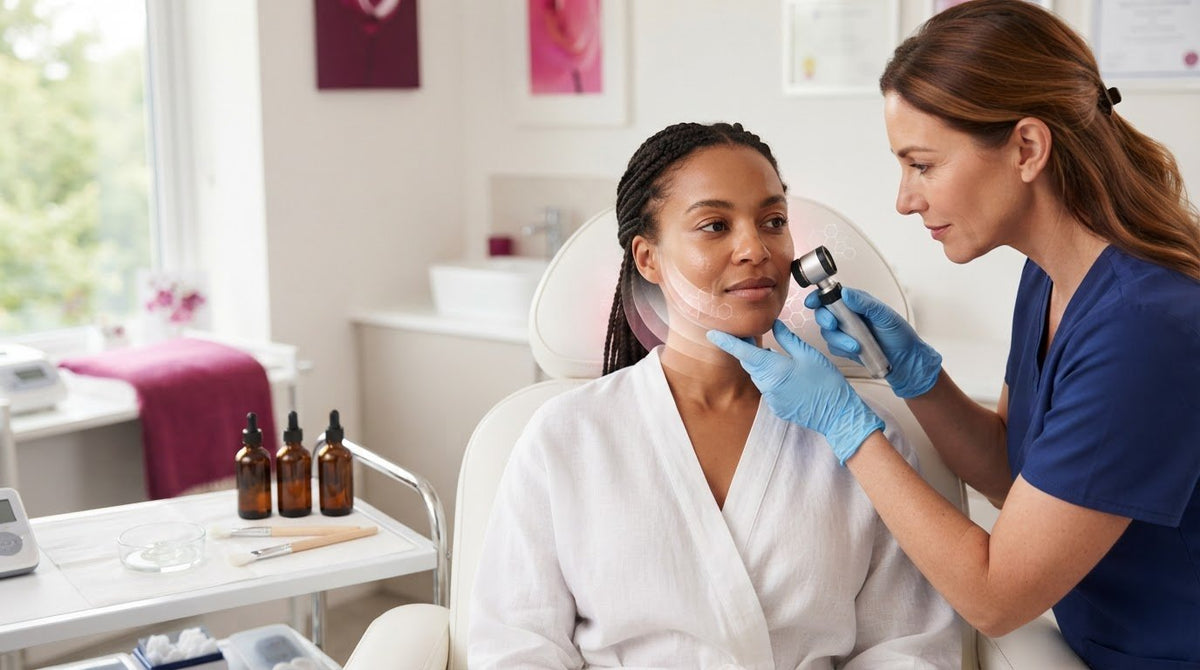
Chemical peel protocols: who is suitable and what to expect
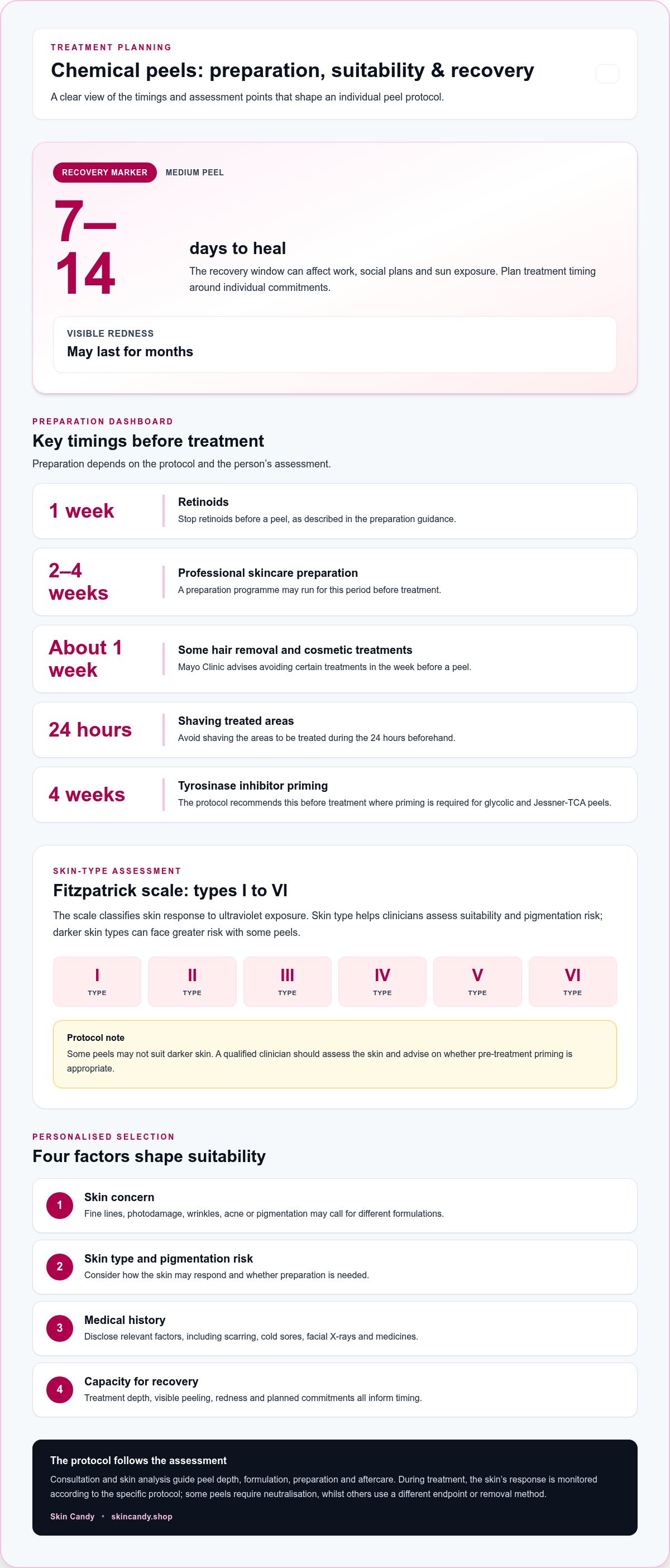
A chemical peel is a controlled exfoliating treatment: a chemical solution is applied to the skin, prompting it to shed and renew. Effective chemical peel protocols for aesthetic clinics match the peel’s depth and formulation to the person’s skin, concerns and pigmentation risk. A medium peel takes about seven to 14 days to heal, although redness can last for months.
It’s understandable to focus on the peel itself, but suitability and aftercare matter just as much. Skin tone, medical history and treatment depth all influence the assessment and recovery plan.
This guide explains how peels work, which concerns they may address and how to assess suitability. It also covers how skin type affects pigmentation risk, what to expect during healing and the practical considerations behind a safe, personalised protocol.
Key Takeaways
- Match peel depth and formulation to the skin concern, medical history and individual assessment rather than using one approach for everyone.
- Factor skin type into treatment planning: pigmentation risk can affect peel suitability and the need for preparation.
- Set recovery expectations before treatment, as healing time and visible reactions vary with peel depth.
- Plan around pre-treatment preparation and follow clear aftercare guidance, including sun protection, to support skin recovery.
- Use a thorough consultation and skin analysis to identify suitability, discuss risks and shape a considered protocol.
Who is suitable for treatment?
Suitability depends on the concern, skin type, medical history and capacity for recovery. A consultation and skin analysis should guide peel selection before treatment.
Medical History and Preparation
Medical history and preparation involve reviewing health factors and readying skin before the procedure. This matters because scarring, cold sores, facial X-rays and medicines can affect planning. Patients should disclose these details before treatment. Retinoids are stopped 1 week before a peel, and professional skincare preparation may run for 2-4 weeks. Mayo Clinic advises avoiding certain hair removal and cosmetic treatments about a week before a peel, and not shaving treated areas during the 24 hours beforehand.
Fitzpatrick Types and Treatment Selection
The Fitzpatrick scale classifies skin from type I to type VI, helping clinicians assess how skin responds to ultraviolet exposure. It matters because darker skin types can face greater pigmentation risk with some peels. Glycolic and Jessner-TCA peels may require pre-treatment priming; the protocol recommends a tyrosinase inhibitor for 4 weeks before treatment. Some peel types may not suit darker skin, so qualified medical advice is important before proceeding.
Set treatment goals around specific concerns, not a broad promise of renewal. Chemical peels may address fine lines, photodamage, wrinkles, acne and pigmentation. Someone concerned about acne, for example, may need a different peel from someone focused on sun-related wrinkles or uneven texture. Match the formulation and depth to the concern, skin condition and tolerance for visible recovery. A thorough consultation helps establish priorities and determine whether a peel fits those goals.
Lifestyle also affects whether treatment timing is practical. Skin treated with a medium chemical peel takes about seven to 14 days to heal, although redness might last for months. That recovery window can affect work, social plans and exposure to sunlight. Patients should consider upcoming commitments before scheduling. If visible peeling or persistent redness would conflict with an event or daily responsibilities, timing and peel depth become part of the suitability discussion.
Before treatment, thoroughly cleanse the area, then apply the chemical solution and monitor the skin’s response throughout, following the protocol for that formulation. Some protocols require neutralisation, while others specify a different endpoint or removal method. After treatment, the skin may blister and peel as it renews. Explain the planned application and stopping method beforehand, including the sensations and visible changes to expect.
How do chemical peels work?
In UK clinics, peel choice and depth shape the procedure, recovery and intended benefit. Well-designed chemical peel protocols for aesthetic clinics match the formulation to the patient assessment and treatment goals.
Peel Action and Skin Benefits
A chemical peel applies a solution to clean skin, prompting controlled exfoliation and renewal. As outer skin cells shed, the appearance and feel of the skin may improve. Depending on the formulation and concern, peels may address fine lines beneath the eyes or around the mouth, mild scars, age spots, freckles and dark patches. The selected depth affects penetration and recovery, so weigh the potential benefits against downtime.
Light Peel Acids
Light peels use acids such as glycolic, salicylic, mandelic or lactic acid to exfoliate the skin’s surface. The acid type, concentration and contact protocol all affect the treatment. Salicylic acid is used in peel formulations, while glycolic, mandelic and lactic acids offer other formulation options. For oily or acne-prone skin, use the specific concern and assessment to guide acid selection. A light peel is not interchangeable with a medium-depth peel just because both use an acid solution.
Peel Depths and Combinations
Peels are classified as superficial, medium or deep according to penetration. Greater penetration reaches deeper skin layers and can produce more substantial dermal rejuvenation, but changes recovery too. Medium peels may use trichloroacetic acid (TCA); a medium-depth peel is described using around 35% TCA. Combination protocols use more than one peeling agent or stage, making formulation and application sequence central to the intended effect.
TCA acts through chemical coagulation of skin proteins, and its exfoliation capacity varies with concentration. Protocol examples include 15-20% TCA for moderate improvement with minimal downtime, or 25-35% TCA for significant renewal with managed recovery. These are examples, not stand-alone instructions: preparation, application and observed skin response also inform the procedure. In practice, chemical peel protocols for aesthetic clinics align those factors with the concern and intended depth.
Phenol Exposure in Deep Peels
Deep phenol peels reach the mid-dermis and require medical-practitioner involvement. Phenol can affect the heart, kidneys and liver, so exposure management is a critical safety consideration. Mayo Clinic describes treating skin in portions at intervals of 10 to 20 minutes to limit exposure. Phenol peels should only be performed by appropriately qualified doctors and surgeons, not treated as an extension of superficial protocols.
For superficial peels in the UK, insurer expectations typically include a recognised qualification, Level 3 as a foundation and peel-specific training. Medium-depth peels are associated with Level 7 or equivalent training. Clinic pricing depends on factors such as peel depth, formulation, treatment area and the planned protocol; there is no single price that applies to every procedure.
For clinic procurement planning, explore professional aesthetic supplies alongside your protocol requirements.
Skin-type assessment and pigmentation risk
Assessing skin type helps guide peel selection and manage pigmentation risk. Consultation should connect the patient’s skin type, treatment concerns and healing expectations. Sun damage, wrinkles and uneven pigmentation, for example, may call for different formulations or depths. Skin analysis before each peel can identify visible sensitivities and establish a baseline for reviewing the skin’s response afterwards.
The Fitzpatrick scale classifies skin from type I to type VI and was developed in 1975. It describes skin response to ultraviolet exposure, but should not be treated as the only suitability measure. A clinician also considers current pigmentation, previous reactions and the concern being treated. That wider assessment matters because some peels may be unsuitable for darker skin types, particularly where post-inflammatory pigmentation is a concern.
For darker skin types, peel choice and preparation deserve specific attention. Glycolic and Jessner-TCA peels may require pre-treatment priming because of pigmentation risk. A recommended approach is priming with a tyrosinase inhibitor for 4 weeks before treatment. This preparation supports a more considered plan, but does not replace skin analysis or patch testing. Patients should receive qualified medical advice before treatment if their skin type raises suitability concerns.
Record the patient’s concerns, medical history and skin condition during the consultation. Ask about previous pigmentation changes and past responses to exfoliating treatments. A patch test before treatment can help assess the response to the selected formulation. Discuss birth control pills and possible pregnancy after a peel, as both are associated with a risk of skin-colour change. These details can influence timing and protocol selection.
Recovery changes with peel depth. After a light peel, healing usually takes one or two days; mild redness and tingling may last 1-3 days. Moderate reactions, including dryness and peeling, may continue for up to 1 week. A medium peel takes about seven to 14 days to heal, whilst redness might last for months. Deep reactions, such as swelling, crusting and prolonged redness, can persist for several weeks.
Set expectations around visible changes, not just when the skin feels comfortable. For medium-depth peels, shedding may begin on days 4-7 of recovery, so patients should plan around work and social commitments. Daily sunscreen is advised because skin can become temporarily more sun-sensitive after treatment. A clear follow-up plan helps track healing and identify unexpected changes, including new or worsening pigmentation.
Patient suitability and contraindications
Suitability depends on medical history, skin condition, medication and peel depth. A structured assessment helps identify contraindications before treatment.
Contraindications and Safety Assessment
A contraindication is a factor that makes treatment unsuitable or means it should be postponed. This matters because a peel deliberately affects the skin and may carry added risk for some patients. Pregnancy or breastfeeding, certain medicines and recent isotretinoin use can affect the decision. Mayo Clinic lists pregnancy as a reason someone may not be suitable for a chemical peel.
Include recent isotretinoin use in the medical history: the clinic guidance gives a 6-month waiting period as a contraindication precaution. Ask about prescribed and non-prescribed medicines, sensitive or irritated skin, and previous reactions to peels. The answers help distinguish a temporary reason to delay from a reason to select a different procedure. Record the concern, relevant history and assessment outcome before choosing a peel.
Assess the skin itself, not just the patient’s stated goal. Active sensitivity or a history of pigmentation changes can affect suitability and the treatment plan. A superficial peel may be considered differently from a deeper one, as penetration influences recovery and risk. Some peel types may be unsuitable for darker skin types, so qualified medical advice is important before proceeding.
Precautions and Treatment Suitability
Precautions are steps that reduce avoidable risk when a patient remains a potential candidate. They matter because sun exposure, preparation and the selected formulation can affect how skin responds. The clinic advises avoiding sun exposure for at least 2 weeks before treatment. A consultation should also cover expectations, timing and the patient’s ability to follow aftercare.
Check whether the patient can protect treated skin from sunlight during recovery. If outdoor commitments or a major event make this difficult, reconsider the timing. Link the assessment to the patient’s concern, skin condition and proposed peel depth. Someone seeking help with sun damage, for example, may need a different plan from someone with sensitive skin or pigmentation concerns.
Fair-skinned, light-haired patients are generally described as better candidates, but this does not replace individual assessment. Skin type alone cannot determine suitability. Review the patient’s history, current skin condition and desired outcome together. For darker skin types, discuss pigmentation risk and whether pre-treatment priming is appropriate. This supports informed selection instead of applying the same peel to everyone.
Explain possible reactions before the procedure, including redness, tingling, dryness and peeling. A medium peel may take seven to 14 days to heal, while redness might last for months. These timelines affect whether the patient can manage recovery alongside work and social plans. A clear discussion helps the patient weigh likely downtime against the treatment goal, without treating a superficial peel as risk-free.
Finally, confirm that the protocol matches the assessment. Patch testing, skin analysis and medical history each contribute different information. If pregnancy, breastfeeding, medication or recent isotretinoin use raises concern, address it before application. Suitability is a clinical decision based on the full picture, not one isolated answer on an intake form.
Recovery and aftercare
Recovery depends on peel depth, while consistent aftercare helps protect newly exposed skin. Follow the treatment-specific instructions and plan for temporary peeling, dryness or redness.
Recovery After a Chemical Peel
Recovery is the period when treated skin sheds and its outer layers heal. Understanding the expected changes helps patients plan daily activities and recognise when symptoms need attention. Mild peeling and flaking may occur for 3-7 days after treatment. Deep-peel shedding can remain visible for 10-14 days, and swelling after a deep peel can last up to two weeks.
Keep the first 48 hours simple: avoid exercise, saunas and hot showers, which can add heat and irritation. Cleanse with cool water and apply a gentle moisturiser to support hydration. Don’t scrub, pull or remove peeling skin. Let flakes shed naturally, since picking can irritate healing areas and may contribute to scarring. A doctor should assess unexpected or worsening symptoms.
SPF and Managing Peeling
Aftercare protects sensitive skin as it heals. Daily sunscreen matters because a peel can temporarily increase sun sensitivity, and ultraviolet exposure can contribute to pigment changes. Use broad-spectrum sunscreen to protect against UVA and UVB rays. Reapply as directed on the product and follow the clinic’s specific sun-protection instructions throughout recovery.
Make-up timing depends on the treatment plan; guidance advises waiting 24-48 hours after a peel. Avoid active skincare during the initial healing period: the stated guidance is 7 days after a superficial peel and 14 days after a medium peel. This includes pausing exfoliating acids and retinoids until the recommended interval has passed.
Peeling is part of the skin’s response, not a reason to speed up shedding. Cleanse with cool water, pat the skin dry, then apply gentle moisturiser without rubbing. Avoid direct heat while fresh layers recover. If dryness or flaking appears, resist adding extra exfoliation or unfamiliar active products. A simple routine helps reduce avoidable irritation during healing.
Plan around treatment depth and visible recovery. Superficial peels are associated with a typical recovery period of 1-7 days in UK clinics, whilst deep phenol peels may take up to 3 weeks. Medium-peel shedding can begin on days 4-7, so avoid scheduling around a major event. Give patients written aftercare instructions covering cleansing, moisturising, sunscreen, make-up and products to pause.
Continue the aftercare plan until the skin has recovered, rather than stopping when peeling first eases. Daily sunscreen remains important after treatment, and reintroduce active ingredients according to the treatment-specific instructions. Consistent care supports healing and helps limit irritation while new skin layers settle.
Skin Candy: Lumi Meso
Skin Candy supplies Lumi Meso for professional aesthetic clinics. Once a chemical peel protocol is established, use the treatment plan to guide product sourcing and stock planning. Choose products according to the clinic’s intended use, patient assessment and established procedure, rather than treating every concern with the same product.
Skin Candy also supplies chemical peels, polynucleotides and fat dissolving agents. These categories support different clinic needs, so keep product selection aligned with the procedure being planned and the practitioner’s professional scope. For clinics sourcing Lumi Meso or other listed aesthetic products, visit Skin Candy’s online shop or contact Skin Candy.
Put your clinic’s next steps into practice
Planning chemical peel protocols for aesthetic clinics also means aligning procurement with the procedures your team intends to deliver. Review your clinic’s priorities, required products and how each fits your established protocols. This keeps purchasing connected to practical clinical needs instead of leaving it as a separate, last-minute task.
Skin Candy supplies professional aesthetic supplies, Lumi Meso and polynucleotides to professional aesthetic clinics. Consider these products alongside chemical peels in your wider procurement plans, and organise sourcing around your clinic’s requirements.
For a straightforward next step, contact Skin Candy to discuss your options. Build a considered approach to treatment planning and sourcing, and move forward with confidence.
Frequently Asked Questions
What is a chemical peel?
A chemical peel uses an exfoliating solution to encourage treated skin to shed and renew. Depending on how far the solution penetrates, the procedure can be superficial, medium-depth or deep. A practitioner might select a lighter peel for surface texture or a deeper option for more substantial renewal. The treatment plan also accounts for the skin concern, formulation and expected recovery, rather than relying on the word “peel” alone.
Does the procedure hurt?
A peel can cause stinging, burning or tingling, and the sensation depends on its depth and formulation. During some peels, a mild burning sensation may last five to ten minutes; stinging and burning during a medium peel may last up to 20 minutes. Patients should understand what sensations to expect before treatment and report discomfort during application, so the practitioner can monitor the skin’s response.
Can I wear makeup after a peel?
Wait until the skin has had time to recover, and follow the aftercare instructions for the peel performed. General aftercare guidance advises avoiding makeup for 24-48 hours; a superficial peel protocol may allow makeup after 24 hours. If skin is still irritated, peeling or unusually sensitive, applying cosmetics can add friction or discomfort. Avoid rubbing makeup off, and resume your usual products in line with the treatment-specific guidance.
How long do the results last for?
Results may last from a few weeks after lighter peels to months or years, depending substantially on peel depth. The concern treated and ongoing skin changes also affect how long an improvement remains noticeable. A peel may improve the appearance of sun-related pigmentation, for example, but continued sun exposure can contribute to new colour changes. Repeat procedures may be needed to maintain benefits, with timing guided by the treatment plan.
How soon will I see results?
Visible changes emerge as the skin heals, so timing depends on peel depth and the concern being treated. With pigmentation, improvement may develop progressively over 4-6 months rather than appearing immediately. Peeling or temporary redness during recovery isn’t the final result. Use the planned review to assess changes in texture, tone or other concerns once the skin has settled, and avoid judging progress while visible shedding continues.
Is it safe?
Chemical peels carry risks, so safety depends on choosing an appropriate peel and assessing the patient beforehand. Possible concerns include irritation, pigment changes and prolonged redness. Pregnancy, breastfeeding and certain medicines can affect suitability. Deep phenol peels carry additional risks because phenol can harm the heart, kidneys and liver; these procedures require appropriately qualified doctors or surgeons. A careful medical history and skin assessment help identify relevant risks before treatment.
What peels do you recommend for acne?
Choosing a peel for acne depends on the type of acne, skin sensitivity and pigmentation risk. Salicylic acid is used in some formulations for oily or acne-prone skin, and chemical peels can treat certain types of acne. Consider whether active breakouts, post-acne marks or uneven texture are the main concern. The assessment should also account for medicines and current skincare, as these can affect preparation and suitability.
What chemical peel protocols are used in UK aesthetic clinics for different skin concerns and depths?
UK clinic protocols match peel type and depth to the concern, skin assessment and recovery needs. Superficial peels may use glycolic or salicylic acid; medium-depth protocols can use TCA, while deep phenol peels require appropriately qualified doctors or surgeons. For superficial peels, insurer expectations typically include a recognised qualification, Level 3 as a foundation and peel-specific training. Medium-depth peels are associated with Level 7 or equivalent training.