Chemical Peel Aftercare Instructions for Clients: A Practitioner Checklist
A generic aftercare sheet can create more uncertainty than reassurance. Client aftercare instructions for chemical peels need to reflect the formulation, peel depth, product guidance and the client’s individual response. If clients leave with verbal advice alone, key steps and warning signs can be easy to forget.
Clear written guidance makes follow-up easier to manage, but it should set realistic expectations rather than promise the same recovery timeline for everyone. Peeling, redness and sensitivity can vary, so clients need to know what to expect, what to avoid and how to get help if concerns arise.
This practitioner checklist will help you organise peel-specific instructions, explain recovery and reinforce aftercare at each client touchpoint. It covers how to tailor advice to product documentation and treatment depth, communicate precautions and identify when a concern warrants prompt clinical review. Use it as a framework, then check every instruction against the relevant manufacturer guidance and your clinical judgement.
Key Takeaways
- Build client aftercare instructions for chemical peels around the formulation, peel depth, skin assessment and practitioner protocol.
- Use a clear handover workflow: confirm the treatment, tailor the advice, explain actions, share contact details and document what was provided.
- Describe only recovery changes supported by the relevant peel protocol. Avoid promising a fixed timeline when recovery can vary.
- Check that each handout is clear, suitable for the client and consistent with the instructions given at the appointment.
- Plan professional peel supplies as part of clinic readiness, while leaving treatment and aftercare decisions with the practitioner.
Client aftercare instructions for chemical peels: what should practitioners cover?
Client aftercare instructions for chemical peels are personalised written and verbal guidance on caring for the skin and what to expect after a specific peel. They should reflect the formulation, treatment depth, skin assessment and practitioner’s approved protocol, rather than rely on a universal handout or fixed recovery timeline.
Keep general communication principles separate from product-specific directions. Advice should be clear, consistent and easy to revisit. Check the precise steps against the current product instructions for use and the practitioner’s clinical protocol. This Chemical peel reference gives a broad overview of peel categories and potential complications, but it doesn’t replace product documentation or clinical judgement.
Why one chemical peel aftercare sheet cannot suit every client
Peels differ in formulation and treatment parameters, and each client’s skin assessment is different. An AHA peel, a BHA peel and a TCA peel are distinct categories, not interchangeable protocols. Don’t assume advice written for one product or depth applies to another.
Before giving instructions, confirm the exact peel used and check the relevant manufacturer guidance. Adapt the explanation to the client’s assessment and treatment plan, then compare it with your approved clinical protocol. Resolve any conflict between a handout and current product instructions before using it.
What clients need to understand before leaving the clinic
Explain possible visible changes using the specific peel and treatment plan. Describe only changes supported by the relevant protocol. Don’t promise that every client will experience the same signs or recover on a set schedule. Make clear how the client can contact the clinic with questions or concerns, and confirm any agreed follow-up.
Give the client written instructions alongside a verbal explanation. Use direct, specific language: identify the action, when it applies according to the protocol and any relevant restrictions. Pause for questions and ask the client to explain the key steps back in their own words. This helps you identify and clarify anything that’s unclear.
Before the client leaves, document the peel and treatment details, the guidance supplied, the discussion and the client’s understanding. Record the agreed follow-up and contact route. This gives the client and clinic a clear reference if questions arise later and supports consistent handovers.
How to build a peel-specific chemical peel aftercare checklist
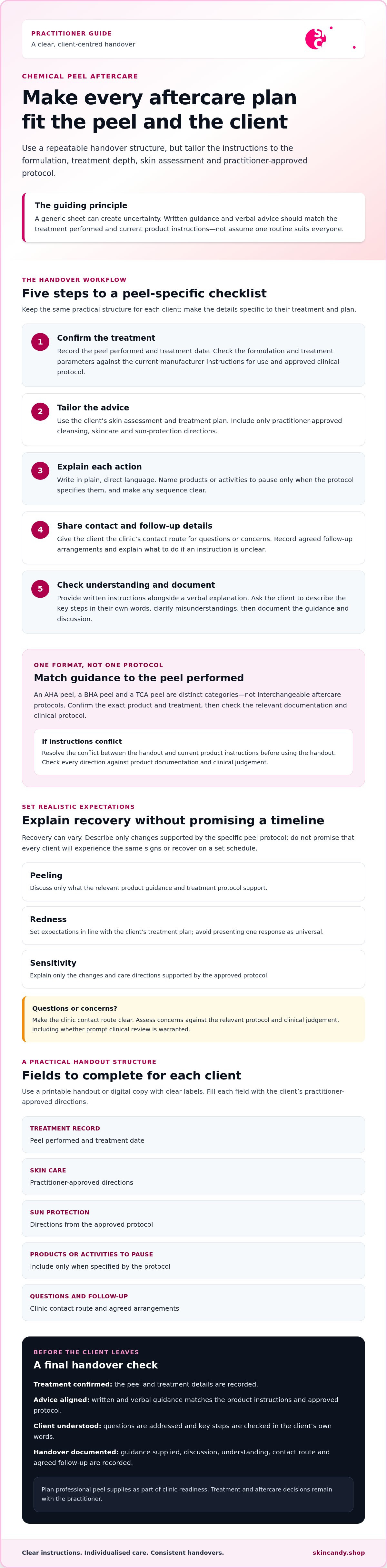
Turn the treatment plan into a practical handover, not a generic list of rules. Use plain language, make each action specific to the practitioner-approved protocol and check current product instructions before issuing the checklist. You can use the same layout for each client, but the advice must match the peel performed and the client’s plan.
- Confirm the treatment. Record the peel performed and treatment date. Check the formulation and treatment parameters against the relevant instructions for use and approved clinical protocol.
- Tailor the advice. Set out the client-specific cleansing, skincare and sun-protection instructions approved for this treatment. Don’t add products, routines or timings unless the protocol supports them.
- Explain each action. Use short, direct instructions. Name products or activities to pause only where the protocol confirms this, and make the sequence clear.
- Share contact and follow-up details. Give the clinic’s contact route for questions and record agreed follow-up arrangements. Explain what the client should do if they’re unsure about an instruction.
- Document the handover. Note the guidance supplied, verbal explanation and client’s understanding. Ask the client to summarise the key steps in their own words, then clarify anything they’ve misunderstood.
A simple written checklist structure
Use a printable handout or digital copy with labelled fields. For example:
- Peel performed and treatment date: [complete for this client]
- Skin-care instructions: [insert practitioner-approved directions]
- Sun protection: [insert directions from the approved protocol]
- Products or activities to pause: [include only if specified by the protocol]
- Questions and follow-up: [add the clinic’s contact route and agreed arrangements]
Use accessible formatting, clear spacing and action-led wording. Avoid dense paragraphs or vague instructions such as “use gentle products” unless you explain what that means for this client. For general context on recovery patterns, Mayo Clinic outlines expected changes after a chemical peel. Use product documentation and clinical judgement to decide what applies to an individual treatment.
Keep the checklist useful for the clinic
Review the handout whenever product instructions or the clinic’s approved protocol change. Keep product selection separate from aftercare guidance: Skin Candy’s professional chemical peel selection guide supports practitioner purchasing decisions, but it isn’t client-specific aftercare advice. Clinics planning professional peel supplies can also browse chemical peels for professional use.
Chemical peel recovery: explain expected changes without overpromising
Aftercare and recovery depend on the treatment performed. Visible changes can vary with the peel, its treatment parameters and the individual client. Set expectations using the relevant product instructions and approved clinical protocol, not a timeline borrowed from another peel or a general handout.
Help clients distinguish changes the protocol identifies as expected from symptoms that need review. Avoid guarantees such as “you’ll peel” or “there’ll be no downtime”. Instead, describe what may occur with this treatment, what the client should do and how to reach the clinic if they have concerns.
How to set expectations for peeling, dryness or sensitivity
Use cautious, treatment-specific wording. If the protocol identifies dryness, flaking, redness or sensitivity as possible changes, explain that experiences can differ. Don’t imply that every client will have them. Give the client a clear reference point: what the practitioner expects for this peel and which instructions to follow if changes occur.
Remind clients not to pick, pull or rub peeling skin, or improvise with products and routines. They should follow the written protocol and contact the clinic if they’re unsure whether a change fits the guidance. Keep your explanation consistent with current product documentation.
When clients should contact the clinic for advice
Provide a direct contact route in writing before the client leaves. Explain how to use it for routine questions and what to do if a concern feels urgent. Don’t leave clients to guess which symptoms are significant or assume they can wait until a planned follow-up.
Advise clients to seek prompt clinical review for symptoms that are unexpected, worsening or severe. A checklist can help them report what they’re experiencing, but it can’t diagnose a complication. Ask the client to contact the clinic through the stated route, then document the concern and follow your clinical escalation process. If the situation appears to require urgent medical attention, direct the client to the appropriate urgent service rather than relying on routine follow-up.
Make follow-up purposeful. Confirm agreed check-in arrangements, record concerns raised and the advice given, and update the client’s record in line with clinic procedures. This keeps communication consistent without suggesting that every client will have the same recovery.
Well-written client aftercare instructions for chemical peels set expectations without promising a particular recovery experience. Keep the focus on the peel performed, the approved protocol and a clear route to clinical review.
Practitioner checklist: tailor, explain and document peel aftercare
A consistent record makes a personalised handover easier to review and follow up. Use this three-stage checklist to capture what was planned, what the client was told and what happened next. Keep entries aligned with clinic policy and check current professional requirements for your setting.
Before the client leaves
- Confirm the treatment record: identify the peel and note relevant treatment details, including the date.
- Check the guidance: confirm the client-specific aftercare against current product instructions and the approved clinical protocol.
- Record the discussion: note the practitioner responsible, questions raised and any relevant consent-related discussion or record, in line with clinic policy.
At handover, record the instructions actually supplied, not just that “aftercare was given”. Note whether the client received a written copy, which points were explained verbally and whether they could summarise the key actions. Add the agreed follow-up plan and contact route.
At handover and follow-up
- Agree the contact route: tell the client how to contact the clinic with questions and explain the process for urgent concerns. Don’t promise a response time unless your clinic has confirmed one.
- Review concerns: use follow-up to clarify instructions and assess reported changes under the clinic’s protocol. Document the concern, advice and next steps.
- Improve the handout: review recurring questions and update unclear wording through the clinic’s approval process. Keep individual clinical decisions with the practitioner.
A generic handout may be quick to issue, but it can miss details needed for an individual treatment. Check your materials against three criteria:
- Suitability: does the guidance match the peel, treatment plan and client?
- Clarity: can the client identify what to do and how to ask for help?
- Traceability: can the record show which instructions were provided and by whom?
These checks make client aftercare instructions for chemical peels more useful to clients and more consistent for the clinic, without turning a template into a substitute for clinical judgement.
Reliable planning also means checking that clinic-approved professional peel supplies are available for the intended treatment workflow. Skin Candy’s aesthetic clinic procurement planning guide offers a supply-planning resource, but it doesn’t replace clinical decisions or client-specific aftercare. Explore professional chemical peels for your clinic’s product planning.
Make chemical peel aftercare part of a reliable clinic experience
Clients benefit from clear, approved instructions. Clinics benefit from a repeatable process that connects the handout to the product used, the practitioner’s protocol and the client’s record. Keep the handout current, check it against manufacturer documentation and make sure staff can identify the correct version for each treatment.
Product readiness supports this workflow, but it doesn’t determine whether a peel is suitable for a particular client. Availability is an operational consideration, not a clinical decision. Practitioners remain responsible for assessing the client, selecting and using products in line with their training and the manufacturer’s instructions, and making treatment and aftercare decisions.
Keep product readiness separate from clinical decision-making
Skin Candy supplies professional aesthetic products, including chemical peels, to clinics and trained professionals. Wholesale supply doesn’t include in-clinic treatment, professional training or client-specific clinical advice. Check the relevant product documentation and your clinic’s approved protocol when preparing instructions. Keep clinical decisions with the responsible practitioner.
Access to professional peel products can form part of treatment-readiness planning. It can help clinics organise stock, but it doesn’t replace client assessment or confirm that a particular treatment should proceed. Keep product selection, treatment suitability and aftercare guidance as distinct steps in your workflow.
Plan the next step for your clinic
Review your current peel protocol and handouts together. Check that client instructions match current product documentation, then organise staff access to the approved versions. Before planning treatment availability, review stock and verify delivery options and terms directly with the supplier. Skin Candy supplies clinics across the UK and offers same-day and next-day delivery options. Confirm current terms before relying on them for operational planning.
Use a simple readiness check:
- Protocol: is the clinical guidance current and approved?
- Handout: does the client receive instructions specific to the peel and treatment plan?
- Stock: is the intended professional product available, with delivery arrangements checked?
Build supply planning into clinic operations while keeping clinical decisions in the right hands. Explore Skin Candy’s professional chemical peel supplies and contact the supplier with product queries. Clear client aftercare instructions for chemical peels, supported by current documentation and practical stock planning, help organise the clinic workflow without treating every peel or client as the same.
Make every peel handover clear and consistent
Strong aftercare starts with a treatment-specific plan, not a one-size-fits-all sheet. Tailor client aftercare instructions for chemical peels to the formulation, treatment and client, then check each direction against current product documentation and your approved clinical protocol.
Give clients written guidance alongside a clear verbal handover. Explain expected changes without promising a fixed recovery, provide a route for questions and document the instructions shared, client queries and agreed follow-up. A consistent record helps your team manage concerns and refine handouts while keeping clinical decisions with the responsible practitioner.
Reliable product planning can support clinic readiness too. Skin Candy’s wholesale range includes professional chemical peels for clinics and trained professionals. Same-day and next-day UK delivery options are offered, but check current terms directly before planning stock or treatment availability.
Explore Skin Candy’s professional chemical peel supplies or contact the supplier with product queries. Current documentation, clear communication and organised planning can help make each client handover more confident and manageable.
Frequently Asked Questions
Can I give every client the same chemical peel aftercare instructions?
Use a consistent template, but tailor the final advice to the peel performed, current product guidance and the client’s assessment. Client aftercare instructions for chemical peels should match the specific protocol, including directions on cleansing, skincare, sun protection, products or activities to pause, and follow-up. A generic sheet mustn’t replace practitioner judgement. Record what you provided, invite questions and give the client a clear clinic contact route.
What should clients avoid after a chemical peel?
There isn’t one avoidance list or timeline that suits every peel. Identify products, activities or skin manipulation to avoid by checking the specific product instructions and the client’s treatment plan. Don’t copy timings from another formulation or assume all peels have the same recovery. Give clear written directions, explain them verbally and tell clients how to contact the clinic if an instruction is unclear.
How long does skin take to recover after a chemical peel?
Recovery varies with the peel, treatment parameters and individual response, so don’t promise a universal timeline. Explain the expected course using approved product information and your clinic protocol. Tell clients which changes may be anticipated and how to follow their instructions. If symptoms are unexpected or worsening, advise them to contact the clinic for assessment rather than relying on a general recovery estimate.
What should a chemical peel aftercare handout include?
Include the treatment identification, client-specific care directions, relevant product or activity restrictions, expected changes, follow-up arrangements and the clinic’s contact route. Keep the wording concise and aligned with the peel’s current instructions. Explain what clients should do if they’re unsure or notice unexpected symptoms. Record the handout provided and verbal explanation in the treatment record, following clinic policy.
When should a client contact the clinic after a chemical peel?
Tell clients to contact the treating clinic if symptoms are unexpected, worsening or severe, or if they’re unsure how to follow their instructions. Provide a clear contact route and explain how urgent concerns are handled under clinic policy. A handout can’t diagnose a reaction. Practitioners should assess reported concerns and follow clinical procedures for escalation or further care.
Can clients restart their usual skincare after a chemical peel?
Restarting skincare depends on the peel, the client’s response and the practitioner’s protocol. Don’t give a universal restart date or assume familiar products are suitable during recovery. Provide product-specific instructions, including any temporary pauses, only when supported by current treatment guidance. If the written instructions don’t address a product, ask the client to check with the clinic before using it again.