Skin Boosters vs Polynucleotides Compared
A client asks for ‘better skin’, but that can mean very different things in clinic. They may be chasing hydration and luminosity before an event, concerned about crepey texture around the eyes, or looking for a longer-term plan to support skin quality. That is where the skin boosters vs polynucleotides conversation becomes commercially useful, not just clinically interesting.
Both categories are firmly established in advanced aesthetics, yet they are not interchangeable. Knowing where each treatment sits helps practitioners set realistic expectations, build more precise treatment plans and stock products that genuinely earn their place on the shelf.
Skin boosters vs polynucleotides: the core difference
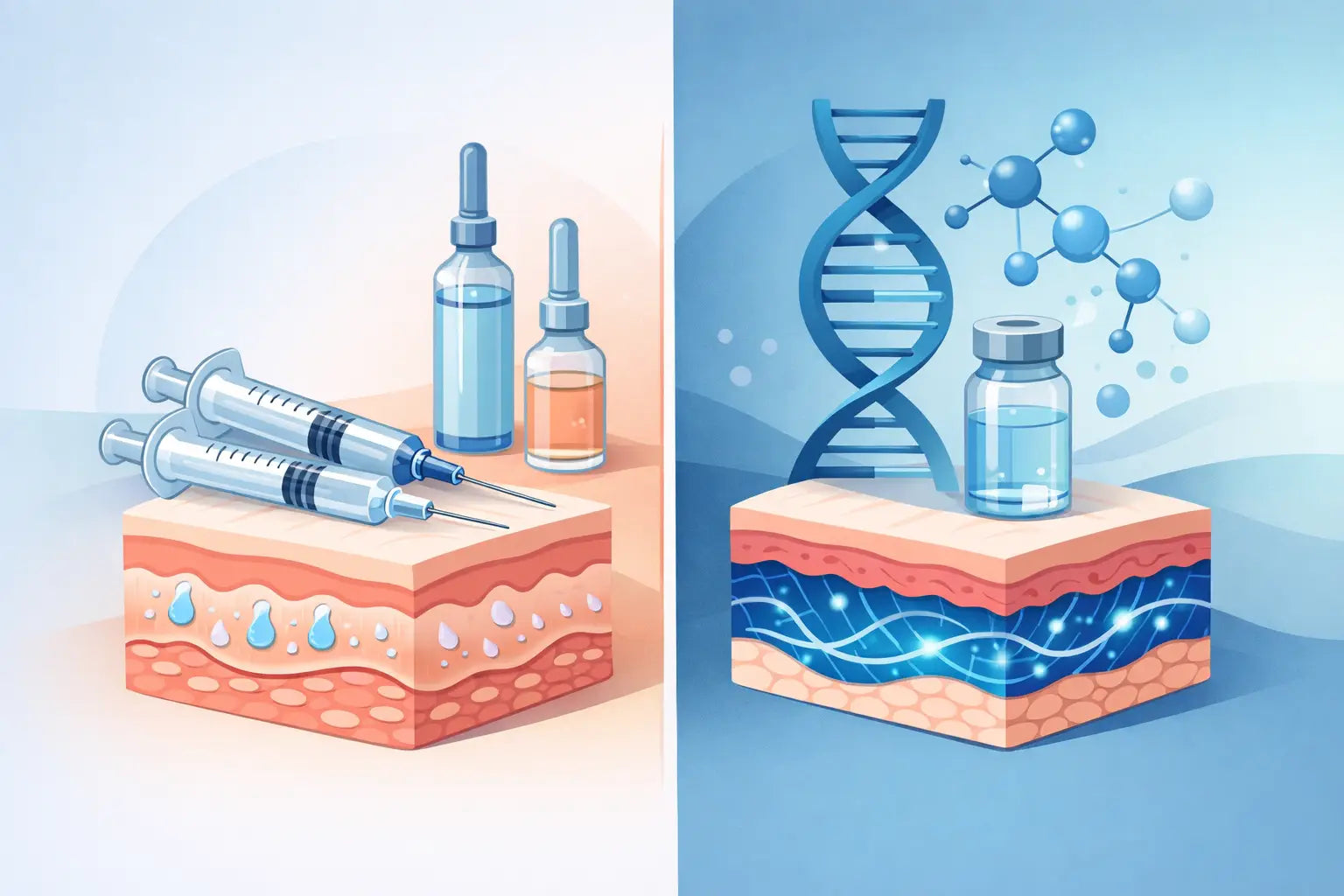
Skin boosters are generally designed to improve hydration, suppleness and surface-level skin quality. Many formulations are based on hyaluronic acid, sometimes with additional ingredients depending on the product. Their appeal is easy to understand: they can support the fresh, rested, dewy look clients see on social media, without the volumising intent of a traditional dermal filler.
Polynucleotides take a different route. These injectable products are used in regenerative-focused treatment plans, with the aim of supporting the skin’s own repair processes and improving tissue quality over time. Rather than being selected primarily for a quick hit of hydration, they are often chosen where skin appears compromised, thin, dull, crepey or affected by environmental stress and ageing.
The practical distinction is simple. Skin boosters tend to be the go-to for hydration and glow. Polynucleotides are typically positioned for gradual skin-quality support and regeneration-led protocols. There is overlap in the outcomes clients may notice, particularly improved radiance and smoother-looking skin, but the treatment rationale, protocol and client messaging should remain distinct.
What skin boosters do best
For clients whose skin is dehydrated, lacklustre or beginning to show fine lines, a skin booster can be a strong first conversation. It is especially relevant when the client does not need contouring or volume and wants to retain a natural-looking result. The goal is skin that looks more hydrated and feels more elastic, not a changed facial shape.
Common treatment areas include the face, neck, décolletage and hands, subject to the product’s intended use and the practitioner’s assessment. This versatility makes skin boosters a reliable treatment category for clinics, particularly when seasonal demand rises ahead of weddings, holidays and party season.
That said, ‘glow’ should never become a vague promise. A client with significant laxity, deep etched lines or volume loss may need a different plan entirely. Skin boosters can complement broader aesthetic work, but they are not a substitute for correcting structural concerns where another modality is more appropriate.
From a clinic perspective, skin boosters are often easy for clients to understand. They work well as a course-based offering, can encourage maintenance bookings and fit naturally into facial, neck and hand rejuvenation menus. Product choice still matters. Viscosity, concentration, treatment area, protocol and client suitability all influence whether a particular formulation belongs in your core stock.
Where polynucleotides shine
Polynucleotides are attracting attention because clients are increasingly asking for treatments that focus on skin health rather than obvious alteration. This category can be particularly valuable for practitioners working with mature skin, delicate under-eye concerns, photoaged skin and clients who want a subtle, progressive approach.
The under-eye area is a good example of why category knowledge matters. A hydration-led product may be appropriate for one client, while another with thin, crepey tissue and pigmentation concerns may be better assessed for a polynucleotide-led protocol. Neither choice should be driven by a trend alone. The tissue, the client’s medical history, their expectations and the product’s indication need to lead.
Results are usually discussed as progressive rather than instant. That makes consultation language crucial. Clients expecting an overnight transformation may be better suited to a different treatment, or they may simply need clearer guidance on the value of a treatment course and the time frame involved. Done well, this is not a sales barrier. It is how you build trust and reduce disappointment.
Polynucleotides can also support a more advanced clinic positioning. They give experienced practitioners a category that sits confidently alongside skin boosters, microneedling, peels and other skin-quality treatments. The strongest plans are rarely built around one hero injectable. They are built around appropriate sequencing, sensible intervals and a clear reason for every treatment selected.
Choosing the right option for the client
The most effective consultation does not begin with, ‘Which product would you like?’ It begins with what the client sees, what they want to change and what is actually suitable.
A client with dehydrated, tired-looking skin and an upcoming occasion may lean towards a skin booster treatment plan. Someone concerned with skin fragility, texture changes and gradual rejuvenation may be a better candidate for polynucleotides, following a full assessment. Clients with volume loss may need to discuss structural support separately, while those with active skin conditions, infection, contraindications or unrealistic expectations may need treatment deferred or declined.
Age alone is not a treatment indication. A younger client can have dehydrated, stressed skin, while an older client may have excellent tissue quality but need support in a very specific area. Equally, a popular product is not automatically the right product. Your assessment, training and the manufacturer’s instructions should always set the standard.
Treatment planning and managing expectations
Both categories commonly work best as part of a course, rather than as a one-off appointment sold with oversized promises. Exact protocols vary by brand and product, so practitioners should follow the relevant instructions for use, maintain appropriate records and only administer products within their scope of practice and training.
For skin boosters, clients often respond well to a conversation around hydration, radiance and ongoing maintenance. Explain that lifestyle, sun exposure, smoking, skincare and overall health can affect how skin looks between appointments. A good injectable treatment can elevate a skincare plan, but it cannot outwork every external factor.
For polynucleotides, focus on patience and progression. Talk through the possibility of temporary injection-related effects such as redness, swelling, tenderness or bruising, alongside the fact that visible improvement may develop over a series of treatments. Avoid presenting regenerative language as a guarantee. Clients deserve a realistic explanation of expected outcomes, limitations and individual variation.
Photography is valuable for both. Consistent before-and-after images, taken with the same lighting and positioning, help clients see changes that may be subtle from one week to the next. They also strengthen your consultation process and support ethical marketing, provided you have appropriate consent and follow advertising requirements.
Stocking smarter for clinic demand
For a busy clinic, the question is not whether skin boosters or polynucleotides are ‘better’. It is whether your stock reflects the treatments you are qualified to deliver, the concerns your client base brings through the door and the protocols your team can execute consistently.
A considered range may include a dependable skin booster for face and broader hydration-focused work, plus a polynucleotide option suited to your advanced skin-quality offering. Do not overstock every product that gains traction online. Instead, monitor rebooking rates, treatment margins, expiry dates, client feedback and how often a product genuinely fits your consultations.
Reliable supply matters here. Running out halfway through a popular treatment course is not just inconvenient - it disrupts client confidence and clinic planning. UK practitioners also need to be clear on product authenticity, storage requirements, batch traceability and professional-use restrictions. A competitive price is valuable, but it should sit alongside dependable sourcing and support.
Skin Candy’s practitioner-focused range is built around the categories clinics use every day, making it easier to replenish treatment essentials without turning stock ordering into another admin job.
The strongest answer is rarely one category
Skin boosters and polynucleotides both deserve a place in modern aesthetics, but for different reasons. One may deliver the hydration-led freshness a client wants now; the other may suit a slower, tissue-quality-focused journey. The smart move is to keep your consultation sharper than the trend, your protocol aligned with product guidance and your treatment menu built around results you can explain with confidence.