Professional Polynucleotides Buying Guide: Selecting the Right Regenerative Injectables for Your Clinic
Is your clinic ready for the shift from traditional volume fillers to cellular regeneration? With the UK aesthetics market projected to reach £5.8 billion by 2033, polynucleotides have moved from a niche interest to a clinical essential. You've likely felt the pressure of a saturated market, trying to distinguish between dozens of new bio-stimulators whilst preparing for the licensing requirements introduced in July 2026. Choosing the wrong product doesn't just impact your results. It risks your reputation and your profit margins.
We know you're looking for a balance between high-end regenerative results and a supply chain that works. This article will help you master the clinical and commercial factors of procurement to enhance patient outcomes and simplify your ordering process. We'll explore how to identify the best products for specific indications and how to leverage reliable next-day delivery to keep your clinic running at peak efficiency. It's time to move beyond the guesswork and organise your inventory with professional-grade solutions that deliver consistent, visible results for every patient.
Key Takeaways
- Match molecular concentration and product viscosity to specific clinical indications, ensuring superior outcomes for delicate areas like the periocular zone.
- Distinguish between the temporary hydration of HA skin boosters and the long-term DNA-led regeneration offered by polynucleotides to select the right treatment for every patient.
- Identify the most effective bio-stimulators within a professional collection to address intensive anti-ageing concerns across various age groups.
- Optimise your clinic's cash flow by implementing a procurement strategy that balances bulk buying with the flexibility of next-day UK delivery.
- Ensure clinical continuity and patient satisfaction by partnering with a reliable wholesaler that understands the logistical demands of high-volume aesthetic practices.
What are Polynucleotides in Regenerative Aesthetics?
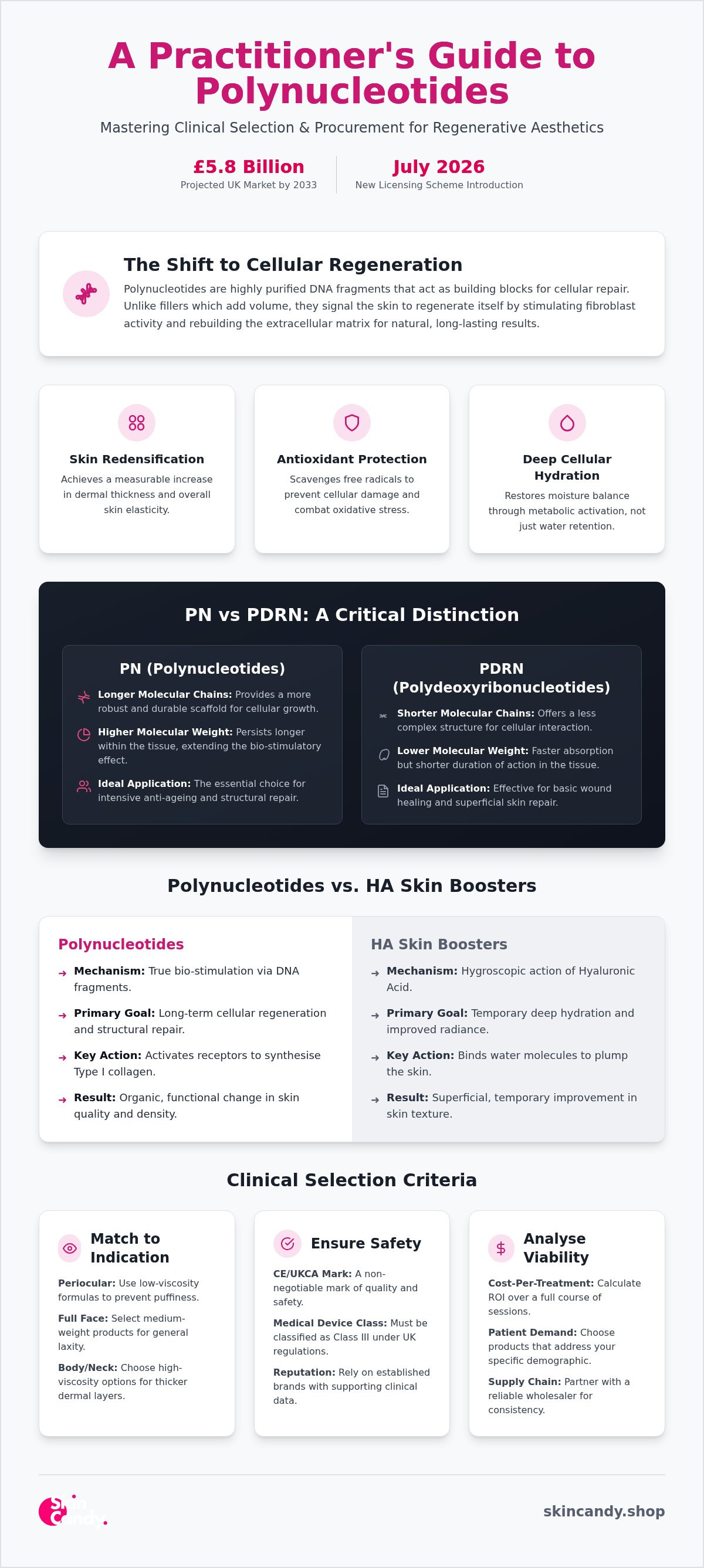
Polynucleotides represent a significant shift in aesthetic medicine. They are highly purified, long-chain nucleotides extracted from salmon or trout DNA. These bio-polymers act as the building blocks for cellular repair, targeting the skin's underlying architecture rather than simply masking imperfections. By focusing on fibroblast stimulation and extracellular matrix (ECM) repair, they offer a physiological approach to anti-ageing that traditional products cannot match. They don't just fill space; they programme the skin to heal itself.
July 2026 marks a turning point for the UK industry. With the introduction of the new licensing scheme for non-surgical cosmetic procedures in England, practitioners are prioritising safety and efficacy above all else. Polynucleotides fit this new regulatory environment perfectly. They are classified as Class III medical devices under the UK Medical Device Regulations 2002, aligning with the highest standards of safety and quality. Clinics are moving away from quick-fix fillers and towards these regenerative protocols to meet the growing demand for natural-looking, sustainable results.
The core benefits of integrating these injectables into your clinic include:
- Skin redensification: A measurable increase in dermal thickness and overall elasticity.
- Antioxidant protection: Scavenging free radicals to prevent further cellular damage and oxidative stress.
- Deep cellular hydration: Restoring the skin's internal moisture balance through metabolic activation rather than simple water retention.
The Science of Bio-stimulation
Dermal fillers provide volume through physical displacement. Polynucleotides work differently. They utilise DNA fragments to signal the body to accelerate its natural repair mechanisms. This isn't just about temporary hydration; it's about functional, structural change. Polynucleotides specifically activate purinergic receptors to trigger the synthesis of Type I collagen, effectively rebuilding the skin's structural support from within. This bio-stimulatory effect ensures that the results are organic and long-lasting, rather than purely mechanical.
PN vs PDRN: Understanding the Terminology
Practitioners often confuse Polynucleotides (PN) with Polydeoxyribonucleotides (PDRN). The difference is technical but clinically vital for your treatment outcomes. PN consists of longer molecular chains with a higher molecular weight than PDRN. These longer chains provide a more robust scaffold for cellular growth and persist longer within the tissue. Whilst PDRN is effective for basic healing and superficial repair, PN is the preferred variant for intensive regenerative protocols. Its superior chain length ensures a more profound impact on skin elasticity and structural repair, making it the essential choice for high-end clinical results and patient satisfaction.
Selection Criteria: How to Choose Polynucleotides for Your Clinic
Procurement isn't just about buying stock. It's about clinical precision. Choosing the right polynucleotides requires a balance of molecular science and commercial viability. You need to assess concentration, viscosity, and brand reputation to protect your margins and patient safety. With 28 different products currently available in our collection, understanding these variables is essential for a streamlined supply chain.
Start by looking at the clinical data. In the UK, ensure every product carries a CE or UKCA mark. This is non-negotiable for Class III medical devices. Beyond safety, evaluate the cost-per-treatment. Successful clinics don't just look at the box price; they calculate the return on investment over a full course of sessions. High-quality results drive word-of-mouth referrals, which is the most cost-effective way to grow your aesthetic practice.
Indications and Treatment Areas
Match the product to the anatomy. For the delicate periocular area, prioritising low-viscosity formulations prevents unwanted puffiness or visible papules. Full-face rejuvenation requires a medium-weight product to address laxity and skin quality effectively. For body applications, such as treating stretch marks or neck crepiness, look for higher-viscosity options that can survive the mechanical stress of thicker dermal layers. You can browse these specific formulations in our wholesale collection to find the perfect match for your patient demographic.
Molecular Weight and Concentration
Higher concentration doesn't always equal better results. For younger "prejuvenation" patients, lower concentrations (around 10-15mg/ml) are often sufficient to stimulate fibroblast activity without over-loading the tissue. Mature skin typically requires 20mg/ml or higher for effective redensification. Choosing the wrong concentration can lead to poor integration or underwhelming patient outcomes.
Biocompatibility is the silent factor in patient satisfaction. High-quality polynucleotides should have excellent spreadability to ensure even distribution and minimise post-injection oedema. A product that integrates smoothly into the extracellular matrix reduces downtime. This ensures your patients can return to their daily routines faster, which is a key selling point for any modern aesthetic clinic. Always prioritise formulations that offer a predictable recovery profile.
Polynucleotides vs Skin Boosters: A Comparison for Practitioners
Practitioners often face a strategic choice between immediate patient gratification and long-term tissue health. Whilst both categories improve skin quality, their biological pathways are entirely different. Traditional skin boosters rely on Hyaluronic Acid (HA) to bind water and provide a temporary "glow" through hydration. Polynucleotides, however, focus on the underlying pathology of ageing. They repair damaged DNA and stimulate the production of healthy collagen, offering a more sustainable approach to regenerative aesthetics.
Managing patient expectations is vital when switching from HA-based boosters to regenerative protocols. Patients used to skin boosters often expect visible results within 48 hours. With regenerative injectables, the process is physiological and takes time. You must communicate that whilst the initial hydration is subtle, the structural improvements in skin thickness and elasticity will peak weeks after the final session. This shift from "instant filler" to "cellular repair" requires a different consultation style but leads to higher long-term patient retention.
Mechanism Comparison
Think of skin boosters as internal moisturisers. They provide a temporary reservoir of moisture that plumps the epidermis. In contrast, polynucleotides act as cellular repair kits. They provide the raw materials for fibroblasts to synthesise new extracellular matrix components. Results from DNA-led regeneration generally outlast simple hydration because the product physically alters the skin's architecture rather than just increasing water volume. Integrating PN for structural integrity alongside HA for immediate turgor creates a comprehensive treatment profile that addresses both the causes and symptoms of skin ageing.
Clinical Decision Making
Patient selection determines your success rate. For mature skin with significant photodamage, elastosis, or scarring, PN is the superior choice. It addresses the cellular damage that HA alone cannot fix. Younger patients seeking a temporary "red carpet glow" may still prefer traditional skin boosters. However, for those interested in "prejuvenation," PN offers a more proactive way to maintain skin density before visible sagging begins.
You can also combine these technologies for advanced results. Using PN as a foundational treatment before layering mesotherapy products wholesale UK allows you to target multiple skin layers simultaneously. This multi-modality approach is becoming the standard for high-performance clinics. For a deeper dive into which patients are best suited for these protocols, refer to our guide on polynucleotide indications for aesthetic clinics. Understanding these nuances ensures you prescribe the right product for the right clinical outcome every time.
Standout Products in the Skin Candy Polynucleotide Collection
Skin Candy provides a comprehensive 28-product range of polynucleotides to ensure every clinical indication is covered. A one-size-fits-all approach doesn't work in regenerative aesthetics. You need specific concentrations for different tissue depths and patient concerns. Our curated selection allows you to switch between high-concentration formulas for deep dermal repair and lighter variants for superficial refinement. This breadth of choice ensures you can tailor every treatment plan to the individual patient's needs whilst maintaining clinical excellence.
Our collection includes versatile "all-rounder" products that are perfect for treating the face, neck, and décolletage in a single session. These formulations provide the necessary viscosity for ease of injection whilst delivering a potent dose of DNA fragments to stimulate fibroblast activity. By stocking a variety of weights and concentrations, you can address everything from early-stage skin laxity to advanced photodamage with total confidence in the results.
Leading Brands for UK Clinics
Lumifil and Regenovue are the cornerstones of our collection. These brands are staples for UK practitioners because they offer consistent results and high biocompatibility. Lumifil's range provides an excellent balance of luxury and value. This allows you to maintain healthy margins without compromising on the quality of the patient experience. We've analysed the features of our top-selling units to ensure we stock the formulations that practitioners trust most for daily clinical use. High-concentration PN options are particularly popular for intensive anti-ageing protocols where skin redensification is the primary goal.
Specialist Regenerative Formulas
The periocular region requires extreme precision. We stock specialised formulas designed specifically for the delicate eye area to treat dark circles and fine lines without causing excessive swelling or visible papules. These products have a specific viscosity that ensures smooth integration into the thin skin around the eyes. Beyond facial rejuvenation, polynucleotides are proving highly effective for body treatments. We offer products targeted at scarring and stretch mark reduction, where deep tissue repair is required to bridge the gap in damaged extracellular matrices.
Hair rejuvenation is another rapidly growing area. The use of PN for scalp treatments helps to revitalise hair follicles and improve the thickness of the hair shaft. These diverse applications allow you to expand your clinic's service menu easily. Whether you're treating an athlete for scarring or a patient for thinning hair, the right regenerative injectable is essential. You can browse the full Polynucleotides collection for current pricing and availability.
Building a reliable stock profile is simple when you have access to a versatile range. Our inventory is designed to support the fast-paced environment of a busy clinic. Don't let supply chain delays interrupt your treatment plans. You can secure your clinical supplies today and take advantage of our reliable next-day delivery service across the UK.
Procurement Strategy: Buying Polynucleotides Wholesale in the UK
Successful integration of polynucleotides into your clinic depends on a lean, reliable supply chain. In a high-volume environment, stockouts aren't just inconvenient. They disrupt patient treatment plans and damage your professional reputation. Reliable next-day delivery is a non-negotiable requirement for modern aesthetic practices. It allows you to maintain clinical continuity without tying up excessive capital in inventory. Practitioners need the confidence that their orders will arrive on time, every time, to meet the demands of a busy booking schedule.
Managing your cash flow effectively requires a balanced inventory strategy. Bulk buying offers the best margins, which is vital for maintaining profitability as the UK aesthetics market continues its rapid growth. Whilst bulk orders reduce the cost-per-unit, just-in-time procurement is often better for clinics with limited storage or those managing tight monthly budgets. We provide the logistical flexibility to support both approaches. This ensures you always have the right regenerative injectables available when your patients need them, regardless of your clinic's size or financial structure.
Optimising Your Aesthetic Supply Chain
Consolidating your aesthetic clinic procurement UK reduces administrative overheads and simplifies your accounting. Dealing with multiple wholesalers creates unnecessary complexity and increases the risk of delivery delays. By partnering with a dedicated distributor, you gain access to a consistent supply of CE-certified products. This is essential for meeting the safety standards required by the July 2026 licensing scheme. A dedicated wholesale partner acts as the silent engine behind your business, helping you avoid the "out of stock" trap during peak treatment seasons like the pre-summer rush.
Next Steps for Your Clinic
Setting up a professional account is the first step toward streamlining your procurement. It gives you instant access to our full collection of 28 polynucleotides and current wholesale pricing. Before placing your first order, use this checklist to ensure you have the right mix of products for your demographic:
- Verify your practitioner credentials for account approval and regulatory compliance.
- Identify your highest-volume treatment areas, such as the periocular zone or full-face rejuvenation.
- Select a mix of concentrations to cover different patient age groups and skin concerns.
- Plan your initial stock levels based on your current booking rate and expected growth.
Secure your clinic's stock today and experience the reliability of a high-performance logistics partner. Shop Polynucleotides at Skin Candy to ensure your practice is ready for the future of regenerative medicine. We are committed to supporting your commercial success through efficient distribution and technical expertise.
Future-Proof Your Aesthetic Practice
Mastering the science of polynucleotides is no longer optional for clinics aiming to lead in the regenerative market. Success requires more than clinical skill; it demands a strategic approach to procurement and patient selection. By matching molecular weights to specific indications and maintaining a lean inventory, you ensure consistent results and healthy margins. The shift toward DNA-led repair is a long-term evolution in skin health that rewards practitioners who prioritise quality and reliability.
Don't let logistical delays hinder your clinic's growth. We provide a comprehensive range of 28+ professional products with specialist support to help you navigate this fast-paced industry. Take control of your supply chain and provide your patients with the advanced regenerative outcomes they expect. Shop our professional Polynucleotides collection for next-day UK delivery and secure the tools you need for clinical excellence. Your journey toward a more efficient and results-driven practice starts with the right wholesale partner. We look forward to supporting your clinic's continued success.
Frequently Asked Questions
How many sessions of polynucleotides are typically required for results?
Patients typically require a course of three to four sessions to achieve optimal regenerative results. These treatments are usually spaced three to four weeks apart to allow for cellular turnover and collagen synthesis. Whilst some improvement may be visible after the second session, the full bio-stimulatory effect of polynucleotides peaks approximately three months after the final injection.
What is the average downtime for patients after a polynucleotide injection?
Average downtime ranges from 24 to 48 hours, depending on the injection technique and the treatment area. Patients may experience mild erythema, localised swelling, or small papules at the injection sites. These issues are temporary and usually resolve quickly without intervention. Advise patients to avoid strenuous exercise and heat treatments for at least 24 hours post-procedure to ensure a smooth recovery.
Can polynucleotides be used in combination with dermal fillers?
Yes, you can use these products alongside dermal fillers to provide a multi-layered approach to facial rejuvenation. Whilst fillers provide immediate structural volume, these bio-stimulators improve the quality and health of the overlying skin. Many practitioners prefer to space these treatments by two weeks or use different dermal planes to ensure optimal integration and avoid excessive tissue pressure.
Are polynucleotides safe for all skin types, including sensitive skin?
These injectables are highly biocompatible and safe for all skin types, including sensitive and reactive skin. Because they are derived from purified DNA fragments, they carry a very low risk of allergic reaction or immunogenic response. This makes them an excellent alternative for patients who may be sensitive to traditional hyaluronic acid boosters or more aggressive chemical treatments.
How long do the regenerative results of polynucleotide treatments last?
Regenerative results typically last between six and twelve months after a full initial course. The longevity of the effect depends on the patient's age, lifestyle factors, and the severity of the initial skin damage. To maintain the structural benefits, most clinics recommend a single maintenance session every six months to keep fibroblast activity and collagen production at a peak level.
What are the most common side effects practitioners should monitor?
The most common side effects are mild and localised, including bruising, swelling (oedema), and redness (erythema). Practitioners should also monitor for temporary papules, which are common when using micro-droplet techniques in thin skin areas. These reactions are standard for any injectable procedure and rarely lead to long-term complications if proper aseptic techniques are followed during the treatment.
Is a specific injection technique required for polynucleotide products?
Specific techniques vary by indication, but the micro-droplet and retrograde linear threading methods are most common. For the delicate periocular area, a superficial micro-droplet approach ensures even distribution without excessive volume. Deep dermal layers may require a cannula or 30G needle for linear threading to address laxity. Always follow the manufacturer's specific protocol for each product in our collection.
How should I store polynucleotide products to maintain their efficacy?
Store these products at room temperature, typically between 2°C and 25°C, away from direct sunlight and moisture. There is no requirement for refrigeration for most professional-grade brands, but you should always check the specific instructions on the packaging. Correct storage ensures the stability of the long-chain polynucleotides and maintains the product's efficacy throughout its entire shelf life.