Polynucleotides vs Exosomes: 2026 Practitioner Guide
The 2026 aesthetic market has moved beyond simple volume replacement to focus entirely on cellular reprogramming. Whilst you've likely seen the impressive results of regenerative medicine, the decision between polynucleotides vs exosomes for clinics is often complicated by conflicting marketing and technical jargon. You understand that your patients want the latest biostimulators, but you're probably struggling to explain why one vial costs significantly more than a syringe or how to manage the strict storage requirements of advanced biologics.
This guide provides the clinical and commercial clarity you need to lead your local market. We'll give you a definitive framework for patient selection and explain the exact ROI for both product categories. You'll learn the logistical realities of shelf-life and storage, ensuring your clinic operates at peak efficiency with a reliable UK supply chain. From understanding how exosomes signal to how polynucleotides repair, we're covering the essential facts to keep your procurement streamlined and your results predictable.
Key Takeaways
- Differentiate between the structural DNA repair provided by polynucleotides and the rapid cellular signalling of exosomes to optimise patient results.
- Identify the most effective clinical indications for each, using polynucleotides for periocular crepey skin and exosomes for alopecia or deep acne scarring.
- Master the logistical differences between polynucleotides vs exosomes for clinics, specifically regarding cold-chain storage requirements and room-temperature stability.
- Refine your administration protocols by choosing between direct mesotherapy injection techniques and synergistic topical delivery via microneedling.
- Maximise your clinic’s ROI by understanding the cost-per-treatment variations and leveraging a reliable UK wholesale partner for rapid fulfilment.
Understanding the Regenerative Shift: Polynucleotides and Exosomes Defined
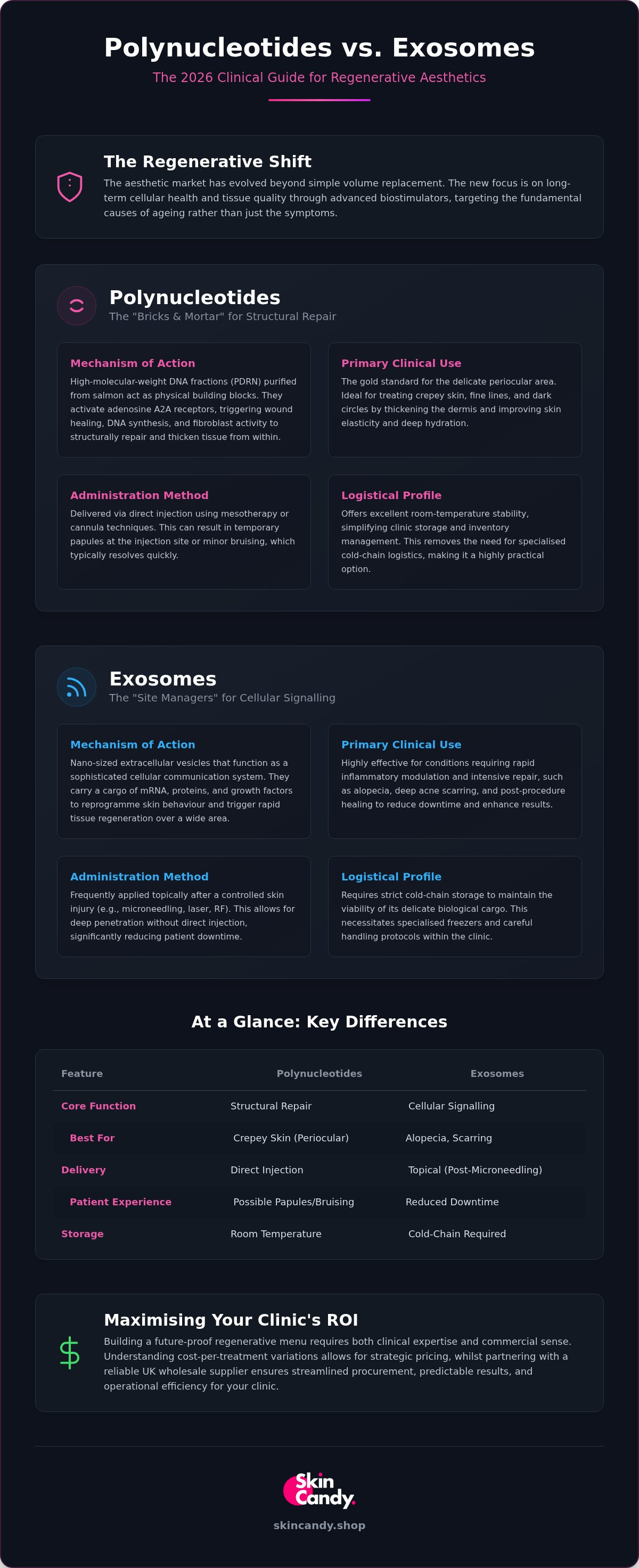
The aesthetic industry has hit a definitive turning point in 2026. Traditional volume-based dermal fillers are no longer the sole focus of high-performing clinics. Instead, practitioners are prioritising long-term cellular health and tissue quality. Understanding the nuances of polynucleotides vs exosomes for clinics is essential for any business aiming to offer modern regenerative protocols. Polynucleotides are high-molecular-weight DNA fractions, typically purified from salmon sperm, that act as the structural building blocks for tissue repair. In contrast, exosomes are nano-sized extracellular vesicles that function as a sophisticated cellular signalling system. Whilst polynucleotides provide the physical materials for repair, exosomes deliver the biological instructions to reprogramme skin behaviour.
The Science of Polynucleotide Biostimulation
Polynucleotides rely on Polydeoxyribonucleotide (PDRN) to stimulate metabolic activity in fibroblasts. When injected, these DNA chains activate adenosine A2A receptors. This activation directly triggers wound healing and DNA synthesis. This process doesn't just mask ageing; it reverses it by improving skin elasticity and deep hydration at a fundamental cellular level. Practitioners should master polynucleotide indications for aesthetic clinics to ensure they're applying these biostimulators for long-term tissue repair rather than temporary fixes. They're particularly effective for patients with compromised skin barriers or those requiring structural thickening of the dermis.
The Mechanism of Exosome Signalling
Exosomes represent the pinnacle of paracrine signalling. These vesicles carry a potent cargo of mRNA, miRNAs, proteins, and growth factors that facilitate communication between cells. Unlike polynucleotides, which stay at the site of injection to build tissue, exosomes act as messengers that trigger rapid tissue regeneration across a wider area. The source of these vesicles matters significantly for clinical outcomes. Clinics must choose between different origins based on patient needs:
- Plant-derived: Often used for general skin rejuvenation and antioxidant support.
- Bovine: Known for high growth factor concentrations and intensive repair.
- Human-derived: Frequently considered the most biocompatible for rapid cellular reprogramming.
This signalling effect allows for a dramatic reduction in downtime and a visible improvement in skin texture that purely structural products cannot match. The core distinction is clear. Polynucleotides are the "bricks and mortar" of skin regeneration. Exosomes are the "site managers" that tell the cells exactly how to use those materials. By stocking both, clinics can offer a dual-layered approach that addresses both structural deficiency and cellular exhaustion. This transition to biostimulation ensures your clinic remains at the forefront of the 2026 aesthetic landscape.
Clinical Comparison: Polynucleotides vs Exosomes for Patient Indications
Selecting the right biologic requires a precise diagnosis of the patient's tissue quality. The choice between polynucleotides vs exosomes for clinics often boils down to whether the patient needs structural reinforcement or rapid inflammatory modulation. Polynucleotides are biostimulators that physically integrate into the tissue to promote long-term repair. Exosomes are lightweight messengers that trigger a cascade of healing without adding volume or substance. Practitioners must match these mechanisms to specific pathologies to ensure predictable outcomes.
Administration methods also dictate the clinical experience. Polynucleotides are typically delivered via mesotherapy or cannula, which can lead to temporary papules or minor bruising. In contrast, exosomes are frequently applied topically following a controlled injury, such as microneedling or radiofrequency. This makes exosomes a powerful tool for reducing the downtime of more aggressive treatments. Clinics that source high-quality regenerative consumables can offer these as premium add-ons to standard skin resurfacing protocols.
Facial Rejuvenation and Periocular Care
Polynucleotides remain the gold standard for the delicate periocular area. The specific molecular weight of salmon-derived DNA fractions is ideal for thickening the thin skin around the eyes, directly addressing dark circles and crepey textures. Whilst exosomes provide excellent general rejuvenation, they lack the immediate structural "filler-like" support that polynucleotides offer to the dermal matrix. However, using exosomes post-laser can halve recovery time by suppressing inflammatory cytokines almost instantly. The ideal regenerative patient presents with localised structural laxity requiring polynucleotide reinforcement and generalised inflammatory ageing that benefits from exosome signalling.
Hair Restoration and Scalp Health
In 2026, hair restoration has been transformed by exosome-led signalling. Clinical evidence suggests that exosomes are highly effective at stimulating dormant hair follicles by delivering growth factors directly to the bulb. This paracrine effect is often more rapid than the results seen with polynucleotide scalp treatments, which focus more on improving the vascularisation of the scalp tissue. Managing patient expectations is vital; whilst exosomes trigger faster signalling, polynucleotides may be needed to maintain the scalp environment over several months. Successful clinics often employ a tiered membership model, using an initial course of exosomes to "jump-start" the follicles, followed by polynucleotide maintenance to ensure long-term hair density and health. This dual-action approach ensures patients see both immediate improvements and sustained results.
Practical Administration: Injection Techniques and Clinical Protocols
Effective results depend on precise delivery. When evaluating polynucleotides vs exosomes for clinics, the administration route is the primary operational differentiator. Polynucleotides are typically injected into the deep dermis using either a mesotherapy approach or a cannula. For periocular work, practitioners often prefer a 30G or 32G needle for point-by-point injections. Alternatively, a 25G or 27G cannula allows for a retrograde linear threading technique, which minimises trauma and reduces the risk of bruising in the mid-face. Most protocols require a course of 3 to 4 sessions, spaced 2 to 4 weeks apart, to achieve cumulative biostimulation.
Exosomes operate through topical absorption following a controlled skin injury. They aren't currently licensed for direct injection in the UK; instead, they're applied immediately after microneedling or radiofrequency treatments. This synergy is powerful. The micro-channels created by the needles act as pathways for the vesicles to reach the target cells. To maintain high clinical standards and ensure sterile delivery, clinics must secure reliable mesotherapy products wholesale UK to support these combined regenerative protocols.
Combining Regenerative Products with Traditional Fillers
Sequencing is critical when mixing biostimulators with hyaluronic acid (HA) fillers. In 2026, the gold standard is to prime the tissue with polynucleotides 2 weeks before administering HA fillers. This improves the dermal matrix and provides a better foundation for the filler. Whilst you can use exosomes and fillers in the same appointment, they must be delivered to different layers. Exosomes remain topical or intra-epidermal, whilst fillers occupy the sub-dermal or supraperiosteal space. Practitioners must monitor the inflammatory response closely. Excessive swelling may indicate an over-stimulated immune environment, particularly if treating patients with high sensitivity.
Managing Patient Discomfort and Downtime
Patient comfort is a significant factor in treatment adherence. To minimise bruising with polynucleotides, use a slow injection speed and apply pressure immediately after each pass. For exosome treatments, the discomfort is primarily associated with the microneedling process itself. Applying a specialised exosome mask post-procedure provides an instant soothing effect and reduces erythema within minutes. Advise patients to avoid washing the treated area for at least 6 hours. This ensures maximum cellular uptake of the signalling molecules before any topical interference occurs.
The Business Case: Procurement, Storage, and ROI for UK Clinics
Integrating regenerative biologics into your service menu requires more than just clinical skill; it demands a robust commercial strategy. When comparing polynucleotides vs exosomes for clinics, the financial and logistical overheads differ significantly. Polynucleotides typically arrive in pre-filled syringes and remain stable at room temperature. This makes them easy to stock and manage. Exosomes, however, often require strict cold-chain storage to preserve the integrity of the delicate vesicles. This logistical hurdle means you must account for specialised refrigeration and more intensive inventory tracking to avoid product wastage.
Adopting a "just-in-time" procurement model is the most effective way to manage clinic cash flow in 2026. Rather than tying up thousands of pounds in refrigerated stock, successful clinics order based on their weekly booking volume. This reduces the risk of expiring biologics and ensures every patient receives the freshest possible product. To scale efficiently, order your regenerative consumables today from a partner that understands these time-sensitive requirements.
Logistics and Inventory Management
Next-day delivery is no longer a luxury; it's a fundamental requirement for high-value biostimulators. If a patient books a premium exosome treatment, you cannot afford a three-day delay in shipping. Organise your clinic stock by expiry date and storage temperature. Keep polynucleotides in your standard clinical cabinets and reserve fridge space exclusively for exosome vials. Partnering with a reliable aesthetic clinic procurement UK specialist allows you to maintain lean inventory levels without risking treatment cancellations.
Maximising Profit Margins on Regenerative Treatments
Profitability in regenerative medicine comes from smart bundling and tiering. A course of three polynucleotide treatments offers a steady revenue stream with a lower entry price for the patient. Exosomes command a higher premium as an advanced signalling treatment. You can maximise margins by upselling exosomes as a "recovery booster" for existing microneedling patients. This adds significant value to the patient experience whilst only increasing your treatment time by minutes. Bulk buying consumables like Lumi Meso or specific polynucleotide brands can further reduce your cost-per-syringe, directly increasing your bottom line. Focus on high-turnover regenerative tiers to ensure your clinic remains the most competitive and profitable provider in your region.
Conclusion: Building a Future-Proof Regenerative Menu with Skin Candy
The 2026 regenerative market rewards practitioners who understand the distinct biological roles of their consumables. The choice between polynucleotides vs exosomes for clinics is rarely an "either/or" scenario. Instead, it is a strategic decision based on the specific pathology of the patient's skin. Polynucleotides act as the structural foundation, providing the DNA building blocks necessary for long-term dermal thickening and periocular repair. Exosomes function as the high-speed signalling system, reprogramming cellular behaviour to suppress inflammation and accelerate recovery. Offering both allows your clinic to address structural laxity and cellular exhaustion simultaneously, providing a holistic result that single-modality clinics cannot match.
Maintaining a competitive edge requires more than clinical expertise; it necessitates a commitment to product integrity. Sourcing your biologics from a verified UK wholesaler is the only way to guarantee the safety and authenticity of these advanced materials. With exosomes requiring strict cold-chain management and polynucleotides needing precise purification standards, the risks of using unverified suppliers are too high. A transparent, professional-only supply chain protects your patients and your clinical reputation. It ensures that every vial and syringe you use performs exactly as the manufacturer intended, leading to predictable outcomes and high patient retention.
Why Skin Candy is the Preferred Partner for UK Practitioners
Skin Candy operates as the logistical engine for the UK's most successful aesthetic businesses. We prioritise speed and reliability because we understand the high-pressure environment of a busy clinic. Our same-day fulfilment and next-day delivery services mean you can operate a lean inventory without the fear of treatment cancellations. Our range is curated for professional excellence, stocking everything from the trusted Lumifil Dermal Fillers to the most advanced exosome signalling vials. We don't just provide products. We provide the peace of mind that comes from a dependable, high-volume wholesale partner dedicated to professional standards.
Next Steps for Your Clinic
Transitioning to a regenerative-first menu is a straightforward process when your logistics are streamlined. Start by registering for a wholesale account to access professional-only pricing and bulk-buy incentives. Evaluate your current patient demographic to identify who would benefit most from the structural repair of polynucleotides versus the rapid signalling of exosomes. Use this data to inform your initial procurement strategy, ensuring you have the right biologics on hand for every indication. Explore our full range of polynucleotides and exosomes at Skin Candy today. and ensure your clinic is ready to lead the regenerative shift in 2026.
Secure Your Clinic's Position in the Regenerative Era
The 2026 aesthetic landscape belongs to practitioners who master cellular biostimulation. By understanding the functional differences of polynucleotides vs exosomes for clinics, you can provide tailored protocols that exceed patient expectations. Polynucleotides offer the structural DNA repair needed for sensitive areas like the eyes, whilst exosomes deliver the rapid signalling required for complex inflammatory issues and hair restoration. It's no longer enough to offer volume alone; you must offer regeneration.
Success in this high-growth sector depends on your supply chain. Skin Candy provides the infrastructure your business needs to scale with confidence. We provide next-day UK delivery on all clinic consumables and act as an authorised wholesaler for leading regenerative brands. Our team offers dedicated support for aesthetic practitioners to ensure your procurement remains as efficient as your clinical results. Don't leave your inventory to chance when patient outcomes are on the line.
Shop Professional Regenerative Aesthetics at Skin Candy today. Take control of your inventory and lead your local market with the most advanced regenerative tools available.
Frequently Asked Questions
Do exosomes require cold-chain storage in a clinical setting?
Yes, most medical-grade exosome vials require strict cold-chain storage, typically between 2°C and 8°C, to maintain the integrity of the signalling vesicles. Whilst polynucleotides are generally stable at room temperature, exosomes are biologically active and will degrade if exposed to heat. Always check the manufacturer's specific instructions for each brand to ensure product efficacy isn't compromised before administration.
Can I use polynucleotides and exosomes on the same patient?
You can use both treatments on the same patient to achieve a multi-layered regenerative effect. When managing polynucleotides vs exosomes for clinics, practitioners often use polynucleotides for deep structural repair followed by exosomes to accelerate surface healing. This combined approach addresses both deep dermal laxity and superficial skin texture in a single comprehensive treatment plan.
What is the typical recovery time for polynucleotide injections vs. exosome therapy?
Recovery time for polynucleotide injections typically ranges from 24 to 48 hours as the product integrates and minor papules or bruising subside. Exosome therapy, usually applied topically after microneedling, often sees erythema resolve within 6 to 12 hours. The signalling molecules in exosomes actively suppress the inflammatory response, significantly shortening the downtime compared to traditional injectable treatments.
Are exosomes or polynucleotides better for treating active acne or scarring?
Exosomes are generally superior for active inflammatory acne and complex scarring due to their potent anti-inflammatory signalling properties. Polynucleotides are highly effective for structural pitting and atrophic scars where the skin requires physical DNA building blocks to thicken the dermis. Many clinics combine these, using exosomes to calm the skin and polynucleotides to rebuild the lost tissue volume in depressed areas.
How do I explain the difference between a skin booster and a polynucleotide to my patient?
Explain to patients that whilst a skin booster provides temporary hydration through hyaluronic acid, a polynucleotide is a biostimulator that repairs the skin's DNA. Boosters act like a high-performance moisturiser from within; polynucleotides act like a cellular repair kit. They stimulate fibroblasts to produce new collagen and elastin rather than just attracting water to the area for a temporary glow.
What qualifications do I need to purchase and administer exosomes in the UK?
In the UK, exosomes are intended for professional use by qualified medical practitioners, including doctors, nurses, and dentists. You must ensure your aesthetic insurance policy specifically covers regenerative biologics and topical delivery methods like microneedling or radiofrequency. Always purchase from a verified wholesaler to ensure you are meeting the professional standards required for medical-grade consumables and patient safety.
How many sessions are typically required for noticeable regenerative results?
Most patients require a course of 3 to 4 sessions to see significant regenerative results. These are usually spaced 2 to 4 weeks apart to allow for the cumulative effect of cellular biostimulation. Whilst some patients report improved skin luminosity after one session, the full structural benefits of polynucleotides vs exosomes for clinics take approximately 90 days to manifest as new collagen matures.
Are there any contraindications specific to salmon-derived polynucleotides?
The primary contraindication specific to salmon-derived polynucleotides is a known fish or seafood allergy. Although the DNA is highly purified, practitioners should avoid these products for allergic patients to prevent hypersensitivity reactions. Other standard contraindications include pregnancy, breastfeeding, active skin infections at the injection site, and certain poorly controlled autoimmune conditions.