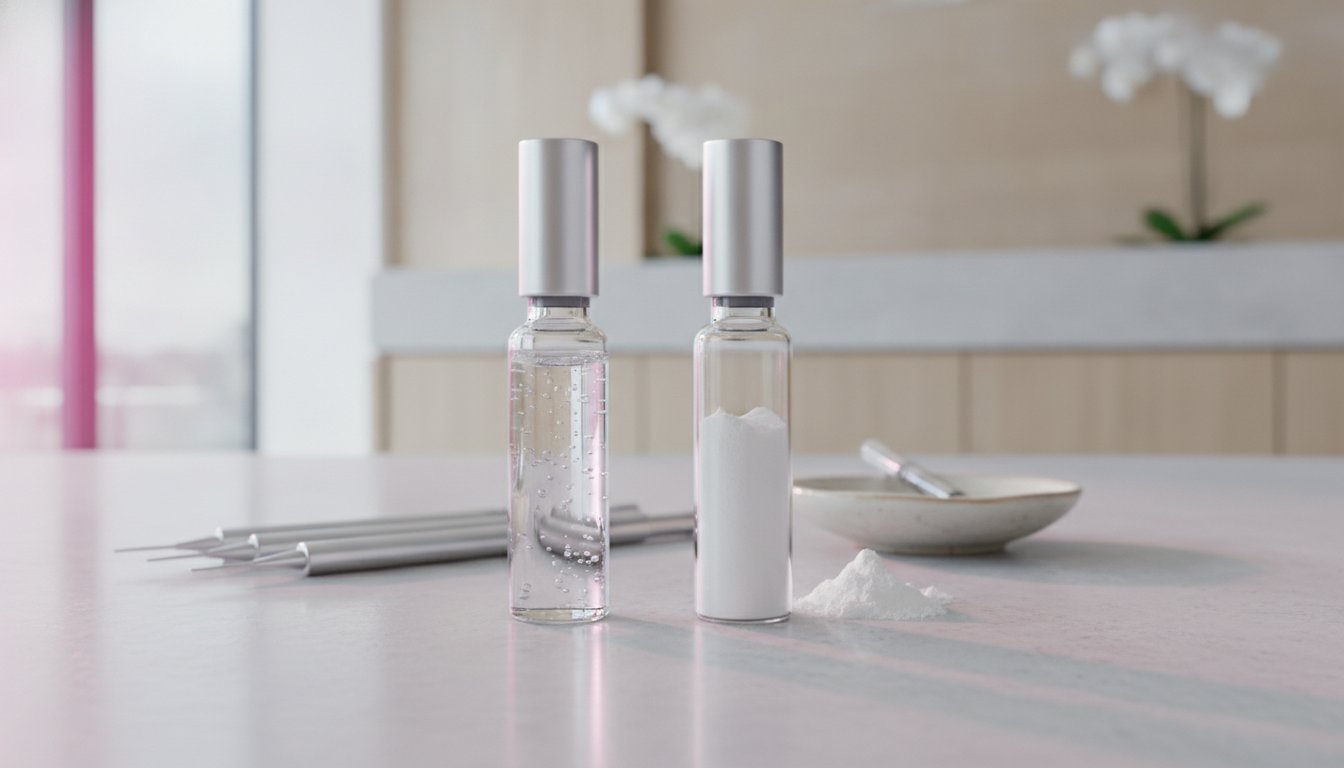
PLLA vs HA Fillers for Clinics: A Professional Practitioner’s Comparison Guide 2026
The instant gratification of hyaluronic acid often blinds practitioners to the long-term commercial power of biostimulators. While HA remains the industry's bread and butter, the 2026 shift toward regenerative aesthetics means your ability to master PLLA vs HA fillers for clinics will define your competitive edge. You likely feel the daily pressure to balance the immediate "wow" factor of HA with the gradual, structural benefits of PLLA. It's a difficult transition, especially when patients demand instant results but need the longevity that only collagen stimulation provides.
We understand that managing these expectations is as much a logistical challenge as a clinical one. This guide delivers a technical and commercial breakdown to help you optimise patient results and refine your procurement strategy. We'll provide a clear differentiation between these materials, a roadmap for your consultation process, and a strategy for securing a reliable UK wholesale supply chain. By the end, you'll know exactly how to integrate these tools to drive both patient satisfaction and clinic efficiency.
Key Takeaways
- Contrast the immediate volumisation of HA with the collagen-stimulating properties of PLLA to refine your clinical decision-making.
- Discover why PLLA offers a superior long-term ROI for patients seeking structural rejuvenation rather than temporary correction.
- Master the nuances of PLLA vs HA fillers for clinics to effectively manage patient expectations regarding "instant wow" versus "natural evolution."
- Identify the ideal patient profiles for each material, specifically targeting aesthetic minimalists and those with mature skin concerns.
- Optimise your procurement strategy with insights into reconstitution requirements and reliable next-day UK delivery options.
Understanding the Mechanism: Hyaluronic Acid vs Poly-L-Lactic Acid
The 2026 aesthetic market prioritises regenerative results over temporary fixes. Understanding the fundamental mechanics of PLLA vs HA fillers for clinics is essential for any practitioner aiming to deliver high-performance outcomes. While both fall under the broad category of injectable filler materials, their biological interactions are entirely distinct. Hyaluronic Acid (HA) works as a physical placeholder. Poly-L-Lactic Acid (PLLA) acts as a biological catalyst. This distinction is the core of the shift from simple filling to regenerative aesthetic medicine.
HA fillers are hydrophilic gels that provide immediate physical volumisation by binding water. They’re designed for instant gratification. PLLA consists of biodegradable synthetic polymers that act as bio-stimulators. They don’t provide volume through their own mass. Instead, they signal the body to create its own structural support. Choosing between them isn't just about the patient's face; it's about their long-term treatment goals.
How HA Fillers Work in the Dermis
HA fillers rely on cross-linking technology to resist rapid enzymatic degradation. This chemical process determines the product’s G-prime and viscosity. High G-prime fillers, like those in the Lumifil or Volifil ranges, provide the robust support needed for deep revolumisation and contouring. They physically displace tissue to correct rhytids and volume loss instantly. A critical clinical advantage is reversibility. Hyaluronidase acts as a reliable safety net, allowing practitioners to dissolve the product if complications arise or if the patient's aesthetic preference changes. It’s a predictable, controllable tool for immediate correction.
The Science of PLLA Collagenesis
PLLA operates on a more complex biological timeline. When PLLA micro-particles are injected, they trigger a controlled, sub-clinical inflammatory response. This response is the key to its success. It activates fibroblasts, the cells responsible for collagen production. Practitioners must prepare patients for the "disappearing act" that occurs shortly after injection. Once the carrier medium is absorbed, the initial swelling subsides, and the face may look as it did before treatment. This is normal. Over the following months, the PLLA particles are gradually replaced by endogenous collagen structures. The result isn't a foreign gel sitting in the tissue; it's a reinforced dermal matrix built by the patient's own body. It’s a natural evolution that offers structural rejuvenation rather than a temporary "fill." Mastery of PLLA vs HA fillers for clinics allows you to offer both immediate impact and long-term biological repair.
Key Differences in Clinical Results and Longevity
The clinical choice between PLLA vs HA fillers for clinics often hinges on the patient's desire for immediate versus progressive change. Hyaluronic acid (HA) provides that sought-after "instant wow" factor. It physically fills space as soon as it's injected. Patients leave the chair with visible, albeit temporary, results. Conversely, Poly-L-Lactic Acid (PLLA) offers a natural evolution. It is a slower process that requires patience and a commitment to the long-term biological outcome.
PLLA generally requires a series of two to three sessions spaced six to eight weeks apart. Whilst this demands more commitment from the patient, the longevity profile offers a superior long-term ROI. HA typically lasts between 6 and 18 months depending on the specific cross-linking technology and the area treated. PLLA results can persist for over two years. This is because the volume is not derived from a temporary gel; it is the result of the patient’s own tissue reinforcement. Practitioners looking to stock both options can find a full range of dermal fillers and PLLA products ready for next-day dispatch.
Injection depth is another critical differentiator. HA is versatile. It can be placed superficially for fine lines or supraperiosteally for structural support. PLLA is more restricted. It must be placed in the deep dermis or supraperiosteally. Incorrect placement of PLLA, particularly if too superficial, increases the risk of palpable nodules. Mastering the nuances of PLLA vs HA fillers for clinics allows you to tailor your technique to the specific material and the patient's anatomical needs.
Duration and Degradation Profiles
The way these materials leave the body dictates their maintenance programmes. HA undergoes natural enzymatic breakdown via hyaluronidase. It is a predictable, linear process. PLLA degrades via hydrolysation. This Poly-L-lactic acid clinical review confirms that the initial inflammatory response leads to collagen synthesis that often peaks at the 6-month mark. This is when the patient sees the maximum benefit. Maintenance for HA involves top-ups every 6 to 12 months. For PLLA, a single maintenance session every 12 to 18 months is usually sufficient to sustain the newly formed collagen matrix.
Treatment Areas and Suitability
HA remains the gold standard for precision areas. It is the only choice for lip augmentation, tear troughs, and the correction of fine perioral lines. PLLA is better suited for global facial rejuvenation. It excels in treating temples, mid-face hollowing, and jawline contouring where large-scale volume restoration is required. There are strict contraindications for PLLA. It should never be injected into the periorbital or perioral regions. The high mobility of these areas, combined with the thinness of the skin, significantly raises the risk of nodule formation. Stick to HA for these delicate zones to ensure patient safety and satisfaction.
Strategic Patient Selection: When to Recommend PLLA over HA
Identifying the right candidate is the first step in mastering the commercial use of PLLA vs HA fillers for clinics. The "Aesthetic Minimalist" represents your prime PLLA candidate. These individuals often express a deep-seated fear of looking "done" or "over-filled" by traditional gels. They want to look like themselves, just refreshed. PLLA meets this need by providing a change that is so gradual it bypasses the scrutiny of peers. It isn't an overnight transformation. It is a slow restoration of lost volume that mimics natural aging in reverse.
Age-based strategies also dictate your material choice. Use PLLA for structural rejuvenation in mature skin where global volume loss is evident across the mid-face and temples. For younger patients, frame PLLA as a "collagen bank" investment. You aren't just filling a line; you're building a biological foundation for their future skin quality. Many high-volume clinics now adopt a hybrid approach. Use HA to provide immediate architecture in specific areas, such as the cheekbones, then layer PLLA to improve the overall dermal thickness and elasticity of the surrounding tissue.
The Consultation Framework
Your consultation must determine if a patient prefers instant or gradual results. Ask them directly: "Do you want to see the change today, or are you looking for a result that grows with you over six months?" This question instantly separates HA candidates from PLLA ones. Use 2026 digital mapping tools to project volume growth. Showing a patient a heat map of where collagen will likely develop helps bridge the gap between their financial investment today and the visible result they'll see in several months. It builds trust in the biological process.
Risk Management and Aftercare
Patient commitment is non-negotiable for PLLA success. You must enforce the 5-5-5 rule: massage the treated area for five minutes, five times a day, for five days. This ensures even distribution of the micro-particles and prevents the formation of nodules or granulomas. Remember that there is no reversal agent for PLLA. Once injected, you cannot use hyaluronidase to undo the process. If you aren't confident in the patient's ability to follow strict aftercare, or if the area requires high-precision correction, stick to HA. For these high-precision cases where control and reversibility are paramount, choose Teofil filler UK to leverage advanced HCCL™ HA technology. This provides the safety of a reversible gel with the performance of modern, high-stability cross-linking.

Operational Considerations for UK Aesthetic Clinics
Managing a high-volume practice requires more than clinical precision; it demands logistical efficiency. The operational differences between PLLA vs HA fillers for clinics significantly impact your daily schedule and cash flow. Hyaluronic acid fillers are ready-to-use devices. You open the box, attach the needle, and inject. Poly-L-Lactic Acid (PLLA) requires a more hands-on approach. Most PLLA formulations demand reconstitution with sterile water for injection and often require a specific standing time to ensure full hydration of the micro-particles. This preparation time must be factored into your clinic’s workflow to avoid delays during patient appointments.
Storage and shelf-life also vary between these two categories. HA syringes are stable at room temperature and have long expiry dates, making them easy to stock in bulk. Reconstituted PLLA has a much shorter window for use. Once mixed, you must use the vial within the manufacturer's specified timeframe, often ranging from 24 to 72 hours. This requires a tighter booking system to ensure product isn't wasted. From a pricing perspective, HA is often sold per syringe. PLLA is more effectively packaged as a multi-session programme. This model secures patient commitment and provides a predictable revenue stream for the clinic over several months.
Procurement and Just-in-Time Logistics
Cash flow management is the backbone of a profitable clinic. Adopting just-in-time inventory aesthetic clinic practices allows you to keep stock levels lean without risking treatment cancellations. For busy UK practitioners, next-day delivery is a non-negotiable requirement. You shouldn't have to tie up thousands of pounds in stock that sits on a shelf for months. Instead, source your PLLA and HA fillers from a wholesaler that offers same-day dispatch. High-volume clinics can still benefit from bulk buying discounts on staples like Lumifil or Volifil whilst maintaining a flexible inventory of specialized biostimulators. To streamline your supply chain and access the latest PLLA ranges, order your professional clinic supplies here for guaranteed next-day UK delivery.
Staff Training and Specialisation
The learning curve for PLLA is steeper than for HA. Practitioners must master specific fanning and cross-hatching techniques to ensure even product distribution. It’s vital that every injector in your clinic understands the different rheologies of your stock. Marketing your business as a "Regenerative Centre" can differentiate you from competitors who only offer traditional filling. By specialising in the nuances of PLLA vs HA fillers for clinics, your team can provide more sophisticated, tiered treatment plans. This expertise positions your clinic as an authority in long-term skin health rather than just a provider of temporary aesthetic fixes.
Optimising Your Clinic Inventory with Skin Candy
Navigating the complexities of PLLA vs HA fillers for clinics requires more than clinical expertise; it requires a procurement partner that moves as fast as your business does. Skin Candy acts as the silent engine behind your practice, providing a curated portfolio that spans the entire aesthetic spectrum. We don't just sell consumables; we secure your supply chain. Whether you are performing high-precision lip augmentations with HA or global structural rejuvenation with PLLA, our stock is selected for its clinical performance and safety profile. We provide only medical-grade, CE-marked products to ensure your clinic remains compliant with the evolving UK regulatory standards of 2026.
Reliability is our baseline. We understand that a missing delivery isn't just an inconvenience; it's a lost appointment and a frustrated patient. That’s why we offer same-day dispatch and guaranteed next-day UK delivery for all clinic orders. This logistical excellence allows you to maintain a lean inventory, freeing up capital that would otherwise be tied up in excess stock. By balancing the immediate volumisation of HA with the regenerative power of PLLA, you can offer tiered treatment plans that keep patients returning for years, not just months.
Why Skin Candy is the Preferred Choice
Our commitment to rapid fulfilment across the United Kingdom makes us the primary choice for practitioners who value efficiency. We offer competitive wholesale pricing on leading brands, including Lumifil dermal filler UK, which has become a staple for clinics seeking high G-prime performance at a commercial price point. We simplify the procurement process by acting as a single-source supplier for dermal fillers, biostimulators, and meso products. This unified approach reduces administrative overhead and ensures consistency in your treatment results. We understand the high-pressure environment of UK aesthetic clinics, and our support team is deeply integrated into the professional community we serve.
Get Started with Your Next Order
Setting up a professional wholesale account is a streamlined process designed for busy practitioners. Once registered, you can navigate our extensive range of skin boosters, polynucleotides, and fillers with ease. Our platform is built for speed, allowing you to replenish your stock in minutes. As the industry moves toward more sophisticated regenerative techniques, having a reliable source for PLLA vs HA fillers for clinics is essential for maintaining your competitive edge. Don't let supply chain delays dictate your clinic's growth. Enquire about PLLA filler wholesale UK today and experience the satisfaction of a professional, results-oriented partnership that prioritises your commercial success.
Future-Proofing Your Aesthetic Practice for 2026
The choice between PLLA vs HA fillers for clinics isn't about which product is superior. It's about selecting the right tool for the specific clinical indication. Hyaluronic acid remains the gold standard for immediate contouring and delicate areas. Poly-L-Lactic Acid provides the biological foundation for long-term structural rejuvenation. By mastering both, you offer a more sophisticated service that addresses both the symptoms and the causes of facial ageing. You've seen how these materials differ in mechanism and application; now it's time to integrate them into your daily practice.
Success in a high-volume environment depends on more than clinical skill. It requires a supply chain that mirrors your clinic's pace. Skin Candy provides the logistical confidence you need to manage a diverse inventory of 100% professional-grade products. With specialist wholesale support and next-day UK delivery, you can focus on patient results rather than procurement delays. We handle the logistics so you can focus on the aesthetics.
Browse our professional PLLA and HA filler ranges for next-day delivery and elevate your treatment standards today. Your clinic's growth depends on the reliability of your partners. We're ready to support your commercial success.
Frequently Asked Questions
Is PLLA better than HA for deep facial volumisation?
PLLA is generally superior for global, deep-tissue volumisation because it creates structural support rather than just filling space. HA is better for targeted, high-precision volume in mobile areas. For mature skin with significant depletion, PLLA provides a more natural, longer-lasting foundation by stimulating the body's own collagen production over several months.
Can I inject HA and PLLA in the same treatment session?
Yes, you can perform hybrid treatments, but you must inject them into different anatomical layers or distinct facial zones. Typically, practitioners use HA for immediate structural definition on the bone and PLLA in the deep dermis for global skin quality. You should never mix the two substances in the same syringe or inject them into the exact same tissue plane simultaneously.
How much PLLA should a clinic stock compared to HA fillers?
Most high-volume clinics maintain a 3:1 ratio of HA to PLLA. Since HA is used for a broader range of indications like lips and fine lines, it remains the primary inventory item. However, as the market shifts toward regenerative aesthetics, increasing your PLLA stock ensures you can meet the rising demand for biostimulatory treatments without waiting for deliveries.
What is the "5-5-5" rule for PLLA aftercare?
The "5-5-5" rule requires patients to massage the treated area for five minutes, five times a day, for five days post-treatment. This mechanical action is vital to prevent the PLLA micro-particles from clumping into nodules. It ensures an even distribution of the stimulator, which leads to a smooth, uniform collagen response across the entire treatment area.
Is there a way to dissolve PLLA if the patient is unhappy?
No, PLLA cannot be dissolved with hyaluronidase or any other reversal agent. Once the collagenesis process begins, the results are permanent until the body naturally degrades the new collagen over several years. This makes patient selection and precise injection technique critical when using PLLA vs HA fillers for clinics, as errors are much harder to rectify than with reversible gels.
How do PLLA fillers affect clinic revenue compared to HA?
PLLA treatments often generate higher per-patient revenue because they are typically sold as a multi-session course. While a single HA syringe provides immediate profit, a PLLA programme secures three appointments and long-term loyalty. This creates a predictable income stream and positions your clinic as a specialist centre for advanced, regenerative aesthetic results.
What are the most popular PLLA brands available for UK wholesale in 2026?
The 2026 UK market features established biostimulators alongside newer, high-performance ranges. Skin Candy stocks a curated selection of professional-grade PLLA products alongside our Lumifil and Aesossa HA lines. These brands are chosen for their safety profiles and predictable results, allowing practitioners to offer a diverse range of PLLA vs HA fillers for clinics with logistical confidence.
How does the reconstitution of PLLA affect treatment time?
Reconstitution adds approximately 15 to 30 minutes to your preparation workflow, depending on the specific brand's hydration requirements. Some modern PLLA formulations are ready to use faster than traditional powders. Practitioners should organise their schedule to ensure vials are mixed and settled before the patient arrives, maintaining a seamless and efficient clinic experience for the patient.